
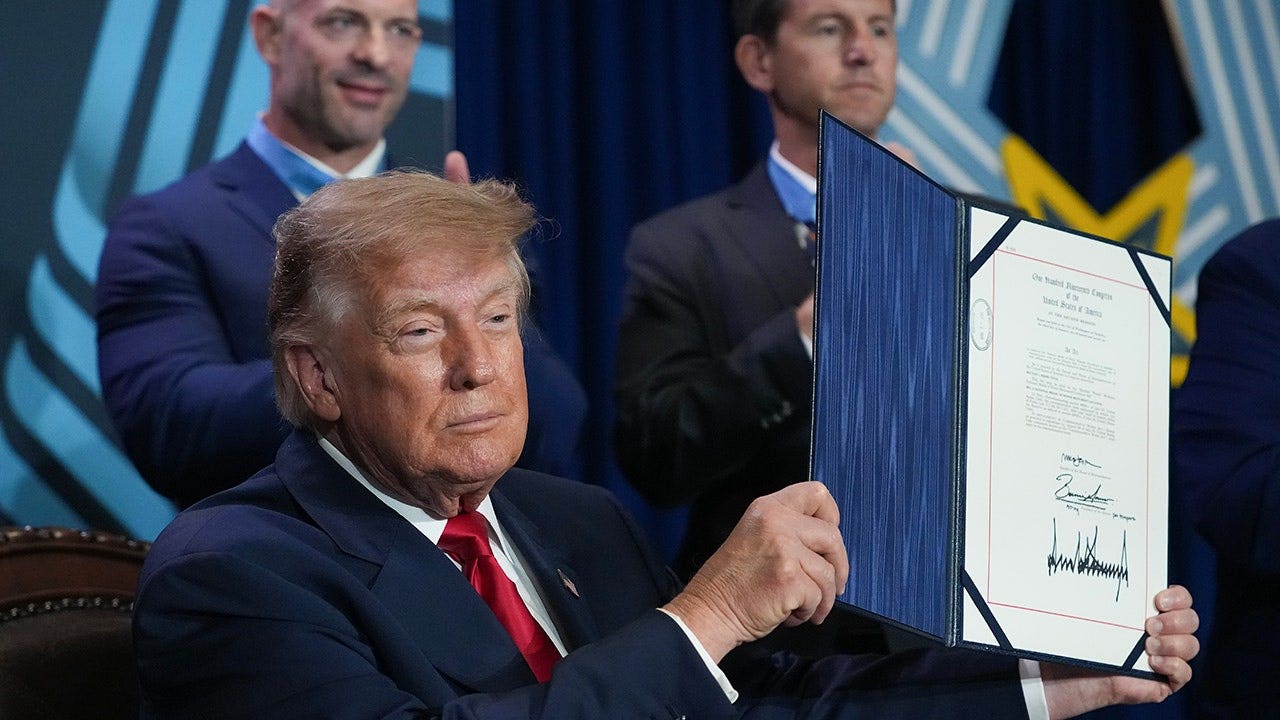
President Donald Trump signed a new measure in Texas that clears the path for a National Medal of Honor monument on the National Mall, putting one of the country’s most revered honors on a far more visible stage. The move came during a ceremony packed with recipients and their families, where the message was simple and powerful: the nation should never lose sight of courage, sacrifice, and service.
Trump signed the Hershel “Woody” Williams National Medal of Honor Monument Location Act after touring the National Medal of Honor Museum in Arlington and greeting more than a dozen recipients. The bill does not authorize construction of the monument itself, since Congress already approved that in 2021, but it does allow the future memorial to be placed within the Reserve of the National Mall, close to some of the most iconic landmarks in Washington.
The location matters. The Reserve is a protected part of the Mall, and putting the monument there means the tribute would sit among the nation’s most recognizable symbols of history and sacrifice. For supporters, that setting gives Medal of Honor recipients the kind of public recognition their heroism has long deserved.
The act carries the name of Hershel “Woody” Williams, the Marine legend who earned the Medal of Honor for his ferocious actions at Iwo Jima and died in 2022 as the last surviving World War II recipient. His name gives the law real weight, tying the new monument to a figure whose life already stands for grit, duty, and battlefield courage.
Trump took a long moment to praise the recipients in attendance and describe what their stories mean to the country. He told the crowd, “We’re privileged to have with us 15 of the 65 living recipients of the Congressional Medal of Honor,” and then added that the acts of bravery behind those medals remain almost impossible to fully grasp.
He also singled out Williams’ wartime record, describing the brutal fighting at Iwo Jima and the way Williams moved through enemy positions over and over again. The language was blunt and admiring, the kind of tribute that matched the gravity of the occasion rather than softening it.
The museum’s leadership said the event was about more than one monument. National Medal of Honor Museum Foundation Chairman Charlotte Jones said the museum is focused on “heart, about courage, about sacrifice and patriotism,” and that the stories of the recipients carry a force that goes well beyond military history.
Jones also pointed to the unusually broad support behind the project. According to the foundation, the effort has received eight unanimous votes in Congress over six years, and the location act itself cleared both chambers without opposition, which is rare in a city that usually turns even simple ideas into fights.
That bipartisan backing says a lot. The Medal of Honor still cuts through the noise because it represents something bigger than politics, something rooted in service under the worst possible conditions. It is one of the few honors that can still bring lawmakers from both parties to the same side without hesitation.
The future monument will not have a final spot selected until the National Park Service makes the call, and the foundation says a design competition will follow. No federal funds will be used for construction, so the project will rely on private fundraising, which adds another layer of public commitment to the effort.
Trump used the moment to underline the human cost behind the medals, saying the recipients “stood tall when their country needed heroes.” He described them as men who carried the wounded, shielded their comrades, and faced danger head-on without flinching.
That kind of language gave the event a sharper edge, especially as the president spoke about the monument and the museum working together to preserve those stories. The idea is not just to build something impressive in Washington, but to create a permanent place where sacrifice is impossible to ignore.
The White House said the signing was meant to honor the recipients’ service in a straightforward way. “Medal of Honor recipients represent the very best of America. President Trump honored their courage today, and a new monument will ensure the nation never forgets their valor and sacrifice,” White House spokeswoman Liz Huston said.
