
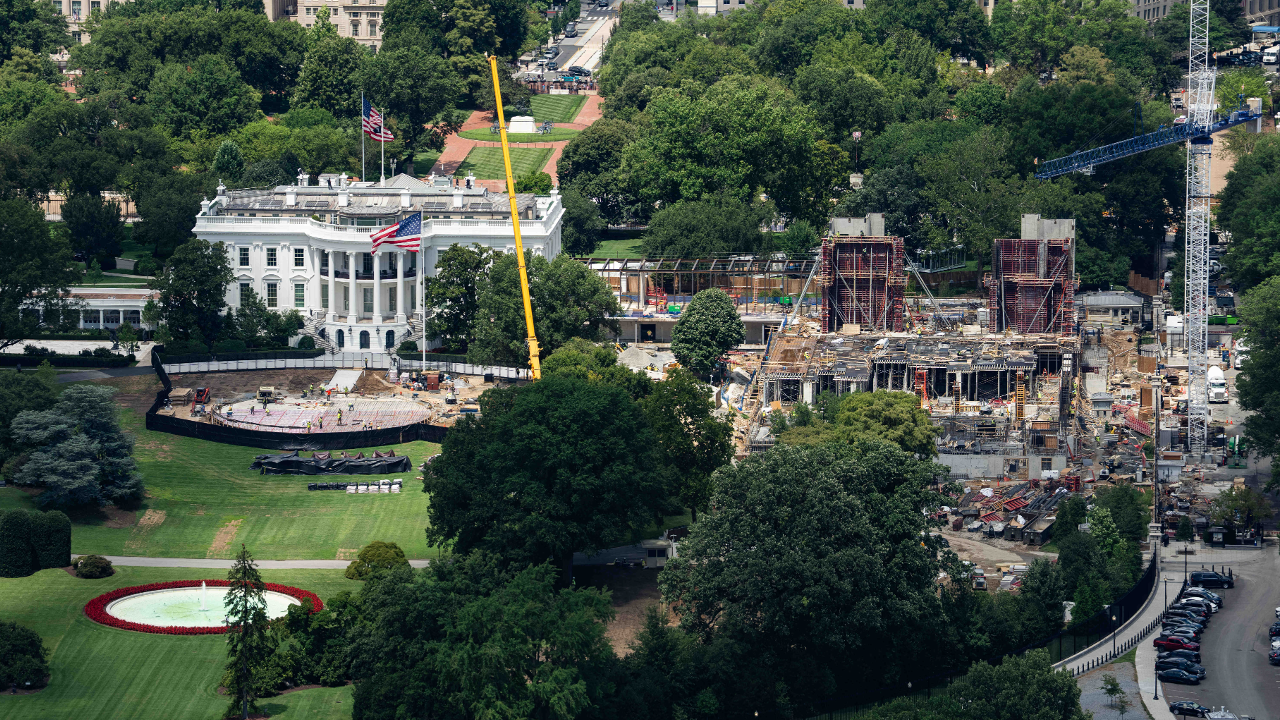
A White House project has run headfirst into a bigger fight about security, presidential protection, and how much judges should see into sensitive national defense planning. At the center is a dispute over a ballroom construction pause, but the deeper issue is whether the courts are forcing public exposure on a place that has to stay hardened, flexible, and ready for worst-case scenarios.
“Where is the president? He’s got to move.” Those are words no national security advisor wants to hear, because every second counts when the command structure has to vanish into a safer location. In high-pressure moments, the shift from the Oval Office to an undisclosed secure space happens fast, quietly, and with very little room for debate.
That kind of urgency is why the White House cannot be treated like an ordinary civic building. It is the president’s home, but it is also the nerve center for military command, crisis response, and continuity of government. It has to work under pressure from every angle, including threats from hostile states, terrorists, and lone attackers looking for an opening.
The current dispute is tied to construction and to what may sit above and below it, which is exactly the sort of thing national security planners usually keep close to the vest. Once a court order halts work and drags the details into open view, the public conversation shifts from architecture to vulnerabilities, and that is a dangerous trade. In a world full of satellites, advanced surveillance gear, and persistent digital snooping, secrecy is not a luxury.
The problem is not just what can be seen from the outside. It is also what could be inferred from delays, layouts, security changes, and the movement of people who protect the president day and night. A building meant to support the executive branch should be defensible from the ground up, not dissected in court like a zoning dispute over a shopping center.
The Constitution gives the president the responsibilities of commander in chief, and those responsibilities come with practical needs that cannot be brushed aside. A president has to be able to operate from a secure command post, and the White House complex has to be ready for sudden action if danger closes in. That includes the possibility that the usual escape routes or travel plans may not be available when seconds matter.
This is where the age of hypersonic missiles and rapid surveillance changes everything. The threats are faster, smarter, and less forgiving than they were a generation ago, which means protective planning has to be deeper and less visible. Any court weighing a case like this should be thinking about the real-world timeline for moving the president, the vice president, and key aides under extreme pressure.
The standing fight matters too, because not every lawsuit deserves to get that far when the subject is national security. Judges can and do dismiss cases that do not belong in court, and that filter exists for a reason. When the dispute involves a sensitive federal site, the bar for letting challengers interrupt the work ought to be very high.
The 9/11 memory still hangs over all of this. After that day, the country learned just how quickly the government has to shift into survival mode, and how much planning gets hidden from public view for good reason. That reality has not faded, even if some legal fights now try to turn protection measures into a public spectacle.
There is also a basic leadership point that gets lost in the noise. Future presidents will face danger too, and they will need a White House that is more than symbolic, more than pretty, and more than easy to talk about in court filings. The building has to be ready to shield the people inside it, whether the threat comes from above, below, or from far beyond the horizon.
That is why the delay feels so wrong to many who understand the stakes. Security inside the executive complex should be handled with care, speed, and respect for the office itself. The country cannot afford to let public litigation chip away at the very protections designed to keep its highest office standing when the pressure hits.
