
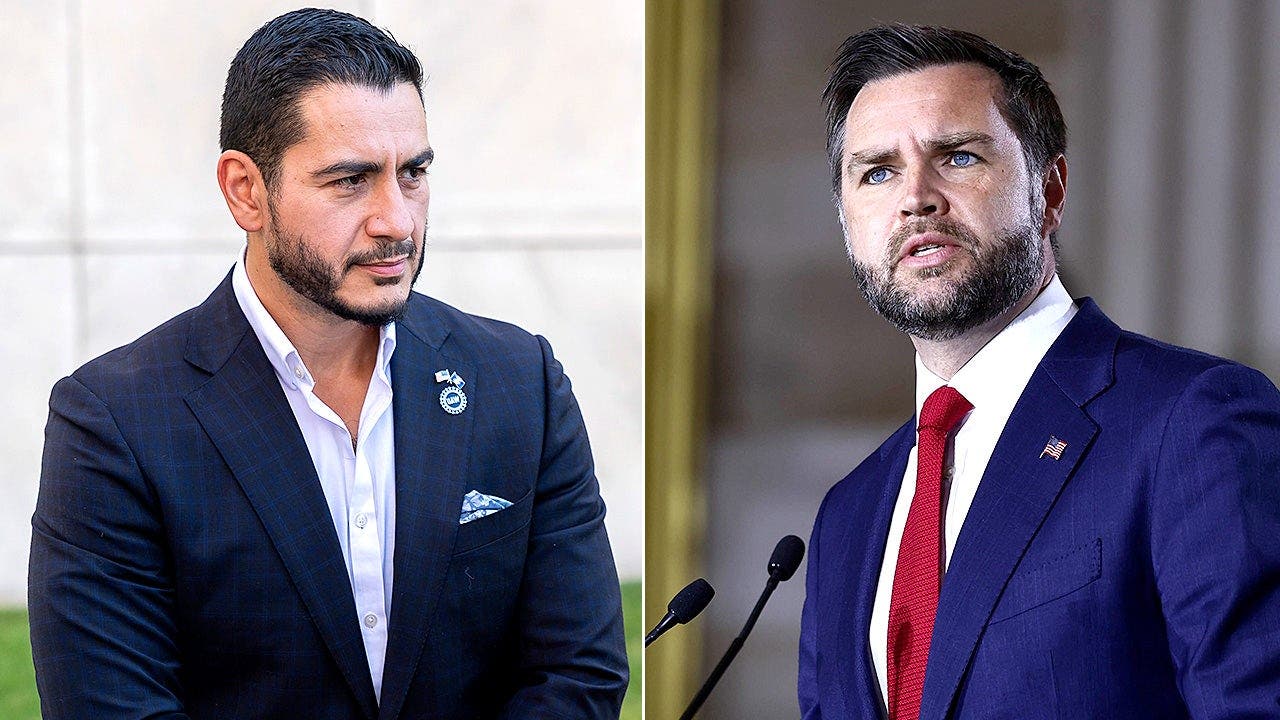
JD Vance used a factory-floor speech in Ohio to take direct aim at Abdul El-Sayed and the modern Democratic Party, arguing that the party has drifted far from the people who once powered it. The flashpoint was El-Sayed’s past remarks on Sharia law, which Vance held up as a perfect example of how out-of-touch Democrats have become on culture, identity, and basic common sense.
Speaking at the Cleveland-Cliffs Middletown Works steel plant, Vance leaned hard into the contrast between union labor and progressive politics. He said the party now sounds more like it belongs to “graduate students” than the men and women keeping plants like that running day after day. The crowd got a familiar Vance message: the working class built this country, and Democrats keep forgetting that.
Vance brought his late grandfather into the story, describing him as a welder who spent four decades on the job and stayed loyal to Democrats because he saw them as the party of union men. That old-school image was the setup for Vance’s bigger point, which was that the modern party has swapped working people for activists, academics, and people obsessed with fringe ideology. The message landed with the kind of blunt edge that has become a signature of his political style.
Then Vance turned straight toward El-Sayed, the Michigan Democratic Senate nominee and son of Muslim Egyptian immigrants. He highlighted El-Sayed’s earlier claim that criticism of Sharia law was tied to White supremacy, calling the idea absurd and deeply disconnected from ordinary Americans. For Vance, that comment was more than just a controversy, it was proof that Democrats are now willing to excuse just about anything if it fits the right ideological script.
“He once argued, not too long ago, that criticisms of Sharia law were rooted in White supremacy,” Vance said. “I’d love to go back in time and tell my papa that there is a man who claims to stand for working people who says not only should we have Sharia law, but if you criticize it you’re a White supremacist. That’s not my grandpa’s Democratic Party, my friend.”
The remarks Vance cited trace back to a 2022 CAIR banquet in Oklahoma, where El-Sayed was the keynote speaker. In that speech, El-Sayed attacked Oklahoma’s failed effort to keep courts from considering Sharia law, tying the issue to a much broader history of American injustice. He compared the opposition to Sharia restrictions with forces behind the Trail of Tears, the destruction of Black Wall Street, and other dark chapters in U.S. history.
“The same exact forces that drove native peoples from their land two centuries ago, destroyed Black Wall Street a century ago, bombed a building decades ago and tried to ban Sharia law not a decade ago, those forces are alive and well today,” El-Sayed said.
That line has not exactly helped him with critics on the right. Conservatives have argued that El-Sayed sees nearly every issue through a race-and-religion lens, and that his rhetoric goes well beyond the boundaries of mainstream politics. His comments on Israel have also drawn heat, with critics pointing to past accusations that the country was committing “genocide” and operating as an “apartheid” state.
For Republicans, the bigger issue is not just one candidate’s language, but what that language suggests about the direction of the party backing him. Vance is tapping into a broader anger among voters who think Democrats spend more time policing speech and chasing activist causes than thinking about wages, energy bills, and life on the factory floor. That kind of contrast is exactly why Michigan’s Senate race has turned into such a bruising fight.
El-Sayed has also tried to soften some of the political damage with later comments about Jewish safety and antisemitism, saying after his primary win, “My commitment to Jewish safety is the same as my commitment to the safety of my own kids. We have a responsibility to take on antisemitism in all of its forms, wherever we see it.” Still, the earlier remarks keep following him, and Vance made sure to drag them right back into the spotlight in a place where blue-collar voters were bound to notice.
