
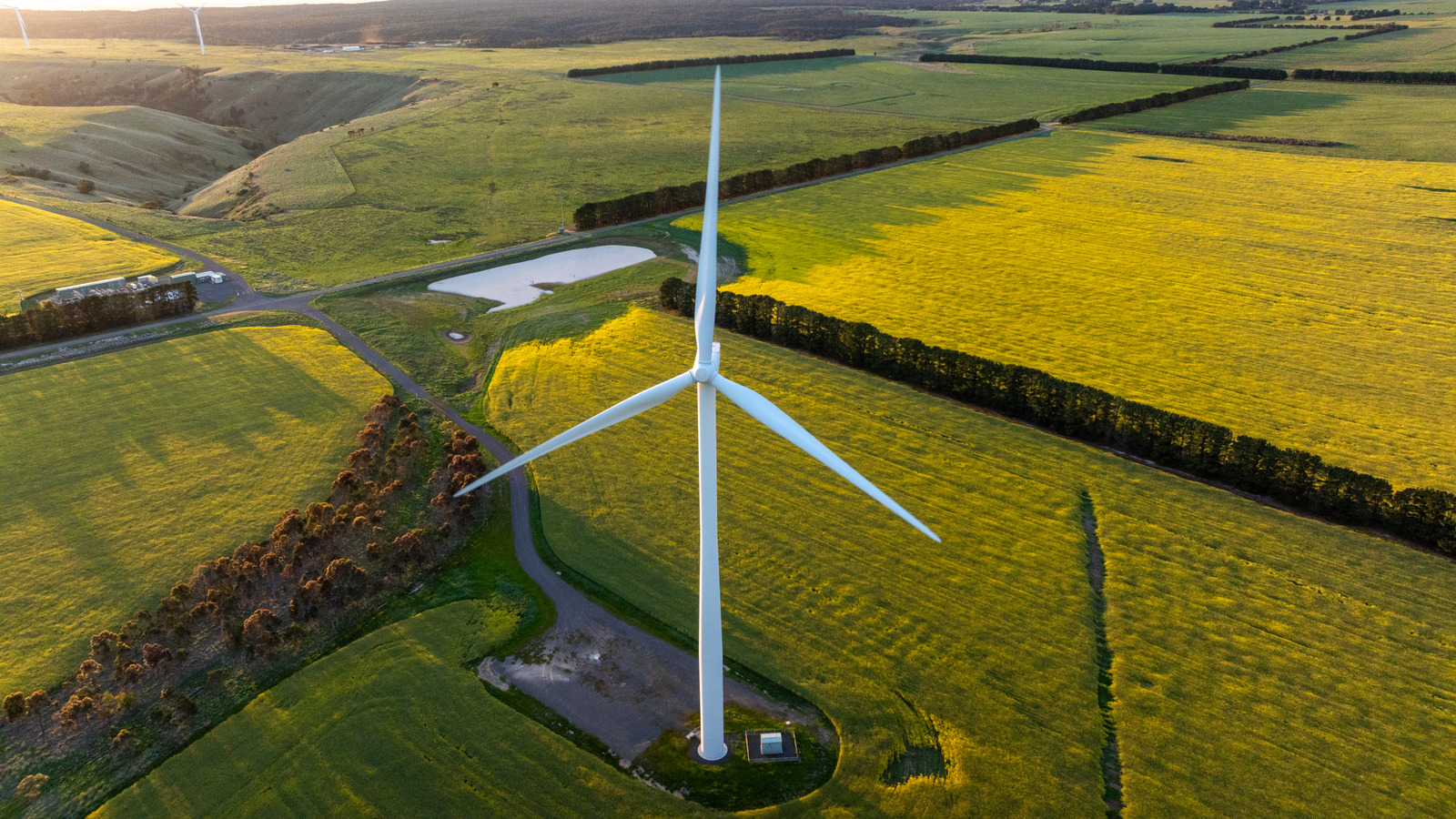
Modern wind turbines usually spin clockwise, while old Dutch windmills often turned the other way. The split is less about physics and more about history, craft habits, and the long shadow of design tradition.
What looks like a technical rule is mostly a convention that grew out of how early builders worked. Over time, that convention stuck, and the modern wind industry eventually settled into a direction that became familiar across the market.
In traditional Danish windmills, the counterclockwise motion was tied to right-handed millers building blades in a way that felt natural to them. The thin side of the wooden laths was placed to the left, not because of wind patterns or geography, but because it suited the people making the machines.
That detail matters because it cuts through a common myth. The direction was never about better weather, a special landscape, or some hidden performance trick, and it had nothing to do with practical jobs like pumping water from underground.
As wind technology moved forward, those older habits carried into some early turbine designs. Once fiberglass entered the picture, though, the industry had a chance to break away from the old wooden style and create a new standard.
The shift really took shape in 1978, when Erik Grove-Nielsen and his wife Tove built the first fiberglass blades. Their blades were five meters long, and they spun clockwise to set themselves apart from the Tvind company’s pioneering design.
From there, the industry split for a while. Windmatic and Tellus kept counterclockwise rotation alive, while companies such as Vestas, Bonus, Nordtank, and Enercon leaned into clockwise motion and pushed it into the mainstream.
That kind of divide is exactly how standards are born. A few competing approaches run side by side for a time, and then the version that gets wider adoption starts to feel inevitable, even when there was never anything magical about it.
Efficiency is where the question gets interesting, but the answer stays pretty simple. For a single turbine, clockwise and counterclockwise rotation are usually close enough that the difference barely matters.
Things only start to shift on large wind farms, where turbine placement becomes a bigger deal. If machines in the same area spin in opposite directions, one can interfere with the airflow reaching another, trimming the power available to the turbine behind it.
That is why consistency matters more than the actual direction. If every turbine in a field spins the same way, the system can work smoothly without wasting energy on mixed rotation patterns.
With clockwise rotation now dominant among the biggest turbine makers, there is little incentive to flip the industry around. The standard has the momentum, the manufacturing lines are built for it, and the old distinction from traditional windmills has become part of the modern identity.
So the clockwise spin is not a law of nature. It is a practical outcome shaped by craftsmanship, product evolution, and the kind of industry habits that can turn a simple choice into the norm.
