
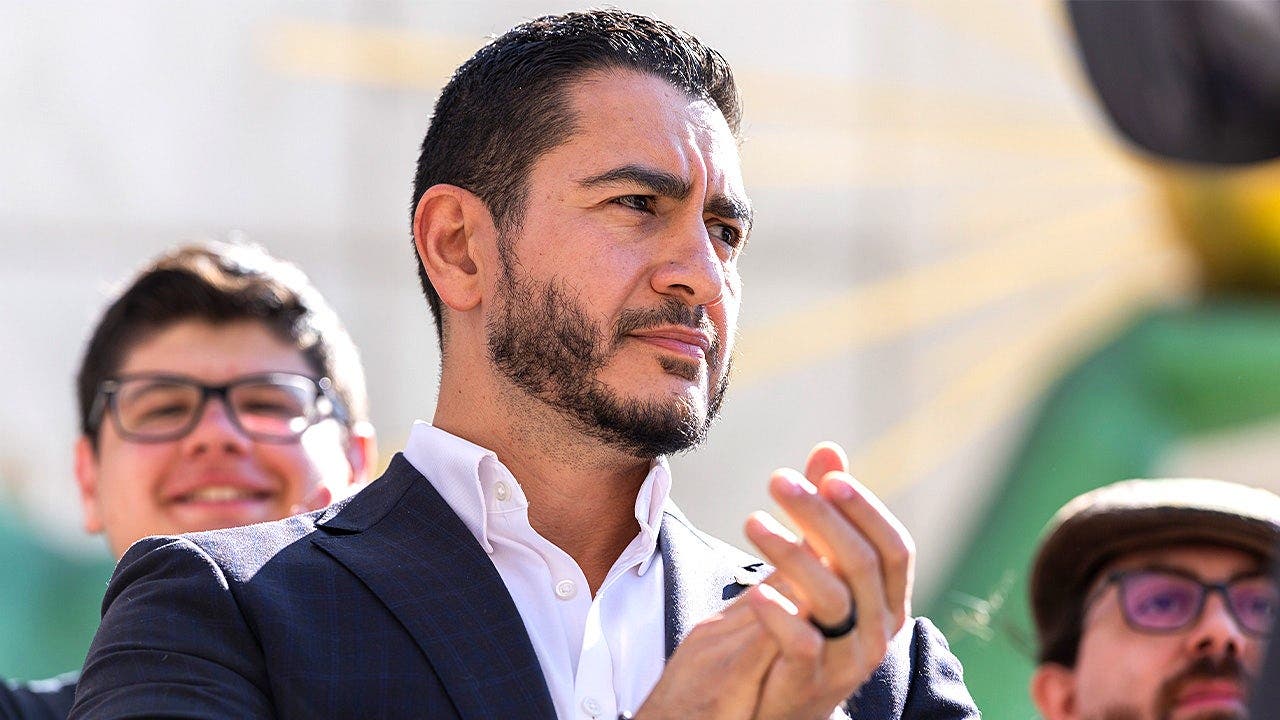
Michigan’s Senate fight is already shaping up as more than a routine midterm contest. Abdul El-Sayed narrowly won the Democratic primary, Mike Rogers has the Republican lane locked up, and the matchup now looks like a sharp test of whether voters want a steady hand or a hard-left jolt.
Rogers brings a familiar resume to the race. The former seven-term congressman and ex-chairman of the House Intelligence Committee has already shown he can pull serious votes in Michigan, and Republicans believe that same coalition can carry him again if turnout stays strong.
That is the big question hanging over 2026. Off-year elections usually drag because they do not spark the same energy as a presidential year, but this one may break that pattern if the Democratic nominee keeps pushing the race into ideological territory.
El-Sayed is not entering the general election as a bland, middle-of-the-road candidate. His profile has become a lightning rod, with critics describing him as far left and closely aligned with activist politics that can fire up some voters while turning off others in a state that often prizes balance over spectacle.
That dynamic matters because Michigan is politically mixed in a way national pundits love to oversimplify. The state has a big Muslim population, a sizeable Jewish community, and a wide slice of voters who do not live and breathe national ideological warfare every day.
Once a race gets this charged, outside money starts pouring in fast. National Republicans are likely to treat Rogers as a must-win, while Democrats and progressive allies will see El-Sayed as a chance to prove their brand can win in a swing state under pressure.
The broader political symbolism is obvious. If Rogers wins, it reinforces the idea that traditional, center-right politics still have a durable lane in the Midwest, especially when a candidate projects competence and discipline.
If El-Sayed pulls it out, it would send a different signal entirely. It would suggest that the left can still win big in a place that usually rewards moderation, even when the candidate comes with plenty of baggage and the race turns into a national shouting match.
That is why the contest is drawing attention far beyond Michigan. Party strategists, donors, and cable-news junkies all know a Senate race like this can become a proxy fight over the direction of the country, especially when both sides see it as a chance to prove something bigger than a single seat.
Rogers also has something else going for him: he looks like a candidate built for Michigan voters who want less drama and more results. In a state that knows how to argue about football, factories, and taxes, a straightforward Republican pitch can still land with force.
El-Sayed, by contrast, seems built to activate the activist edge of the electorate. That can be powerful in a polarized year, but it can also create a ceiling when swing voters start asking whether they want a senator focused on governing or on ideological combat.
So the race is on, and it is already loud. The next few months in Michigan will say a lot about whether voters are ready to reward experience and calm or whether the left can drag the state deeper into the kind of politics that dominates social media and late-night cable fights.
