
Starlink’s speed story is a mix of bold claims, real-world limits, and a few surprisingly fast exceptions. For most home users, the service can be plenty quick for everyday life, but the absolute top end depends on the plan, the hardware, and where you happen to be on the map.
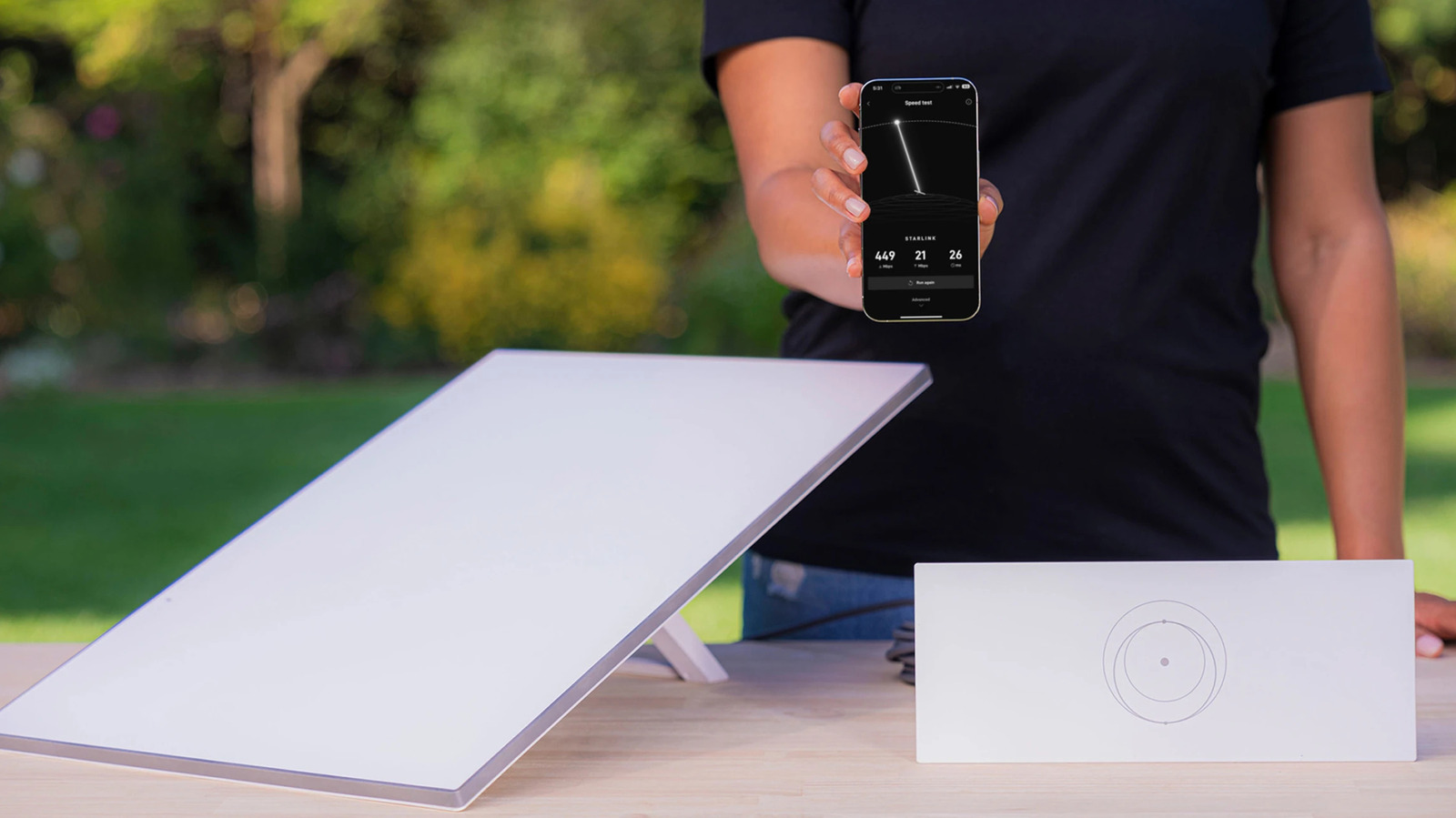
For residential customers, Starlink advertises download speeds of 400+ Mbps, but that number is the ceiling, not the norm. The company says most users usually land somewhere between 45 and 280 Mbps, with a majority seeing more than 100 Mbps, which is enough for streaming, video calls, and gaming without much drama.
Uploads are slower, generally sitting in the 10 to 30 Mbps range. That’s not blazing, but for typical household use it still gets the job done, especially if the goal is checking email, backing up photos, or hopping on a work call without the connection falling apart.
The fastest home plan is the Residential Max tier, which costs $130 a month and is marketed at 400+ Mbps. In testing, though, speeds have tended to average closer to 145 to 170 Mbps, which is well below the headline number but still a solid result for satellite internet.
That gap between promised and actual speed makes more sense once you remember how Starlink works. Because the network relies on satellites shared by many users in the same area, performance can dip when demand rises, just like a busy road slowing down at rush hour.
Starlink does try to give customers a better sense of what to expect by publishing a live speed map. The fastest home reading listed there, at the time of writing, sits off the northeast coast of Nova Scotia at 378 Mbps, which shows that some users really can get close to the advertised top speed.
Still, location matters a lot, and not every place gets the same treatment. Network congestion, satellite coverage, and local usage all play a role, which is why one user can be cruising while another is wondering why the connection feels a little tighter than expected.
If you want the fastest Starlink service available anywhere, the real action is not in a living room. It is in the air, where the company sells aviation plans through authorized dealers for private jets and larger aircraft.
https://x.com/Starlink/status/2075316879586214044
The fastest regional unlimited aviation plan is said to reach 500 Mbps, but the top-end Aviation Global Unlimited package can go even further. Paired with the Performance antenna, it is rated at up to 1 Gbps, which is a serious jump and a reminder that Starlink’s best speeds are not reserved for homes.
Starlink is also pushing to improve the backbone behind its home service. In July 2026, Elon Musk posted on , formerly Twitter, that Starlink can now sustain a steady 10 Gbps for both download and upload almost anywhere on Earth, though that does not mean individual customers are suddenly getting gigabit service at home.
That 10 Gbps figure is tied to dedicated ground-station equipment that supports entire communities, not a single household connection. It can help ease congestion and improve overall network capacity, and when multiple gateways are linked together, even remote locations may reach 20 Gbps.
For home users, the road to true gigabit Starlink is still under construction. The company has asked the U.S. Federal Communications Commission to approve up to 100,000 new Gen3 satellites, and if those get launched, Starlink says customers could eventually see multi-gigabit download and upload speeds.
There is another catch, of course. Getting those speeds would likely require new customer hardware, including a dish and antenna designed for Gen3, and the monthly price is expected to climb too, so the future may be faster, but it will not be cheap.
Latency is part of the pitch as well, with Starlink expecting sub-20 ms response times if the new satellites come online. That would put the experience much closer to wired fiber, which is exactly the kind of comparison Starlink wants to be making as it chases bigger numbers.
For now, the practical answer is simple: home users can get decent, sometimes very good speeds, but the biggest numbers are still tied to special plans and future upgrades. Starlink is clearly building toward a faster network, and the next jump could be the one that finally brings the company’s biggest promises a lot closer to the kitchen table.
