
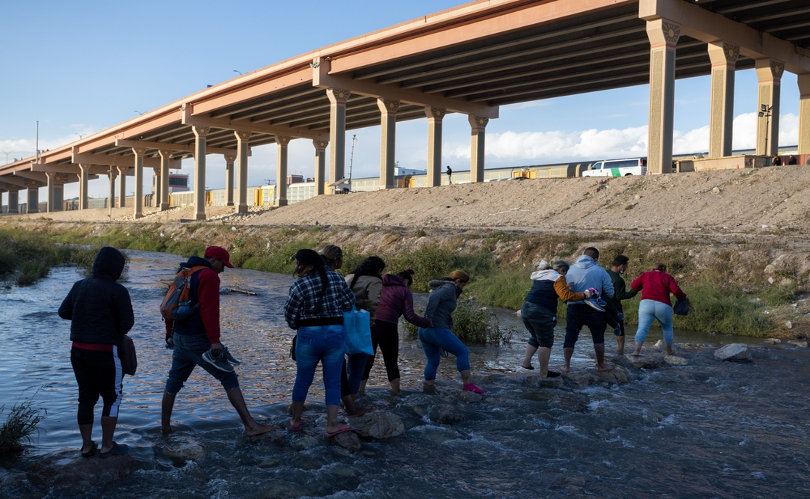
For this story, I will focus on the Vatican-backed immigration tour, the role of Father Mattia Ferrari, the cities and groups involved, the link to liberation theology, and the reaction around Pope Leo XIV’s support.
A Vatican-linked priest is making the rounds in the United States, and the trip is turning heads fast. Father Mattia Ferrari, who coordinates the World Meeting of Popular Movements, is visiting 21 cities with a message that puts immigration front and center. Along the way, his delegation has stepped into court-related appearances, ICE check-ins, and public healthcare enrollment efforts for immigrants.
Ferrari’s tour is not some loose, off-the-cuff trip. It is being carried out with Vatican support and with the backing of Pope Leo XIV, which gives the whole effort a much bigger institutional feel. The stated mission is to meet immigrant families, Catholic bishops, and community organizers while building public pressure around immigration policy.
One of the most striking parts is how hands-on the delegation has been. In places like San Diego, the team has joined diocesan-backed efforts to “accompany immigrants” at hearings and ICE check-ins, acting as a kind of support layer between illegal immigrants and federal enforcement. In other California stops, the group has also worked in farm-worker communities and helped push enrollment in taxpayer-funded public healthcare.
The tour is being coordinated by Catholics in Communion, which says the moment calls for action because of what it describes as a “pastoral emergency” tied to mass deportations. That phrase says a lot about how the organizers see the issue. They are treating immigration not just as a civic debate, but as a moral and religious crisis that demands direct intervention.
At the center of the operation is the World Meeting of Popular Movements, or WMPM, which openly calls itself an “initiative of Pope Francis.” Founded in 2014, the group says it is meant to connect the Church with “grassroots communities,” especially those associated with the poor and the working class. Its roots run deep into liberation theology, a strain of Catholic thought that mixes religious language with Marxist social ideas.
That background matters because it explains the tone and direction of the tour. The movement reports directly to the Vatican’s Dicastery for Promoting Integral Human Development, and Ferrari’s work is tied to that pipeline. Pope Leo XIV met with the movement in October 2025 and called for “land, housing, and work” for all the poor, which clearly set the stage for the current push.
Ferrari did not launch this U.S. tour in a vacuum. After the Vatican meeting, he organized a 40-day run through California, Washington, Texas, Colorado, Pennsylvania, Minnesota, Indiana, Michigan, Louisiana, Washington D.C., New Jersey, and New York. The goal is plain enough: build support for immigration by meeting people where they are and keeping the issue in the spotlight.
He is not traveling alone either. Luca Casarini, founder of the migrant rescue group Mediterranea Saving Humans, is also on the trip, and Ferrari serves as chaplain there. Another figure in the mix is César Piscoya, an adviser connected to the Latin American bishops’ network, who also worked closely with Leo XIV when he led the Diocese of Chiclayo in Peru.
Nearly every stop includes contact with a local bishop or someone close to him, which shows how deliberately this is being woven into the Church’s hierarchy. That is not a small detail. It suggests the effort is not just a social campaign, but a coordinated church-backed message aimed at shaping how Catholics think about immigration in public life.
The tour got even more attention after the death of Lorenzo Salgado Araujo in Houston on July 7, the same day Ferrari’s group was in the city meeting with immigrant families. That incident brought a lot more media attention to the visit and pushed the whole story into a much louder national conversation. In the middle of that, Ferrari’s stops kept moving forward, city by city, with immigration still at the center of every meeting.
