
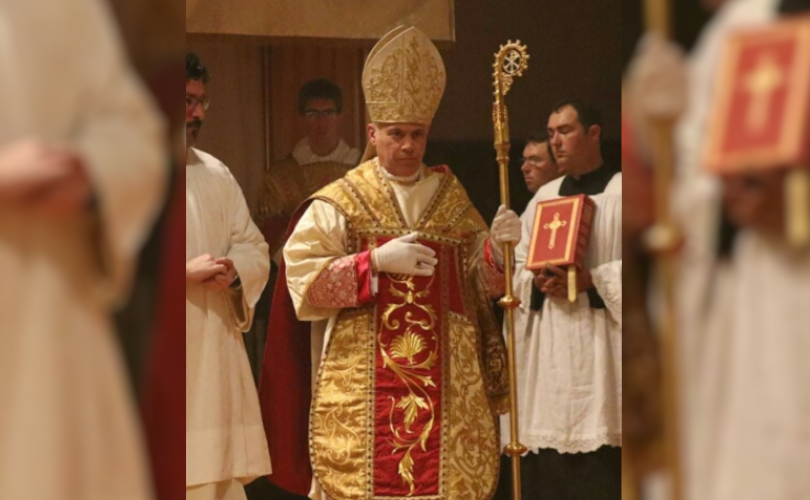
Archbishop Salvatore Cordileone is urging the Church to make room for the Traditional Latin Mass with less friction and more trust. His comments came after the Society of St. Pius X consecrated four bishops without papal approval, a move that deepened already existing tensions and put liturgical questions back in the spotlight.
Cordileone said the episode points to a “growing lack of trust that has been simmering” for years, and he argued that the answer is not more pressure. Instead, he called for sincere dialogue, a softer pastoral tone, and “easier access” to the ancient liturgy so the faithful do not feel pushed to look elsewhere for spiritual nourishment.
https://x.com/ArchCordileone/status/2075687576892244016?ref_src=twsrc%5Etfw
He also said the Church should see more reverent celebrations of the Novus Ordo Missae that draw inspiration from tradition. That part of his message matters because it shows he is not treating this as an all-or-nothing fight, but as a chance to widen the space for worship that feels rooted, serious, and spiritually alive.
Cordileone is not alone in sounding that note. Cardinal Gerhard Ludwig Müller, Archbishop Georg Gänswein, Cardinal Kurt Koch, and other churchmen have also said the Vatican should rethink its current posture toward the Latin Mass after the SSPX consecrations rattled the debate again.
Müller, in an interview published July 1, criticized the SSPX move while also saying the restrictive approach under Traditionis Custodes has not delivered real unity. He argued that an authoritarian style does not fit the Christian way and said the Church should keep dogma firm while allowing some tolerance in pastoral practice.
He pointed back to Benedict XVI’s Summorum Pontificum as a better path. In his view, that motu proprio brought peace by fully embracing the older rite and recognizing that the Church has different rites with their own forms, including the ancient one that cannot simply be banned away.
Gänswein, who now serves as apostolic nuncio to the Baltic States, took a more critical line toward SSPX in his interview, comparing the group with Protestants and lamenting that it did not respond better to Benedict’s efforts in 2009. Even so, he still acknowledged the devotion many Catholics have for the Traditional Latin Mass and said Rome should be more flexible, generous, and fatherly toward it.
He pointed to faithful Catholics and priests who celebrate the older liturgy in full communion with the pope, saying they do so “cum Petro and sub Petro”: never against the pope. That distinction is important, because it draws a line between hardline resistance and ordinary Catholics who simply want a liturgy that feels more prayerful, stable, and unmistakably Catholic.
Koch took a similar approach on a podcast for the German edition of Communio. He rejected the SSPX’s consecrations, but also said it would be self-righteous to condemn the group without asking whether the Church itself has deeper problems that the Society is exposing.
He also said Traditionis Custodes sharply cut back Pope Benedict’s effort to create liturgical unity. Koch argued that the Church still needs to think through the relationship between the two forms of the Roman Rite, especially for Catholics drawn to the traditional liturgy without buying into the whole SSPX package.
That is where the real pressure is building now. The Vatican is being asked to make a choice between tightening control or showing patience toward Catholics who want the old Mass and still remain fully inside the Church’s life.
For many believers, this is not about nostalgia or rebellion. It is about reverence, continuity, and finding a place where the liturgy feels like worship instead of a constant argument.
