
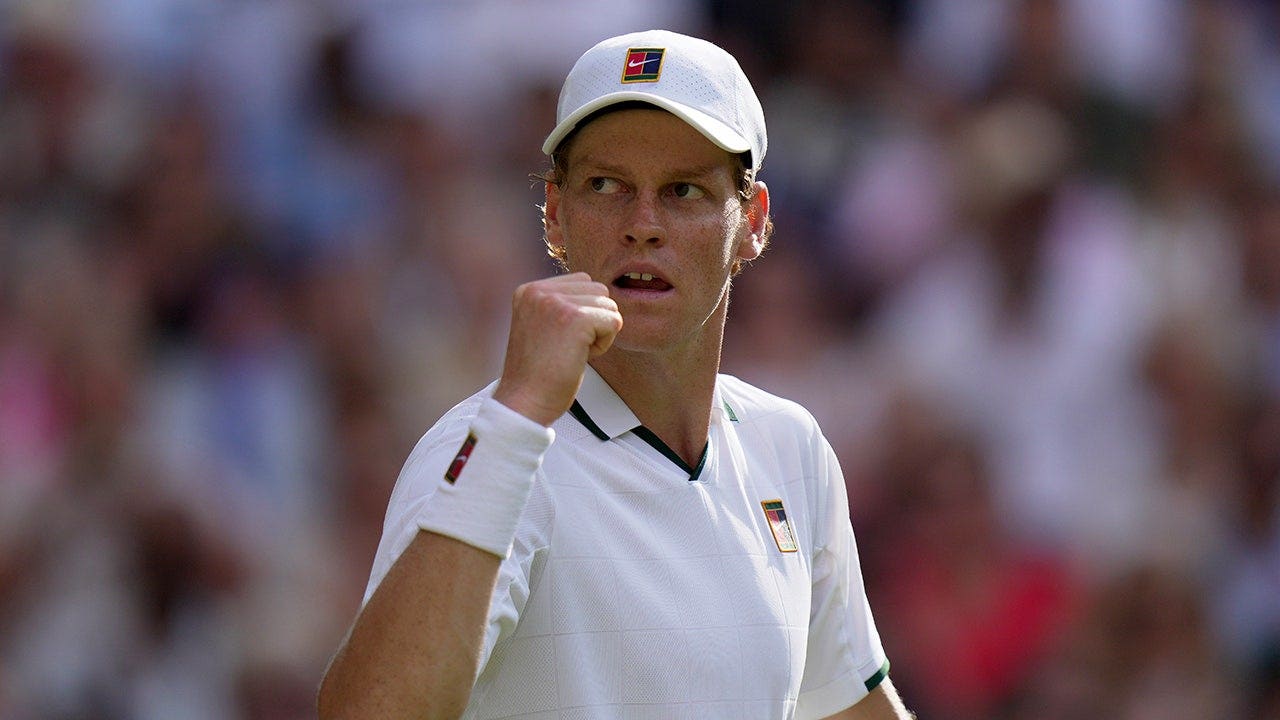
Jannik Sinner’s big Centre Court victory over Novak Djokovic set the stage for a high-stakes Wimbledon final against Alexander Zverev, a matchup that promises raw power, razor-sharp movement, and plenty of storyline weight as the grass-court fortnight heads into its last act. This piece walks through the immediate fallout, what each player brings to the final, and why Sunday feels like one of those matches people will remember.
“Jannik Sinner defeated Novak Djokovic in straight sets at Centre Court on Friday to set up a Wimbledon final against Alexander Zverev on Sunday.” The result landed like a jolt across the tournament — unexpected by some, inevitable to others — and it instantly changed the atmosphere in the grounds and the conversation among players and pundits. Centre Court felt electric as fans processed the upset and turned their attention to what comes next.
Sinner’s performance looked confident and controlled, the kind of tennis that reads as both composed and fearless. He mixed aggression with smart court positioning, cutting angles and taking the ball early when the moment demanded it. On grass that rewards boldness and takes away a margin for error, he found a way to keep Djokovic on the back foot for long stretches.
Djokovic, ever the benchmark, did not disappear from the story because of a single loss; instead he showed why even in defeat his game sets a standard. There were flashes of the familiar resilience, but tonight the balance tilted the other way and Sinner capitalized on openings. For Djokovic, these are the matches that test adjustments and the ability to reset quickly for the next swing at a title.
The marquee final against Zverev now takes on multiple layers. Zverev arrives with his own momentum and a game built around heavy serves and powerful forehands that can dominate rallies on grass. Sinner versus Zverev promises to be a contrast of Sinner’s timing and precision against Zverev’s raw power and reach, with the net and return games likely to be decisive factors.
Tactically, the key will be who can impose patterns without giving up too many short balls. Sinner has shown great capacity to step into the court and redirect pace, which could neutralize some of Zverev’s length. Zverev, meanwhile, will try to keep rallies terse and leverage his serve to prevent Sinner from settling into rhythm.
Beyond tactics, there is a storyline about momentum and legacy. For Sinner, a win Sunday would mark a huge landmark and underline a rapid rise into the sport’s upper echelons. For Zverev, adding Wimbledon would reinforce his status among the elite who have captured Grand Slam hardware, validating the promise he has long carried.
The fans and the venue matter here. Centre Court under the roof is a unique stage where every swing echoes and nerves show more easily. Crowd dynamics can tilt momentum and both players understand the importance of converting early energy into scoreboard advantage. Expect moments of tension that could flip a set in an instant.
Preparation in the next 48 hours will be crucial. Sunday is not just about physical recovery but also about mental clarity and the ability to stick to a game plan when pressure peaks. Coaches will be working on small margins and players will be fine-tuning serve patterns, return positions, and movement strategies to exploit any weakness they spotted during the semifinal.
There are few certainties in sport, but one is clear: this Wimbledon final will be watched for its high-quality tennis and for what it signals about the shifting landscape at the top of the game. Both men bring tools and temperament that can win on the grass, and the ultimate winner will be the player who combines execution with composure when the stakes are at their loudest.
