
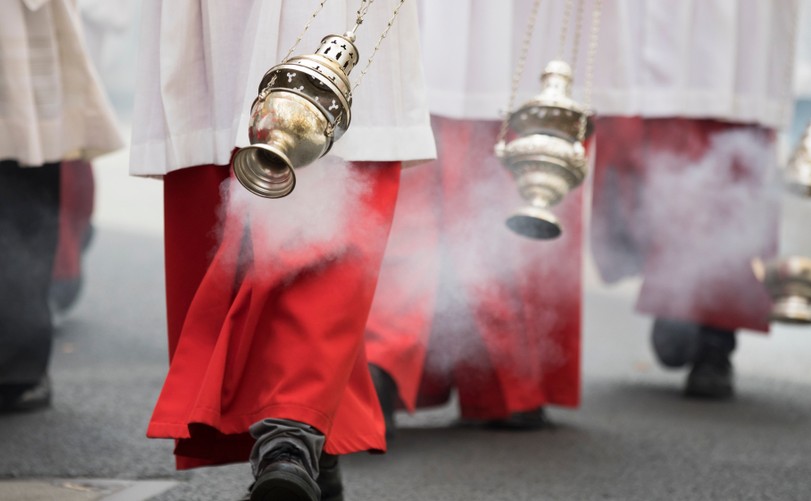
The National Eucharistic Pilgrimage began in St. Augustine, Florida and concluded on Sunday, July 5, in Philadelphia, the city where the Declaration of Independence was signed. This piece traces the pilgrimage’s purpose, the atmosphere in Philadelphia at its close, and the civic and spiritual backdrop that framed the event during a milestone anniversary.
The pilgrimage was organized as a moving expression of faith, gathering people who wanted a public witness centered on the Eucharist. Participants walked, prayed, and processed across long stretches to make a spiritual point visible to towns and cities along the route. The event emphasized communal devotion and the idea of faith traveling through public life rather than staying confined to church buildings.
Starting in Florida gave the pilgrimage a clear southern origin and a long journey toward the nation’s historical core. As the procession crossed state lines, local parishes and volunteers joined in, offering rides, meals, and places to sleep. That grassroots support turned the trip into a rolling network of hospitality and shared purpose.
Philadelphia was a fitting finish for a march that wanted to speak both religiously and civically. The city’s parks and historic plazas provided public space where the Eucharist could be honored in view of millions of Americans and visitors. The timing right after July 4 meant the pilgrimage intersected with a broader national conversation about heritage and public faith.
The closing day had a reverent but public tone, with clergy and laypeople moving through streets that usually host parades and political demonstrations. There were processional stops where short prayers and hymns broke the rhythm of traffic and commerce. The procession’s moments of silence contrasted with the city’s usual bustle and made it clear this was a deliberate, prayerful presence.
Many observers noted the symbolic resonance of honoring the Eucharist in a city tied to the nation’s founding documents. For some participants, the act linked spiritual commitments to civic life without conflating the two. It created a visible reminder that religious expression remains part of the American public square for people who choose to bring it there.
Organizers kept the pilgrimage focused on prayer, not politics, and that shaped how the gathering unfolded in public places. Volunteers coordinated with local authorities to secure permits and plan routes so the processions remained orderly and respectful. That cooperation minimized disruption and underscored that public worship can coexist with ordinary urban life when handled thoughtfully.
Local parishes in and around Philadelphia welcomed pilgrims with hospitality that highlighted community ties. Simple acts like shared meals, folding chairs, and quiet hospitality made the final day feel intimate despite large numbers. Those grassroots gestures were as central to the experience as the formal liturgies.
For many participants, the pilgrimage was a chance to pray together for personal intentions, for families, and for communities. The communal nature of Eucharistic devotion made the event more than a march; it was a moving parish, a temporary local church on the road. That sense of shared spiritual purpose drove people to join from near and far.
Photographs and eyewitness accounts described quiet, focused faces, steady rhythms of prayer, and a mix of young families and older devotees. The diversity of attendees showed that public expressions of faith still draw across generations. Observers also noted respectful curiosity from passersby unfamiliar with the rituals on display.
Practical logistics mattered: marshals guided the route, medical volunteers stood ready, and organizers scheduled rest stops. Those details kept momentum going and allowed the spiritual focus to remain intact. The planning also reflected how sustained public religious events require careful civil cooperation.
The pilgrimage arrived in Philadelphia amid the wider celebrations marking the nation’s 250th anniversary, adding layers of meaning for participants and observers alike. The timing linked a spiritual journey to a moment when many Americans were reflecting on national identity. That overlap produced conversations about the roles faith and civic memory play in public life.
Local leaders from a range of civic and religious institutions noticed the peaceful, orderly nature of the procession. City officials who encountered organizers praised the teamwork and thoughtfulness behind the event. Those interactions reinforced a practical model for how faith-based demonstrations can be integrated into public celebrations.
As the final procession wound through streets near historical landmarks, the atmosphere blended reverence with the ordinary sounds of the city. Cars passed, cyclists rode by, and residents watched from stoops and benches while the pilgrims moved along. That juxtaposition of sacred ritual and urban life underscored the pilgrimage’s central idea: faith moving through the world, not apart from it.
The National Eucharistic Pilgrimage’s end in Philadelphia left many participants grateful for the shared experience and the chance to witness publicly. People dispersed to their homes and parishes, carrying memories of the journey and the sense of connection forged along the way. The event showed how coordinated, peaceful public devotion can find a place in the civic rhythms of a modern city.
