
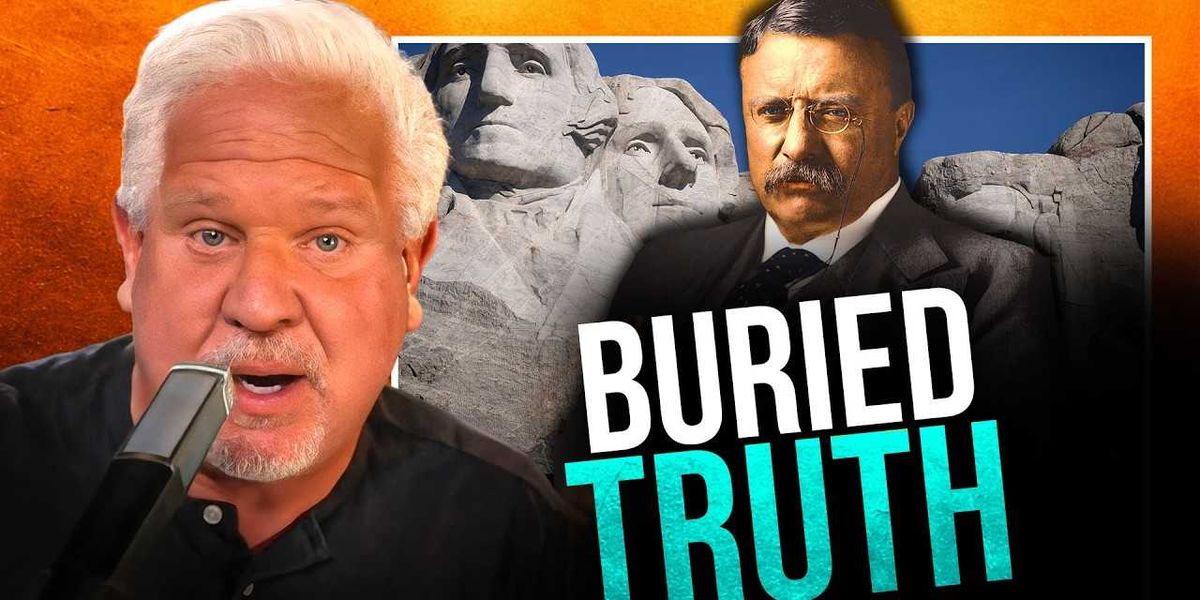
President Trump marked his 80th birthday and America’s 250th with a one-of-a-kind celebration on the South Lawn, pairing spectacle with a nod to a very American idea of toughness. The event brought together top-level fighters and a reminder that presidential life has long mixed politics with displays of personal grit. That theme led straight into a conversation about Teddy Roosevelt — his complicated legacy, his conservation work, and the rough-hewn upbringing that made him an icon. A video clip of the full discussion sits in the piece for anyone who wants the full story.
On June 14, President Trump hosted UFC Freedom 250 on the White House South Lawn for his 80th birthday and America’s 250th anniversary, staging seven fierce fights that showcased athleticism and American spirit. It was a vivid, unapologetic public display of strength, meant to celebrate both an individual milestone and a national one. The crowd and the pageantry fit a long American tradition of presidents turning the White House into a stage for big moments.
That tradition goes back. Teddy Roosevelt used the presidential home as a training ground, sparring and boxing with aides, guests, and professional fighters as part of his “strenuous life” philosophy. He pushed physical and mental toughness not only for himself but for his children, encouraging outdoor adventures and hard work. Roosevelt saw character as something forged by trial, not comfort.
Glenn Beck recalls one vivid parenting moment from Roosevelt: “He would just take [his young children] out in the middle of the forest and say, ‘Find your way home,”’ which captures how hands-on and demanding his approach could be. That anecdote landed with Brad Meltzer, the author known for introducing kids to big American figures in an accessible way. The clip below sits right where the conversation turns from anecdote to analysis.
Out of all the American figures he’s written about over the years, Teddy Roosevelt, Meltzer says, is “the most complicated.” That complexity is the whole point of the recent children’s book that leans into Roosevelt’s more admirable features. It’s an attempt to give kids a hero without papering over the harder bits.
Meltzer points to lessons taught early by Roosevelt’s father: “His father says, ‘When you have money and you have power, that doesn’t make you fantastic or strong or terrific. What it does is it gives you a responsibility — a responsibility to help other people,”’ a guiding principle that shaped Teddy’s public life. That sense of duty, Meltzer argues, extended especially to orphans and the working poor. It was a moral backbone that pushed Roosevelt into public service and reform.
That moral impulse met a deep commitment to conservation, and the numbers testify to it: Roosevelt established five national parks, 150 national forests, 51 federal bird reserves, four national game preserves, and protected roughly 230 million acres of public land during his presidency. Those moves reshaped how America thinks about public resources and natural heritage. For many, that achievement alone cements his legacy.
Still, admiration sits alongside tough critiques. Glenn is frank about the parts of Roosevelt that make modern readers uneasy: “He was a big eugenist guy,” he says, calling out ideas Roosevelt promoted about selective breeding and social hierarchy. Meltzer agrees this belief is deeply problematic even while he admires other aspects of Roosevelt’s life. The nuance matters, especially in teaching kids who should be inspired without idolizing every belief.
Meltzer pulls no punches about Teddy’s early vulnerability: “I think today Teddy Roosevelt is sometimes held out as being that strong guy, the macho guy … but that’s not who he is when he’s growing up. He’s actually sick a lot. He’s smaller than everyone else. He gets picked on,” he says, sketching the contrast between the boy and the man. “He had mice and spiders he used to keep in his room. He was a weird kid,” he adds, painting a portrait that’s human, odd, and relatable.
Tragedy hit hard and fast: “His father dies and then soon after his mother and his wife die on the same day, Glenn, on Valentine’s Day,” says Meltzer, a sequence that rewired his life and set him on a very different path. He retreated west to a ranch in North Dakota, where nature and solitude became a classroom. That period of grief and reflection turned into a practical education in resilience.
Meltzer describes how the ranch reshaped Roosevelt: “He moves to their ranch out in North Dakota, and … he just sits under the stars, and he listens to the wolves. … And if being out in nature teaches him anything, it’s that success doesn’t come from having natural gifts; it comes from how hard you work those gifts,” he continues, “and that’s where he falls in love and starts protecting the outdoors.” That conversion to conservation was both personal and political.
One early speech captures the feel of the man: “Like all Americans, I like big things; big prairies, big forests and mountains, big wheat fields, railroads — and herds of cattle too; big factories, steamboats, and everything else. But we must keep steadily in mind that no people were ever yet benefited by riches if their prosperity corrupted their virtue.” Those lines show a patriot who loved scale but feared the cost of softening national character.
And then there’s the Bull Moose legend. Glenn’s favorite Roosevelt story centers on the time he was shot in the chest and still delivered a long speech, famously declaring, “It takes more than that to kill a Bull Moose!” “Where does [that kind of strength] come from?” exclaims Glenn. “He is complicated,” Meltzer emphasizes, “but he has these hero moments that you’re like, ‘Oh my goodness.”’
To hear more, watch the video above.
