
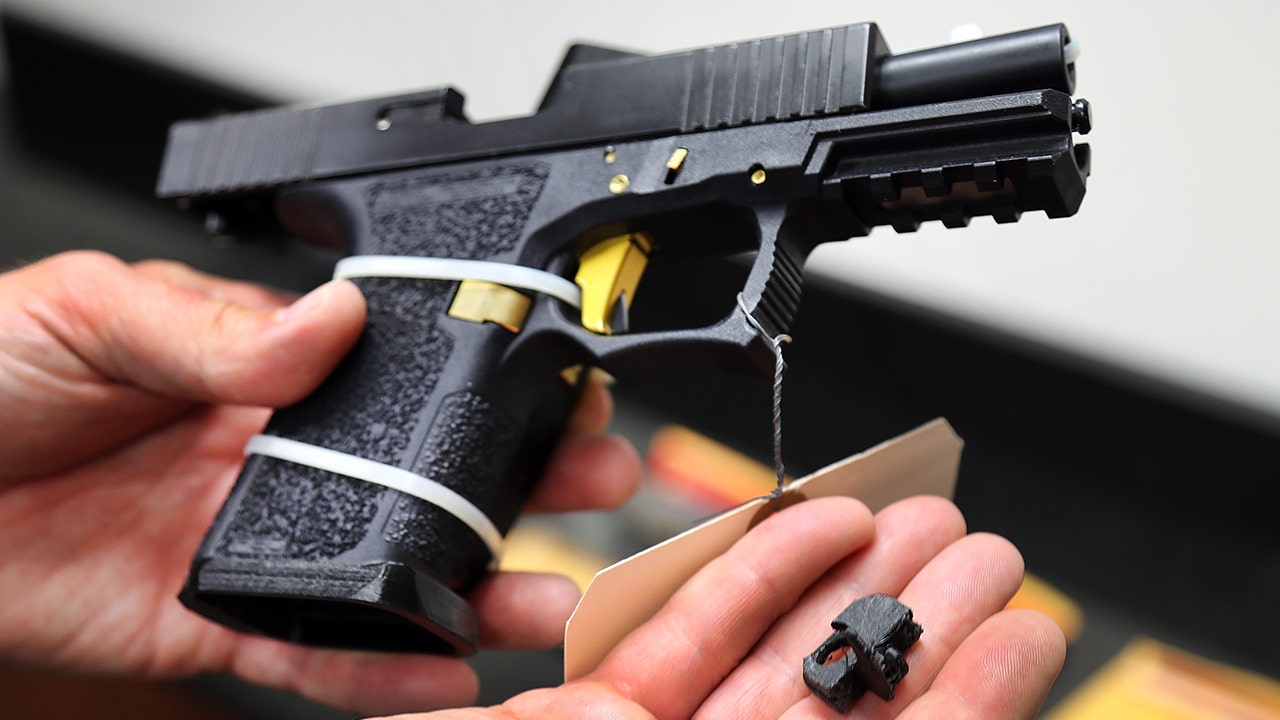
This article explains how California-style bans on Glock and Glock-style handguns have spread to Maryland, Connecticut, and New York, why those laws threaten law-abiding owners and small businesses, the weak logic behind the “DIY machine gun” label, the legal fights already underway, and what gun owners should do next to protect their rights.
Three Democratic-led states moved quickly to follow California’s lead and target the most common handguns Americans own. Maryland, Connecticut, and New York all approved measures this week that strip broad categories of widely used pistols from the legal market. The similarity and speed of these laws should worry responsible gun owners everywhere.
Maryland’s new statute uses the phrase “machine gun convertible” to reach a large swath of Glock and Glock-style pistols, effectively pushing millions of lawfully owned firearms into a gray area. Connecticut adopted nearly identical language, banning future manufacture, sale, and importation of the same popular models while adding restrictions on unfinished frames and receivers. New York went even further by classifying transfers of a “convertible pistol” as a Class D felony.
The National Rifle Association has already filed suit over the Maryland law and is building on litigation it began in California last year. Additional challenges are being weighed in other states where similar bans are taking root. Courts will be the battleground for these sweeping, precedent-shifting restrictions.
These moves are framed as public safety measures, but the practical effect is to take aim at lawful owners rather than criminals. Politicians know full well that converting a semiautomatic pistol into a fully automatic weapon is already a heavy federal crime. The new state bans instead remove options from everyday citizens who use these firearms for defense, sport, and work.
DOJ SUES DENVER OVER BAN ON ‘ASSAULT WEAPONS’ AS CITY’S DEM MAYOR SAYS IT ‘WILL NOT BE BULLIED’ This headline captures the wider debate over local and state efforts to outlaw certain firearms categories. Legal conflicts between federal, state, and local approaches are multiplying and complicating enforcement on the ground.
The public pitch calls these laws a response to “DIY machine guns,” but that label does not hold up to basic legal facts. Federal law already forbids conversion to full auto and makes the manufacture, sale, and possession of conversion devices a crime, and more than half the states have criminalized those devices as well. If the conversion is illegal in multiple ways, the question becomes why conversions still show up in criminal cases.
The honest answer is enforcement, not gadget labeling. Law enforcement could focus more resources on stopping actual criminals who seek illegal conversions, yet the political conversation keeps drifting toward restricting lawful ownership instead. Activists and lawmakers are choosing broad prohibitions over targeted policing, and law-abiding citizens pay the price.
FLORIDA COURT SAYS 18-YEAR-OLDS HAVE SAME GUN RIGHTS AS OTHER ADULTS That ruling underscores how courts are increasingly at the center of Second Amendment disputes. When legislatures push novel classifications of common arms instead of clear, enforceable criminal statutes, judges are left to sort policy from constitution.
The firearms being targeted are not specialized contraptions. They are the most popular handguns in America, prized for their durability, affordability, and range of sizes and calibers. Those traits make them practical for police officers, range shooters, and first-time buyers alike, including women who prefer subcompact and slimline models for comfort and concealability.
Small gun shops and independent retailers will feel the economic sting first. When best-selling brands are pulled from shelves, margins evaporate in an industry that runs on tight profits. Combine these bans with preexisting restrictions labeled as “assault weapon” bans, and you’re looking at a real threat to the survival of many local businesses.
NRA SUES CALIFORNIA OVER BAN ON GLOCK-STYLE FIREARMS: ‘VIOLATES THE SECOND AMENDMENT’ That lawsuit emphasizes the constitutional stakes at play and signals more litigation to come. If courts apply the current Supreme Court standards consistently, sweeping bans that redefine common arms will face serious hurdles.
Recent Supreme Court precedent, including New York State Rifle & Pistol Association v. Bruen, demands that firearm regulations align with the nation’s historical tradition of gun ownership. Redefining everyday handguns out of existence does not square with that approach. These legal fights will test whether states can sidestep longstanding protections by relabeling popular firearms as a novel threat.
Gun owners cannot rely solely on the courts to fix this. Lawful owners must speak up to elected officials, support retailers and ranges in their communities, and vote for leaders who respect the Constitution. Staying organized and politically active is the surest way to keep common firearms available to responsible Americans for self-defense and sport.
