
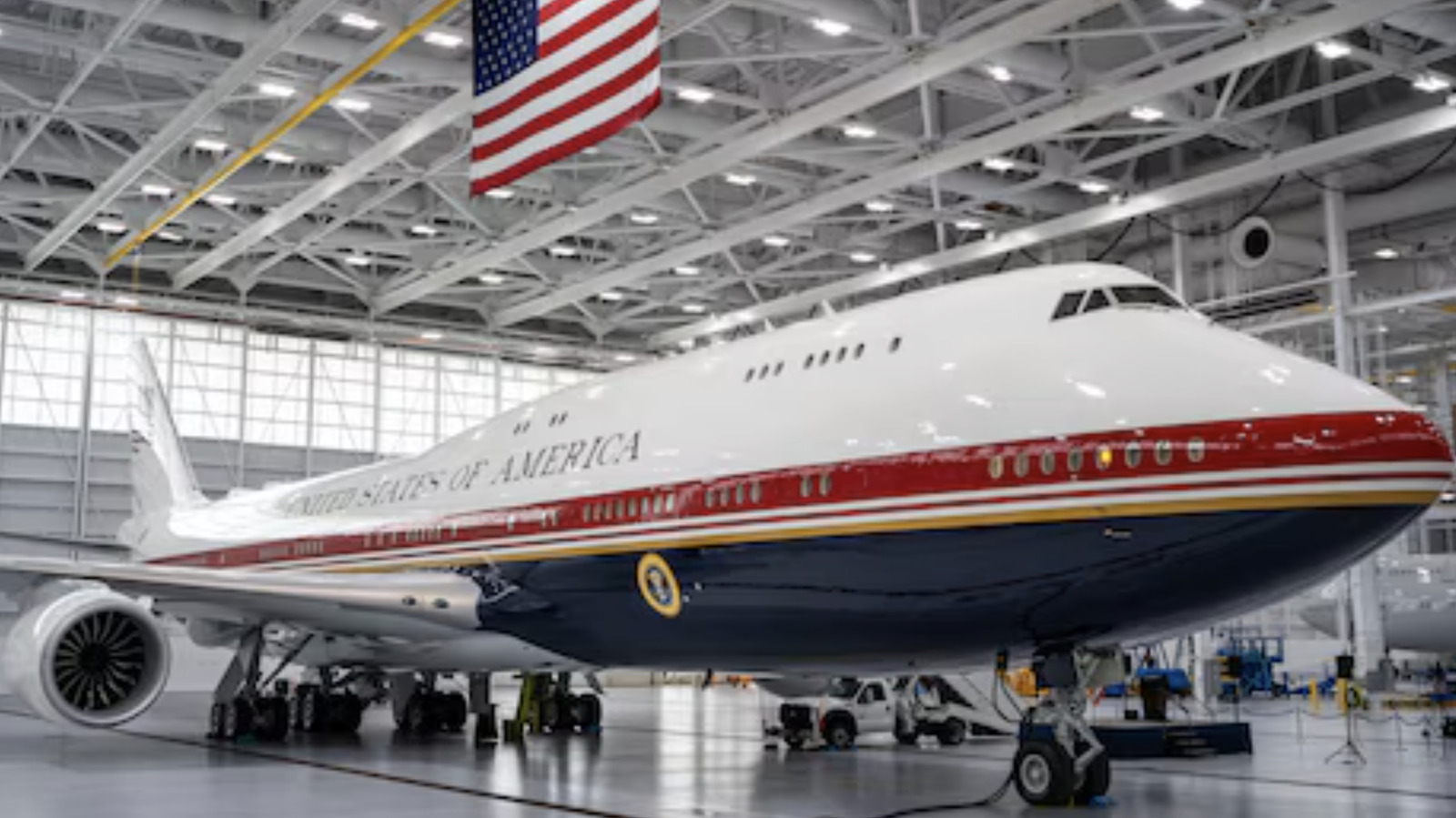
The newest iteration of Air Force One has been unveiled: a jet donated by Qatar that will serve as a stopgap presidential aircraft. It’s a temporary arrangement, and the reveal raises practical and political questions about security, optics, and how the fleet is managed going forward.
Officials presented the donated plane as a practical fix to a gap in presidential airlift capacity. It is being described as a temporary asset while longer-term solutions are finalized, which means it will carry the trappings and protocols expected for presidential travel but not the permanent brand of the long-term fleet.
From a technical perspective, adapting a donated aircraft for presidential use is not as simple as swapping out the flag. The plane needs secure communications, defensive systems, and redundancies that meet strict military and intelligence standards, and those upgrades take time and money to install and test.
There are obvious optics to consider. A foreign-donated jet flying the president around the globe will draw scrutiny about independence and logistical choices, even if the aircraft is fully owned and operated by U.S. teams while in use. The choice highlights how pragmatic needs sometimes collide with public perception and national pride.
On the diplomatic side, the donation reflects a specific relationship with Qatar and underscores the role of allies in supporting U.S. capabilities. Accepting help for a sensitive mission platform is a practical nod to existing partnerships, but it also means managing expectations and ensuring that control and sovereignty remain firmly American.
Cost factors are part of the conversation. Converting an off-the-shelf or donated jet into a presidential transport involves significant investment in security, maintenance, and crew training. That reality makes the arrangement sensible as a short-term fix, though it also prompts questions about how quickly a permanent replacement can be funded and delivered.
Security teams will treat the plane like any other presidential asset because the stakes are the same no matter who provided the airframe. Rigorous testing, classified upgrades, and specialized crews will be involved as part of the certification process, and those steps will determine how soon the aircraft can enter official service.
For the public, details matter. Officials will need to be transparent about timelines, capabilities, and oversight while avoiding unnecessary operational disclosures. The temporary nature of the arrangement gives room to work through logistics without making it the new normal, but it also sets a clock for delivering a permanent solution.
