
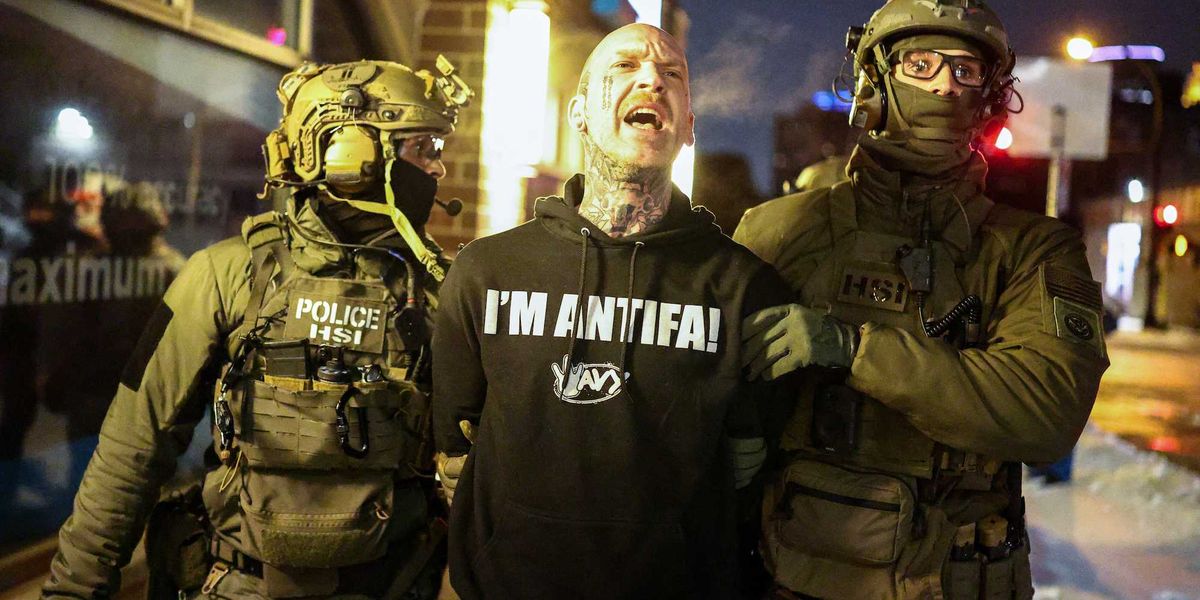
The Justice Department unsealed an indictment charging 15 people tied to Direct Action Minnesota with conspiring to impede or injure federal officers and other crimes related to violent opposition of immigration enforcement, while authorities and federal agencies push back hard against activists and media narratives that downplay the attacks on law enforcement.
Federal prosecutors say Direct Action Minnesota targeted ICE operations in Minneapolis with tactics meant to block and intimidate agents. Officials described training in shield use, surveillance, operational planning, and rapid mobilization against enforcement actions, arguing the actions crossed legal lines into violent obstruction. That portrayal set the stage for charges ranging from conspiracy to assault on federal officers.
In a briefing, U.S. Attorney Daniel Rosen said the group had “violently” opposed immigration law enforcement and detailed the alleged campaign against federal personnel. He identified a Direct Action Minnesota subgroup called the Black Cat Workers Collective, which he accused of utilizing, advocating, and promoting ‘militant tactics and violence.’ “Today, a federal indictment was unsealed charging 15 defendants with conspiracy to impede or injure federal officers and other charges related to efforts of two Minneapolis-based Antifa groups that violently opposed the enforcement of federal law in our state,” Rosen .
Several of the defendants face a slate of serious accusations beyond conspiracy, including making interstate threats, interstate stalking, and destruction of government property. Prosecutors also name alleged assaults on federal officers and solicitation to commit violent crimes, painting a picture of deliberate aggression. Those alleged acts, if proven, go well beyond lawful protest and become federal crimes.
Investigators say some members infiltrated peaceful demonstrations at the Whipple ICE facility and staged blockades that shut down federal operations on multiple occasions. Video evidence submitted to prosecutors is said to show explicit threats and heated rhetoric directed at agents. One of the figures tied to that footage is 37-year-old Kyle Wagner, whose online statements became part of the case against him.
https://x.com/DHSgov/status/2066924197285400654
The evidence reportedly includes messages in which Wagner wrote, “We want to know who they are. We will identify every single one of them and we will prosecute them to the fullest extent of the law. If it has to be done at the barrel of a gun, then let us have a little f**king fun,” and he also declared, “This is where ICE has come to die.” Those words, displayed in charges and media reporting, underline how rhetoric can cross into threats when paired with action. During his arrest footage, Wagner wore a shirt that read, “I AM ANTIFA.”
Only 12 of the 15 indicted are currently in custody while three remain at large and are being sought by authorities. Prosecutors emphasize that identifying and charging those responsible is essential to upholding the rule of law and protecting federal officers. From a law-and-order perspective, these are not cases to be treated lightly or shrugged off as routine protest behavior.
Federal agencies publicly pushed back against softer media framing that suggested the charges were merely about opposing immigration enforcement. The Department of Homeland Security warned that the defendants were not charged for protesting immigration policy but for violently obstructing and assaulting agents and destroying property. “These violent rioters weren’t charged for ‘opposing immigration enforcement’ — they were charged because they violently obstructed and assaulted law enforcement agents and destroyed government property. Why is the media excusing violence?” the agency Tuesday on social media.
Outside the courthouse, supporters of the defendants staged demonstrations and tried to press their case in public, with reports of activists attempting to enter the courthouse and demanding dropped charges. Authorities say some protesters refused to close courthouse doors and chanted at the building, actions that added tension to an already volatile scene. There are accounts of law enforcement using crowd-control measures against gatherings that tried to block court access.
The legal process now takes center stage as the federal system sorts accusations of organized obstruction and threats against agents from lawful dissent. For Republicans and others who prioritize public safety, the indictments are a necessary step to reassert that violent tactics against law enforcement will meet full prosecution. The case will test how courts balance protest rights with accountability when actions cross into criminal conspiracy and targeted threats.
As the defendants move through the judicial system, the broader debate will keep returning to whether media and activists accurately distinguish peaceful protest from coordinated, violent obstruction. That split matters because public tolerance for street-level attacks on federal officers is low across the political spectrum when words and actions combine into a campaign of intimidation. The outcome of these prosecutions will reverberate beyond Minneapolis and influence how similar confrontations are handled nationwide.
