
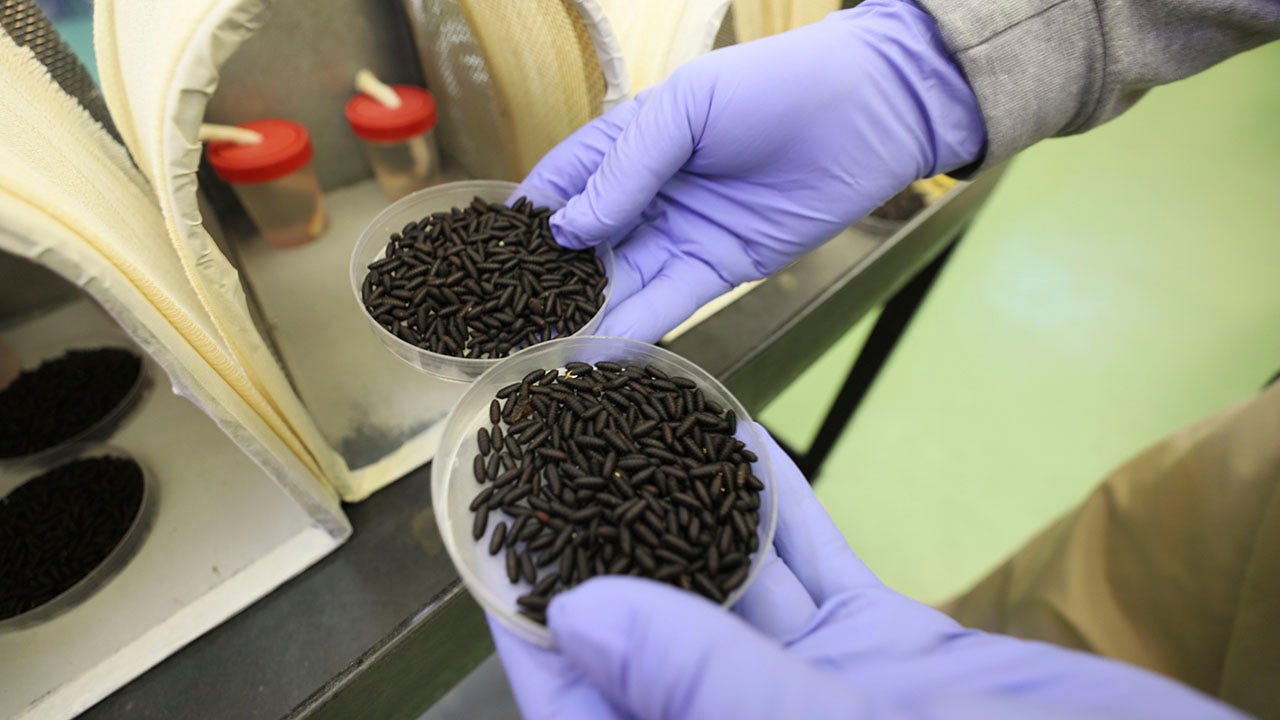
The New World screwworm has crept back into North America and it is exposing a sharp national security fault line between illegal migration, cartel power, and our food supply. Texas ranchers are seeing the first consequences on the ground while policymakers argue over how trade and border policy became the weak link. This piece lays out how porous corridors, cartel-run smuggling, and political choices in Mexico and Washington combined to bring a biological threat to our doorstep.
The outbreak did not arrive by accident. The biological containment barrier through Central America fractured in 2021 when mass movements through the Darién Gap overwhelmed borders and expanded cartel-controlled corridors. Those same corridors later carried infested livestock northward and let a parasite ride straight toward U.S. farms.
Mexican cartels have turned smuggling into business as usual, and parts of the Mexican state have been unable or unwilling to stop them. Estimates put the annual movement at roughly 800,000 head of cattle from Central America into Mexico, with fake ear tags and false veterinary records used to slip animals past checks and taxes. The illicit trade is worth about $320 million a year, and once animals enter Mexico they are laundered into legitimate supply chains that feed domestic and export slaughter plants.
US SHUTS SOUTHERN BORDER TO LIVESTOCK IMPORTS TO STOP SPREAD OF DEADLY FLIES
By the time Mexico confirmed cases in November 2024, New World screwworm had already spread across Central America and deep into southern Mexico. As of June 3, the New World screwworm has caused more than 171,700 cumulative animal cases and more than 2,070 human cases across Mexico and Central. Those official counts almost certainly understate the true scale because many infestations go unreported.
The trade picture makes this biological threat a national security problem. In 2024 Mexico exported roughly 1.25 million head of live cattle to the United States at an estimated value of $1.3 billion. After restrictions on live cattle, Mexico ramped up processed beef exports, with shipments up 23 percent in the first four months of 2026 as animals that would have moved live were finished at home.
Federal guidance already recognizes food and agriculture as critical infrastructure, meaning disruptions would have crippling effects on public safety and the economy. The USDA warns that “this vital sector is a known target for terrorists and malicious actors.” Secretary of Agriculture Brooke Rollins has said it plainly: “Food security is national security. If America cannot feed itself, it cannot fully defend itself — and that reality puts at risk the freedom and security that generations of Americans have fought and died to preserve over the last 250 years.”
Mexico’s political posture matters here. AMLO’s abrazos, no balazos approach gave cartels political breathing room and turned enforcement into an uphill fight. Newer diplomatic language like “cooperación sin subordinación” offers selective cooperation while keeping cartel-controlled routes open, and that selective engagement is what allowed the risk to migrate north.
Dependence on imports makes the United States vulnerable. U.S. cattle inventory sits at the smallest national herd since 1951 while beef imports are at record levels. In 2025 the United States exported $30.6 billion in agricultural goods to Mexico but imported $43.9 billion, creating a $13.3 billion agricultural trade deficit that deepens reliance on supply chains vulnerable to infiltration and sabotage.
Secretary Rollins put it again in stark terms: “Our beef cattle, our citrus, so much of this we’re now importing from other countries like Mexico. If we can’t feed ourselves, this is a national security issue that has to be solved.” Those are not academic words. They are a warning about the costs of offshoring critical food production while criminal networks control transit routes.
Texas counties are on the frontline and our response needs to match the threat. Trade cannot be treated separately from security when cartels and complicit actors can ship high-risk biological material through porous corridors. Unless we harden those routes and insist on real enforcement, no quarantine or protocol will make the problem go away.
