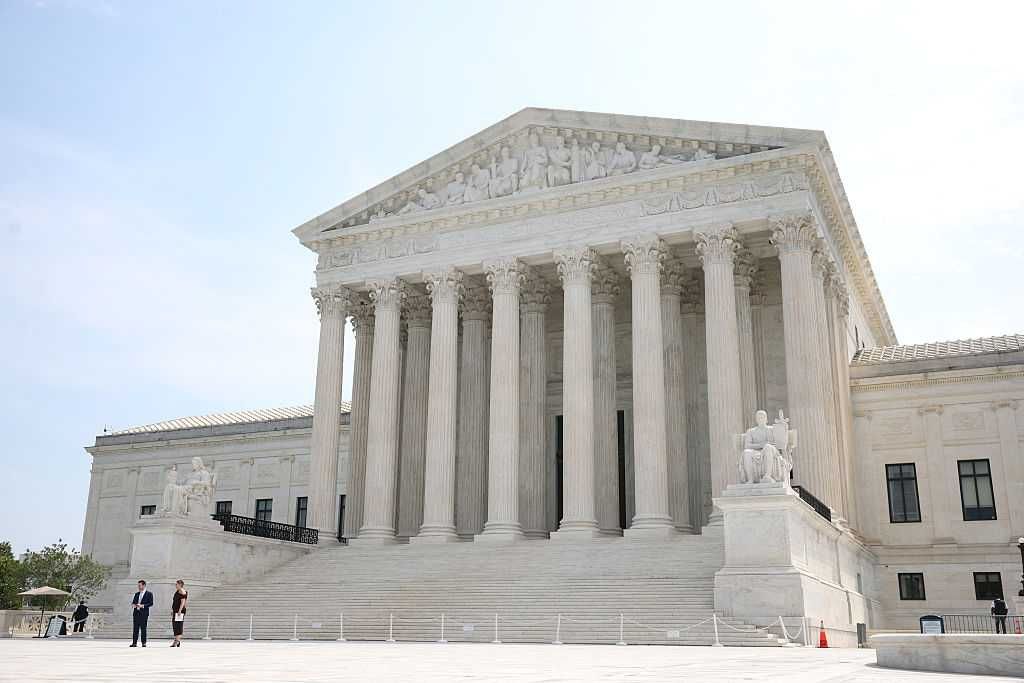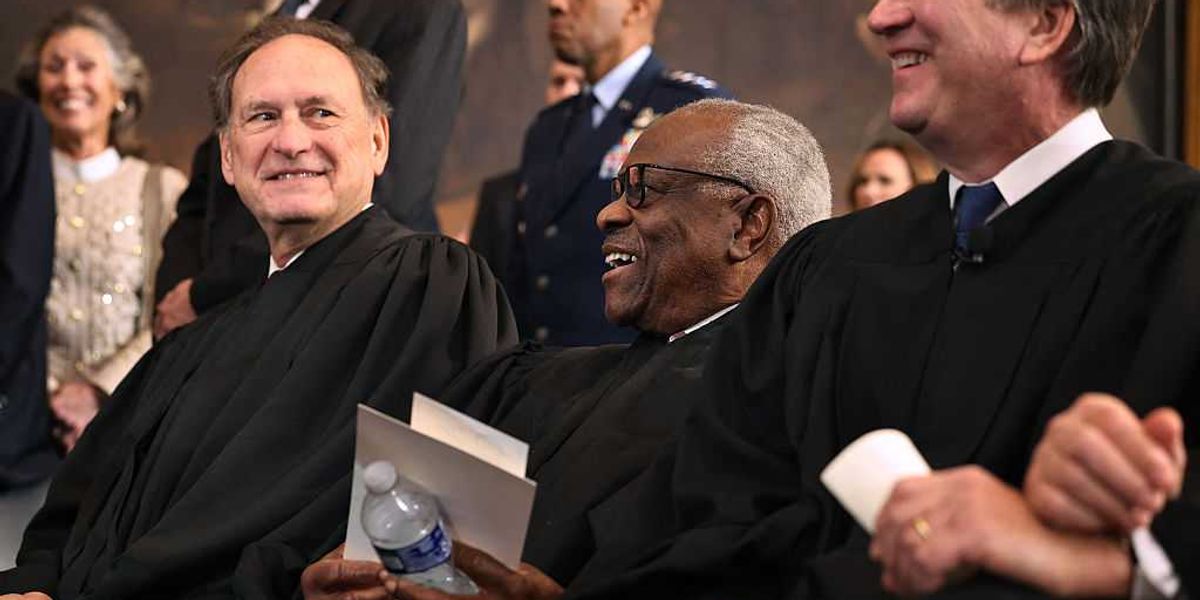
The Supreme Court has agreed to consider a dispute over whether the government can hold certain criminal noncitizens without a bond hearing, a fight sparked by a 2024 appellate ruling and now raised by the Trump administration. Two men who faced lengthy detention under 8 U.S.C. §1226(c) are at the center of the case after a panel of appellate judges found extended detention without a bond hearing may violate due process. The high court’s decision to take the case sets up a clash over constitutional protections, statutory text, and how long detention can last before a hearing is required.
The litigation focuses on two men who are lawful permanent residents with criminal convictions and lengthy detentions. Carol Williams Black, a Jamaican who entered the United States in 1983 and later became a permanent resident, was taken into custody in 2019 after an ICE determination tied to a sexual abuse and child endangerment conviction. Keisy G.M., a Dominican man who entered in 2011 and lived in New York after obtaining residency, pled guilty in 2015 to second-degree assault and was detained by ICE in 2020. Both men challenged their long detentions without bond hearings as violations of due process, arguing the lengths of their custody were unreasonable.
The case reached a divided appeals court where two Obama-appointed judges, Denny Chin and Susan Carney, concluded in 2024 that “the constitutional guarantee of due process precludes a noncitizen’s unreasonably prolonged detention under [8 U.S.C. § 1226(c)] without a bond hearing.” That decision broke with other circuits and immediately drew attention for its potential impact on immigration enforcement. The judges weighed statutory language against constitutional protections and concluded that there are circumstances where prolonged detention triggers the need for a hearing.
The Justice Department pushed back and asked the Supreme Court this year to resolve whether the appeals court erred in reading due process to require bond hearings for detainees held under Section 1226(c). The government also asked the justices to decide whether there is a point at which detention becomes “unreasonably prolonged” and what standard should govern that determination. The petition framed the dispute as both statutory interpretation and constitutional law, arguing the court should provide a clear rule for immigration authorities and lower courts.
In its petition the government argued forcefully that bond hearings are not required where detention relates reasonably to legitimate immigration objectives. “Section 1226(c) detainees have no procedural-due-process right to a bond hearing on matters that are ‘not material’ to the ‘statutory scheme,'” the filing stated. “And where, as here, detention bears a reasonable relation to legitimate immigration purposes — such as ‘preventing deportable criminal aliens from fleeing’ or ‘continu[ing] to engage in crime’ while their removal proceedings are pending … — Section 1226(c) detainees have no substantive-due-process right to a bond hearing either.” That language pushes back on the idea that indefinite custody should automatically trigger a judicial hearing.
The government also highlighted a split among the federal appeals courts, saying clarity from the Supreme Court is necessary because circuits disagree on whether and when Section 1226(c) detention becomes constitutionally problematic. Lower courts have taken different approaches to the threshold for “unreasonable” detention and to which party carries the burden of proof for continued custody. The Justice Department framed the case as one that affects the efficiency and predictability of immigration enforcement nationwide.
The American Civil Liberties Union, representing the two men, urged the Supreme Court not to take the case and described the administration’s position as excessive. The ACLU called the government’s theory “an extreme theory” and characterized the split among courts as a “shallow split” while also saying the specific cases were poor vehicles because one man has left the country and the other was released from custody. Those procedural arguments did not dissuade the justices from agreeing to hear the question.
Cecillia Wang, an ACLU lawyer who represents both criminal foreigners, said in a statement obtained by Reuters, “The court of appeals got it right, and we will defend our fundamental due process principles at the Supreme Court.” “The Constitution protects all of us, regardless of immigration status, from being locked away without due process,” Wang continued. “[U.S. Immigration and Customs Enforcement] cannot detain immigrants — separating families and cutting people off from their communities — for months or even years on end without a bond hearing.”
The Supreme Court formally agreed to review the dispute but could still dismiss the case if it is deemed moot. If the justices decide to rule on the merits, their decision will likely set a significant precedent on how long the government may detain noncitizens with criminal convictions before a bond hearing is constitutionally required. Oral arguments are expected in the next term, and the ruling could reshape how immigration detention and bond hearings are managed across the country.