
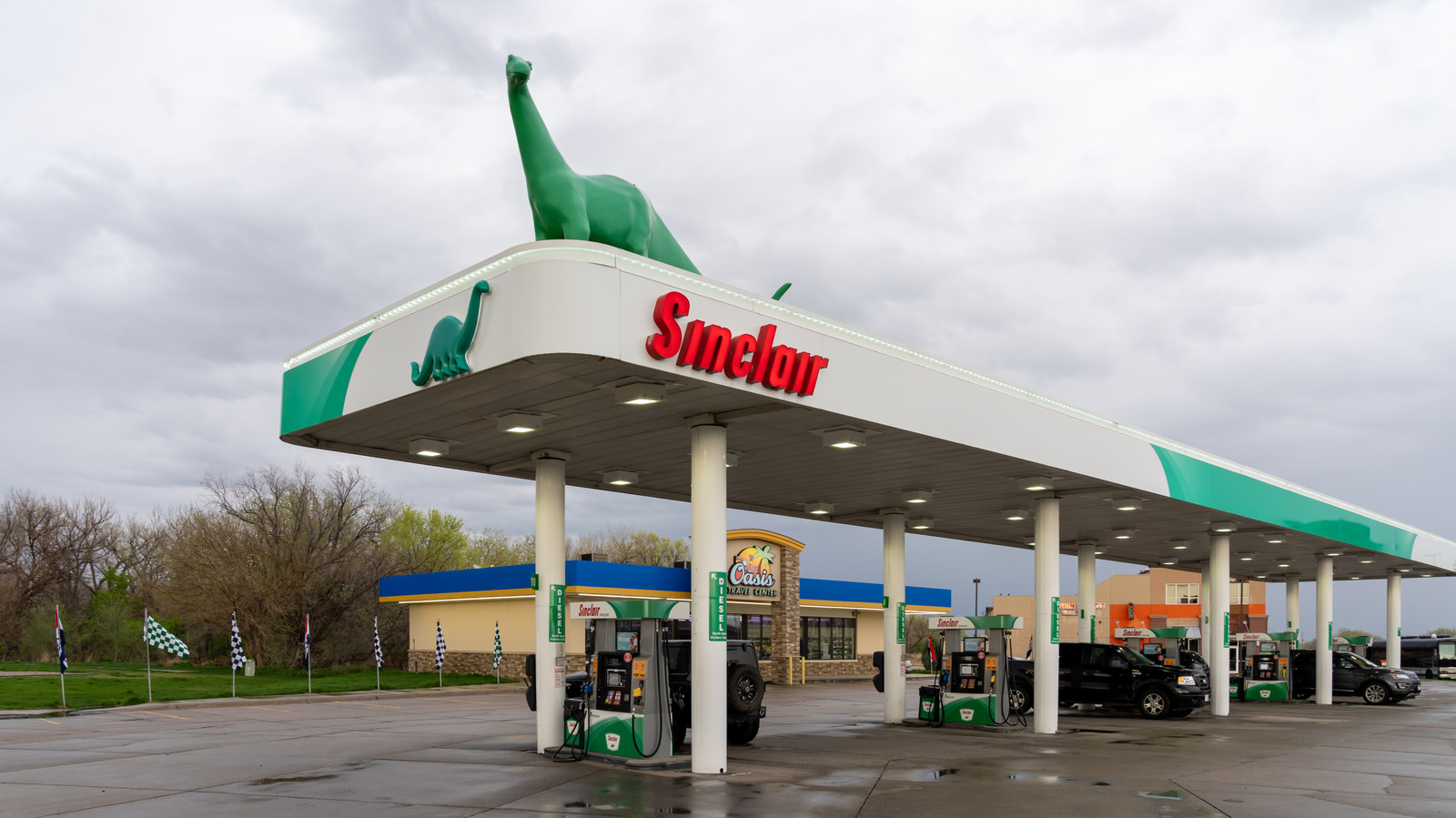
Sinclair’s bright green dinosaur is everywhere you drive: more than 1,600 Sinclair-branded gas stations carry that DINO mascot. This piece digs into who actually owns Sinclair and how the brand shows up at gas pumps across the country, explaining the difference between the private company behind the logo and the many independent operators that sell Sinclair-branded fuel.
Sinclair is not a publicly traded oil giant you can buy stock in on the open market. The company behind the brand operates as a privately held business, which keeps its financials and internal ownership structure out of the typical investor spotlight. That private setup lets the company move quietly on deals and branding choices without the quarterly pressure public firms face.
The brand itself has deep roots: the Sinclair name and the green dinosaur date back nearly a century and have become shorthand for a certain old-school petrol identity. Over the decades the company grew from exploration and refining into a consumer-facing network of service stations and lubricant products. That history is why the DINO still works as a marketing tool; it taps nostalgia while keeping a clear, recognizable presence on highways and in small towns.
Crucially, the Sinclair logo on a pump doesn’t always mean the station is owned by Sinclair Oil Corporation. Most Sinclair-branded stations are operated by independent dealers or local business owners who buy fuel and branding from Sinclair or participate in supply agreements. Those local owners run day-to-day operations, hire staff, set in-store prices and handle maintenance, while the corporate brand supplies the fuel, signage and sometimes promotional programs.
The relationship between the corporate brand and individual sites is similar to many national gasoline brands: a mix of company-operated outlets and franchised or dealer-operated locations. For drivers that means the quality and services at one Sinclair station can differ from the next, even though the logo and fuel grades look the same. If you’re comparing prices or expecting uniform services, it’s useful to remember that the brand is shared across a patchwork of independently run businesses.
Even under private ownership, Sinclair has kept an eye on brand consistency and distribution reach. The company still operates in refining, distribution and a handful of corporate retail locations, which gives it control over supply and the ability to back the brand with marketing and product standards. That vertical control helps keep Sinclair-branded fuel moving into regional markets and onto the forecourts of local operators.
For consumers curious about a specific station’s ties, the practical fact is that ownership at the pump usually rests with the station operator, not the brand. The Sinclair name signals where the fuel comes from and what brand standards might apply, but the proprietor on-site is the person you deal with for service, complaints or loyalty perks. That split between brand and operator is why two Sinclair stations in the same city can feel very different.
So who owns Sinclair today? At the brand level, a private company controls the Sinclair name and its supply chain, while the network on the ground is mostly a collection of independent owners and dealers working under Sinclair’s banners. That combination keeps the DINO visible across the map without making every station a corporate outpost, and it explains why the familiar dinosaur remains a common sight at pumps across the country.
