
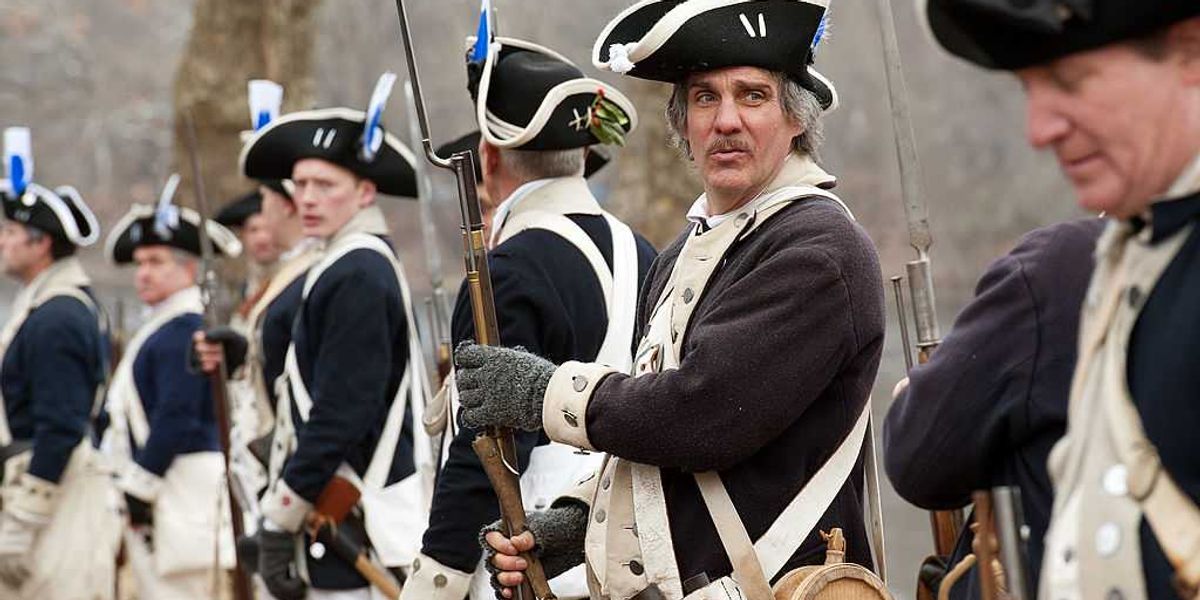
This piece revisits the life and violent death of Rev. John Rosbrugh, the Revolutionary War chaplain who left his pulpit for the battlefield, and examines the path that led him from immigrant roots to a brutal end in Trenton in early 1777.
John Rosbrugh came from a Scottish family that had resettled in Northern Ireland before making its way to the American colonies. He settled in New Jersey and endured early personal tragedy when his first wife Sarah and their infant died in childbirth. Those losses did not stop him from pursuing the ministry; he secured financial help to study at the College of New Jersey and graduated in 1761. By 1764 he was ordained and serving a congregation in Greenwich.
Rosbrugh’s life shifted from parish routines to public leadership as his reputation grew and he remarried, this time to Jane Ralston. The couple raised five children, and their eldest son James later served as a militia captain in the War of 1812. Rosbrugh’s ministry expanded beyond the pulpit into civic duty as tensions with Britain mounted. He became known for blending pastoral care with a strong sense of community responsibility.
When the Continental Army requested reinforcements, Rosbrugh didn’t stay behind with prayers only. He gathered his congregation, quoted Judges 5:23 to them, and offered to serve as their chaplain on the field. The group initially wanted him as their commander, but after some discussion and his wife’s blessing, he accepted the chaplaincy role and arranged for Captain John Hays to take command. He then made the short, wrenching farewell to his family and rode off toward Philadelphia and the army.
Rosbrugh took up the formal duties of a company chaplain after reaching Washington’s camp and signing on with the regimental structure the Continental Congress had set up. Chaplains were officially authorized and paid on a captain’s scale, making the role both a spiritual and institutional one in the new army. His time in uniform was brief but intense, intersecting with the surge of action around Trenton in late December 1776 and early January 1777. Washington’s surprise victory at Trenton set the stage for the hasty movements that followed.
Not long after Trenton’s success, the army withdrew from certain positions and skirmishes continued along the Assunpink Creek. Rosbrugh’s company was involved in these operations, and multiple contemporary and later accounts record an incident during the withdrawal. One version, judged trustworthy by biographers who compiled his life story, places Rosbrugh at the scene where he lingered behind as the main force pulled away. That delay put him in harm’s way as British and Hessian patrols swept the area.
On Jan. 2, 1777, Rosbrugh tied his horse up outside a tavern and went inside for a brief respite. Someone cried out that the Hessians were approaching, and Rosbrugh ran outside to find his horse gone. He tried to flee on foot but encountered a small party of Hessian soldiers led by a British officer. Seeing escape was pointless, he surrendered and even offered his gold watch and cash in hopes of mercy for his family.
Seeing that further attempt at escape was useless, he surrendered himself a prisoner of war. Having done so, he offered to his captors his gold watch and money if they would spare his life for his family’s sake. Notwithstanding these were taken, they immediately prepared to put him to death. Seeing this, he knelt down at the foot of a tree and, it is said, prayed for his enemies. Now seventeen bayonet thrusts were made at his body, and one bayonet was left broken off in his quivering frame. Sabre slashes were made at his devoted head, three of which penetrated through the horsehair wig which he wore.
The graphic nature of the account left a lasting mark on local memory, with a stone monument later erected near Hanover Academy in Trenton. The marker calls him the “Clerical Martyr of the Revolution” and records his roles and the date of his death, noting that he served as a chaplain with the 3rd Battalion, Northampton County militia. Such memorials framed Rosbrugh not only as a victim of war but as a symbol of sacrifice for emerging American liberty.
‘Sabre slashes were made at his devoted head, three of which penetrated through the horsehair wig which he wore.’
Biographers and parish records preserved details of Rosbrugh’s personality and ministry, portraying a man whose life was steady in faith and public service. He had married again after his early widowhood and fathered children who would continue to serve their communities and country. The anecdote of the young James riding beside his father and being sent home—”be a good boy till he should return”—adds a stark personal note to the story and underscores the human cost of the conflict.
Accounts vary on some specifics, as often happens with events handed down through local memory, diaries, and 19th-century compilations. Still, the central facts hold: a minister left his congregation to serve alongside soldiers, was captured in the chaotic sweep after Trenton, and met a brutal end at the hands of enemy troops. His death entered Revolutionary lore and remains a somber reminder of the dangers civilians and clergy faced in that turbulent year.
Today his memory survives in local monuments and history books, where his courage and tragic fate are recorded without the contemporary hyperlinks or footnotes that originally linked him to broader narratives. The story sits squarely in the long catalogue of sacrifices tied to the struggle for independence and reminds us how ordinary community leaders sometimes became frontline actors in a war that shaped a nation.
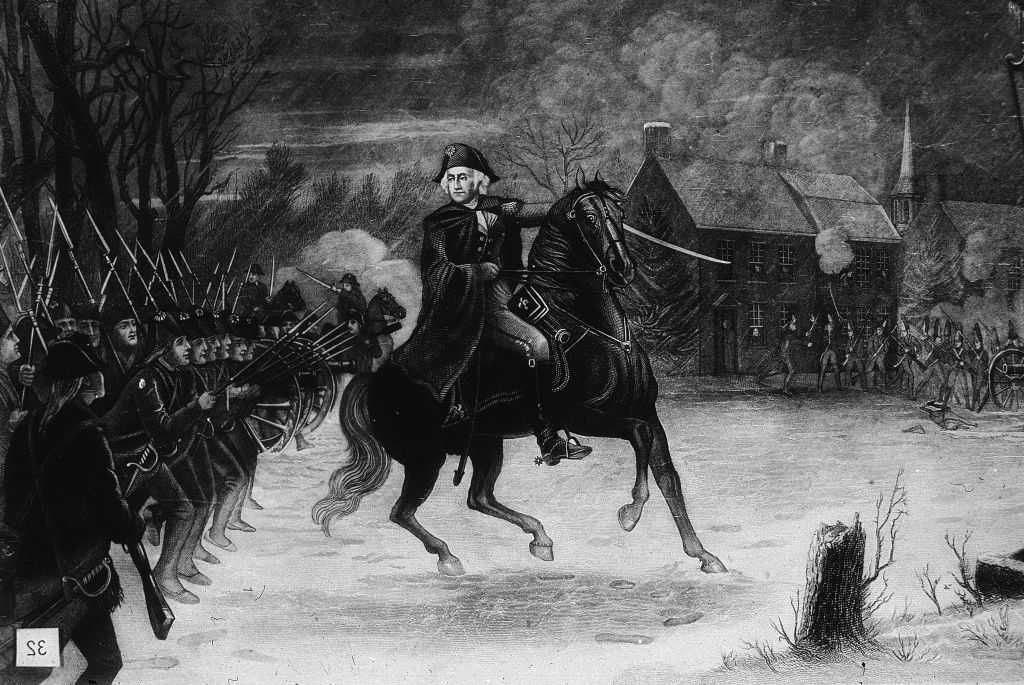
Gen. George Washington at the first Battle of Trenton. Hulton Archive/Getty Images
