
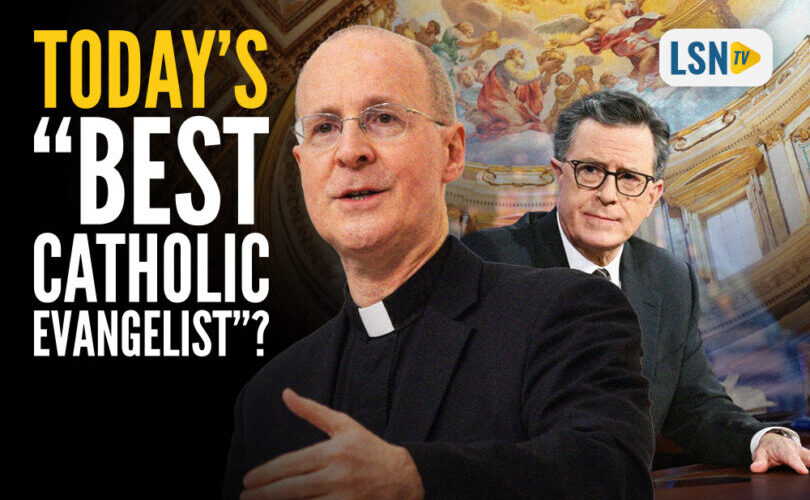
This article questions the wisdom of praising a public figure who supports abortion and celebrates same-sex unions as a model of Catholic outreach, and it pushes back on the idea that such praise can be counted as authentic evangelism. The tone is direct and political, looking at how these choices clash with core Catholic and conservative principles.
“Can someone who mocks the defense of unborn life and celebrates homosexual ‘marriage’ truly be held up as a model Catholic evangelist?” That question matters because words and endorsements shape who is seen as representing faith to the wider public. When a priest or commentator elevates a celebrity with views that run against Church teaching, it sends a signal that conviction and clarity are optional. Conservatives worry that signal weakens moral clarity and hands the cultural argument to those who deny basic religious teachings.
Public figures carry influence, and conservatives expect people claiming Catholic identity to defend life and family. The life issue is not an abstract debate, it is about real human beings, and mocking the defense of the unborn is not a harmless provocation. Celebrating same-sex ‘marriage’ undercuts the Church’s long-standing understanding of marriage as the union of a man and a woman ordered toward life. Endorsing a comedian who thrives on cultural provocation may win applause in celebrity circles, but it does not make someone a trustworthy guide on faith.
Evangelization requires witness, not publicity stunts. Genuine witness includes standing up for the vulnerable and upholding teachings even when they are unpopular. If evangelists begin by softening or dismissing core moral claims, the people they want to reach will be confused, not convinced. Conservatives argue that faithful witness means confronting society with clear moral alternatives, not accommodating every cultural trend in the name of being relatable.
There is also the issue of credibility. A public champion of positions opposed to Church teaching will not be persuasive to those seeking clarity. People who are undecided on life and marriage deserve honest answers, not a message that blends doctrine with celebration of opposition. Republicans and religious conservatives want leaders who will stand firm on life and the family, because compromise on those points often becomes the first step toward broader capitulation.
At the same time, critics should be careful to focus on ideas and consequences rather than personal attacks. Pointing out contradictions between a speaker’s public stances and Catholic teaching is a legitimate part of public debate. The goal is to encourage leaders to align their public example with the principles they claim to represent. Conservatives want religious figures to model consistency so that the faithful and the curious alike can see what committed Catholic witness looks like.
When priests or public intellectuals praise celebrities whose platforms include support for abortion or same-sex ‘marriage’, it blurs important moral lines. That blurring has a cost, because clarity about life and marriage matters politically as well as spiritually. For those who take their faith seriously, endorsing voices that oppose fundamental teachings is not just a pastoral mistake, it is a strategic error that damages the cause of religious liberty and moral truth.
The heart of the debate is simple: authenticity matters more than popularity, and conviction matters more than applause. If Catholic evangelism is to be meaningful, it must speak with courage about uncomfortable truths and defend the weakest among us. Conservatives will continue to press for leaders who do that work without compromise, because the stakes are too high to settle for anything less.
