
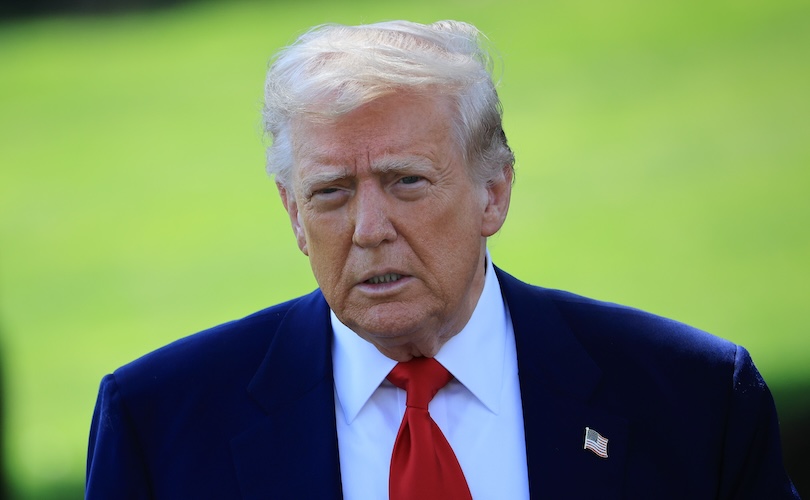
President Trump said he is ‘not optimistic’ about Chinese leader Xi Jinping releasing Catholic freedom advocate Jimmy Lai, and that blunt assessment landed in the middle of growing concern over how authoritarian regimes treat dissidents and religious prisoners.
Jimmy Lai has been a high-profile critic of Beijing for years, known for supporting free speech and a free press in Hong Kong. His advanced age and fragile health make his detention more than a political story, it reads like a human-rights emergency that should trouble anyone who values liberty. For Republicans, this is a clear test: call out oppression and back action that holds authoritarian leaders to account.
Trump’s line of thinking is straightforward and tough-minded, which many on the right respect. When he says ‘not optimistic’, he’s signaling realism about dealing with a regime that prizes control over compassion. That realism doesn’t mean giving up; it means pairing blunt assessment with pressure and smart leverage.
There are practical reasons to push Xi on Lai’s case beyond moral outrage. Allowing a prominent critic to wither behind bars without consequence sends a green light to other authoritarian states that crackdowns carry no price. Republicans argue that American credibility depends on standing with those who champion fundamental freedoms, especially when those people suffer for their faith and their views.
This is also a fight about influence and deterrence. If Beijing can detain foreign-aligned activists and shrug off international concern, it narrows the space for dissent everywhere. Republicans tend to prefer direct measures that make it costly for regimes to act with impunity, and Lai’s situation is precisely the kind of moment where those measures matter.
At the same time, supporters of a tougher stance say the U.S. should use every available lever—diplomacy, targeted penalties, and clear public exposure of human-rights abuses—to change the equation. The goal is to make the political price for detaining someone like Lai higher than the apparent benefits Beijing calculates. That’s a pragmatic view, not wishful thinking.
There’s also a domestic angle worth noting: voters respond to leaders who speak plainly about threats to liberty. Trump’s bluntness on this issue connects with an audience that sees the defense of religious freedom and free expression as nonnegotiable. Standing up for someone like Jimmy Lai is consistent with a broader stance that champions individual rights against authoritarian overreach.
In the end, the situation exposes a clash of values. One side prizes centralized control and political conformity, the other prizes the messy, noisy freedoms that make societies resilient. Trump’s verdict — that he’s ‘not optimistic’ — is a warning shot and a call to act. The question for policymakers and citizens alike is whether that warning becomes a catalyst for tougher, principled responses that protect people who speak out for freedom.
