
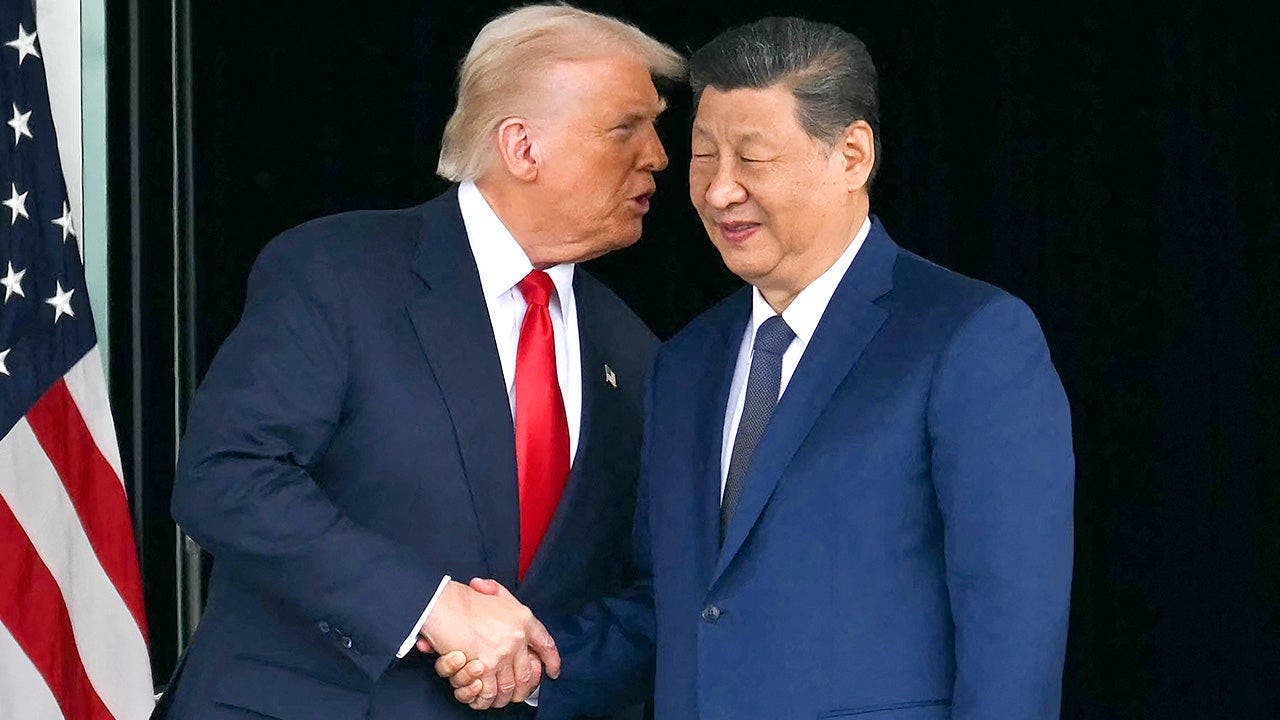
President Donald Trump’s Beijing visit arrives at a rare moment of advantage built on recent trade wins, targeted military pressure and a clear agenda: trade, technology, sanctions and deterrence. This piece maps how those levers shape the summit, why the media narrative misses key facts and what Washington should push for when negotiators sit down with Xi Jinping.
The mainstream press keeps painting a gloomy picture, ignoring how leverage has shifted. “Xi is confident in his country’s power; Trump is weakened with U.S. mired in war,” dripped The Washington Post, and another column warned “Xi wants to project China as a more reliable and responsible counterweight to U.S. volatility,” yet those takes skip the tangible moves that changed the balance. Spin doesn’t alter reality: control of strategic routes, smart sanctions and tighter trade terms matter more than punditry.
On the ground, American policy has tightened the screws where it counts. The U.S. Navy now patrols critical oil lanes that China relies on, curbing the flow of strategic fuel and giving negotiators real bargaining chips. That kind of presence is new leverage, and it forces Beijing to consider costs it may have brushed off before.
Beijing is not without troubles of its own. Xi has spent months reshaping leadership ranks, wrestling with a cooling economy and trying to catch up in advanced tech. Turning inward and tightening control is not a sign of unshakeable strength; it is often a reaction to pressure.
Trade and investment deals have been a core of the U.S. response, and the Trump team brings corporate heavyweights as proof of intent. Executives from the space, aviation and industrial sectors travel with the delegation to signal carrots as well as sticks, and that combination makes America’s position practical and persuasive at the negotiating table.
There’s an economic argument at the center of the trip. “Our trade deficit in goods with China fell to $202 billion in 2025—the lowest it has been since 2004. And China’s share of total U.S. imports fell to about 9 percent, the lowest it has been since China joined the World Trade Organization (WTO) in 2001,” U.S. Trade Representative Jamieson Greer testified Apr. 28. That shift is the result of targeted tariffs, supply-chain diversification and tougher investment scrutiny.
Agriculture and aerospace are obvious bargaining chips. American farmers want stability and long-term purchase commitments for soybeans, dairy and corn, while Boeing stands to move major orders if reciprocity and safety checks align. Managed, sector-by-sector trade talks are what the U.S. team prefers: expand low-risk commerce while isolating sensitive technologies.
Sanctions and targeted enforcement will be on the table too, especially around weapons proliferation and illicit oil flows. Evidence that Iran received chemicals for missile fuels and that shadow tankers skirted sanctions has already prompted action, and the U.S. will make clear these behaviors have consequences that reach China’s energy and petrochemical sectors.
The tech front, especially AI, is high stakes and fiercely competitive. Official chat about safety is fine, but America should avoid binding pacts that legitimize Chinese standards or slow U.S. innovation. Currently, the U.S. leads on model performance and deployment across markets, and preserving that edge means protecting private-sector freedom to innovate.
China’s military buildup remains a strategic challenge: land reclamation in key maritime highways and a fast-growing nuclear arsenal are facts no negotiator can ignore. The Trump approach pairs deterrence with dealmaking—using pressure where necessary while offering trade pathways that reward responsible cooperation. That blend is designed to keep U.S. interests front and center without surrendering leverage.
