
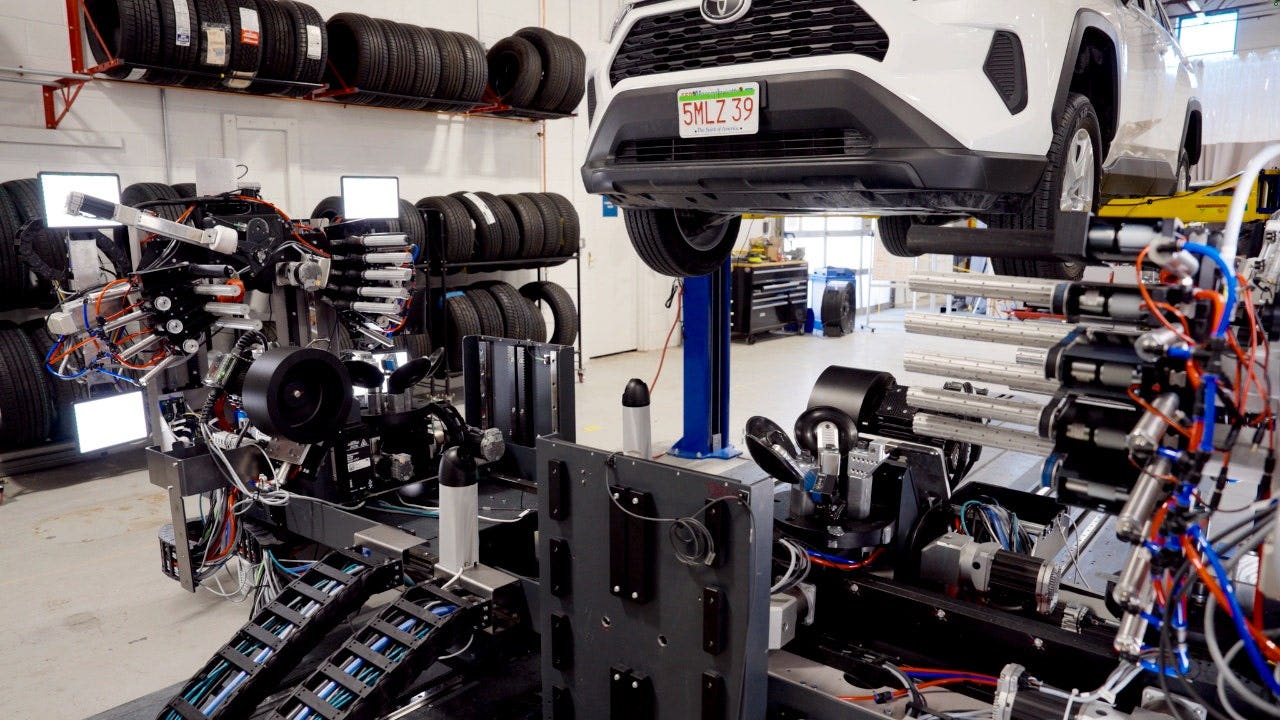
Automated Tire’s SmartBay is a robotic service-bay platform that uses AI and machine vision to change tires, balance wheels and inspect vehicles with minimal human lifting. The system keeps the rim on the car, balances the entire wheel-end assembly, and is built to help shops handle higher volume and tougher EV-driven wear patterns without massive shop overhauls. This piece walks through how SmartBay works, what it promises for shops and drivers, and the safety and labor implications it raises.
SmartBay is presented as a robotic-first service bay that adapts to each vehicle instead of following fixed motions. It relies on physical AI and computer vision with machine learning to make decisions in real time, which is important because not two cars arrive the same way and road grime changes the picture fast. That flexibility is the core claim: a repeatable process that can learn from every job.
One of the standout features is the way SmartBay handles the wheel. “SmartBay is the first patented system in the world that changes tires without removing the wheel from the vehicle. The car is lifted just as it would be on a conventional lift, but instead of taking off the lug nuts, disturbing the tire pressure monitoring system, and pulling the wheel, SmartBay dismounts the tire directly from the rim while the rim stays on the car,” Chalofsky said. That avoids heavy lifting and reduces the chance of damaging sensors.
After mounting the new tire, SmartBay runs ATI’s Real Force Balance, which targets the whole wheel-end assembly rather than just the tire itself. The claim is this produces a more complete and accurate balance, a detail that could translate to a smoother ride drivers actually notice. Consistency in balance is one of the practical upsides shops can advertise to customers.
Staffing and throughput are a big part of the pitch. “A single technician can run two or three SmartBays in parallel, processing roughly 24 tires an hour compared to about four tires in 75 minutes today,” Chalofsky said. SmartBay is designed to fit into a standard 12-foot service bay so shops won’t need major renovations to add capacity.
Electric vehicles add urgency to this problem because of their weight and torque. “EVs are reshaping the tire economy. Because of their weight and instant torque, EV tires wear faster and need to be replaced more often,” Chalofsky said. He added that tires are now “the single largest lifetime maintenance expense on most EVs,” which helps explain why shops face more frequent tire work.
SmartBay’s software is meant to make real-time judgment calls that experienced techs normally make after years on the job. Chalofsky says the system includes “a self-learning AI layer that adapts in real time to hundreds of data points per vehicle.” That networked learning model allows one machine to teach others, speeding adaptation when new trim packages or odd fitments show up.
The company pitches SmartBay as a way to reduce strain injuries tied to repetitive heavy lifting. “Because SmartBay leaves the rim on the vehicle, technicians are no longer lifting heavy, expensive wheel assemblies on and off mounting machines. This eliminates one of the most common sources of strain injuries and workers’ compensation claims in tire work,” he said. Built-in sensors are designed to help it operate safely around people in a busy bay.
Will robots replace technicians? Chalofsky is direct: “Both, but mostly the latter,” he said when asked whether SmartBay replaces technicians or changes the work they do. He argues automation can shift humans away from repetitive labor toward oversight and higher-skill tasks like diagnostics, potentially making existing staff more valuable rather than redundant.
For shops, the practical math matters: less schedule chaos and more predictable door-to-door times. ATI aims for a 45-minute door-to-door tire change for four tires initially, with hopes of trimming that to 30 minutes as the system matures. Faster, more predictable visits could make scheduling smoother and reduce long backups on busy days.
SmartBay is aimed at the predictable, high-volume pain point in service work: tire changes and balances. “Tire changes and wheel balancing check nearly every box for a first product. It’s one of the most frequent reasons a vehicle comes into a service bay, it’s a high-dollar transaction, the work is physically arduous and exactly the kind of task a robotic-first platform is well suited to handle, and the labor shortage is most acute precisely in this part of the workforce,” Chalofsky said. If the system works in real-world Saturdays as it does in demos, shops could see meaningful relief in both throughput and worker safety.
