
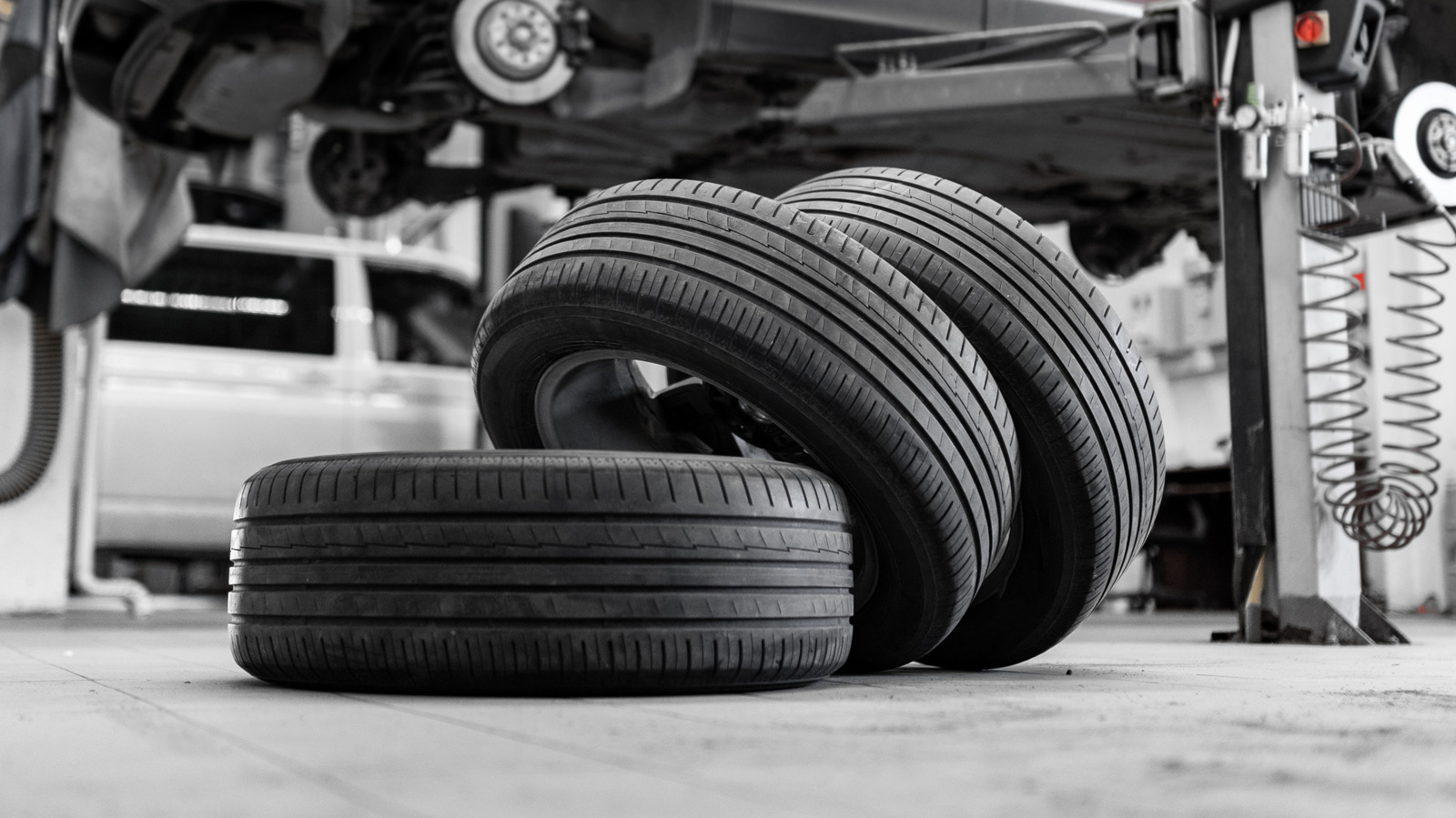
Scientists have peeled back the chemistry that lets modern car tires juggle air pressure, heavy loads, and highway speeds without falling apart. This article walks through the key molecules and materials that give tires their surprising toughness, from classic vulcanization to the microscopic particles that stiffen rubber and the modern tweaks that make tires safer and longer lasting.
Every time you drive, a tire does an impressive juggling act: it flexes, grips, absorbs shocks, and sheds heat. That behavior starts at the polymer level where long rubber chains slide, stretch, and rebound; the way those chains interact determines whether a tire feels springy or floppy. Engineers tune that molecular dance so a tire can hold pressure, resist cuts, and still give predictable handling on wet pavement.
The most famous trick in the tire chemist’s book is vulcanization, where sulfur atoms connect polymer chains with crosslinks to create a tougher network. Those crosslinks prevent chains from pulling apart under load, so the rubber resists deformation and tear propagation. Too many crosslinks and the tread snaps brittle, too few and it squirmy, so chemistry balances strength and flexibility for real-world use.
Fillers are the unsung heavy lifters. Carbon black and silica are tiny particles mixed into the rubber to boost wear resistance, grip, and heat management while keeping costs down. Their surface chemistry and how well they disperse inside the polymer determines whether they act like reinforcement or just clump and weaken the compound.
It’s the interface between filler and rubber where the real magic happens, because stress has to pass from the soft polymer to the hard particle without creating a weak spot. Coupling agents and tailored additives help form strong, but not rigid, connections that let the composite share load and blunt crack growth. That balance improves rolling life and reduces the chance a nick will turn into a dangerous failure.
Recent advances push beyond old recipes with smarter fillers and designed polymer architectures that respond to heat and strain. Nanoparticles, modified silica, and specialized silane treatments let manufacturers tune energy loss, which affects both grip and fuel efficiency. Some newer formulations even use reversible bonds that dissipate energy under sudden stress, helping a tire survive impacts that used to leave a permanent cut.
For drivers, the takeaway is straightforward: tire strength is a product of chemistry as much as steel belts and tread design. Proper inflation, modest loads, and avoiding road hazards still matter, but modern tire compounds give a far larger safety margin than the versions from decades ago. That margin comes from carefully engineered molecules and particles working together so your daily ride handles more pressure than you think possible.
