
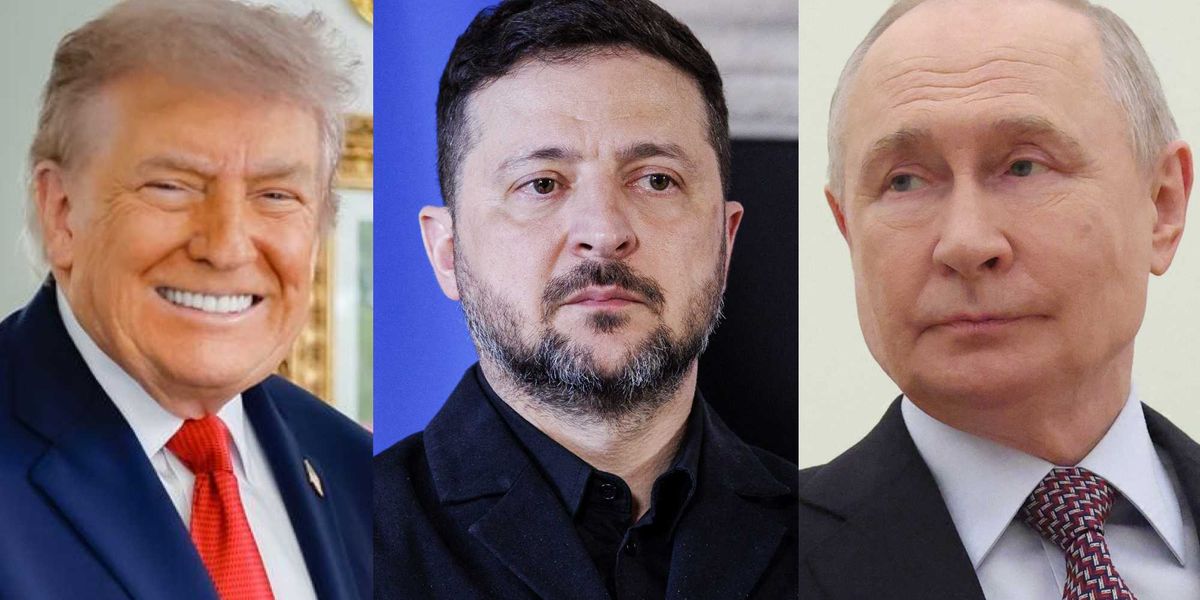
President Trump says he secured a brief, negotiated pause in the fighting between Russia and Ukraine that includes a large prisoner swap timed around Russia’s Victory Day, and leaders on both sides agreed to the stand-down at his request as talks continue toward a broader end to the conflict.
The announcement came from the White House and in a post on Truth Social, where the president said the truce would last three days starting May 9 and would include a reciprocal exchange of 1,000 prisoners from each side. The move was presented as a pragmatic step to get people home and to allow Russia’s Victory Day events to proceed without direct threat, a sensitive moment tied to the memory of World War II.
“The Celebration in Russia is for Victory Day but, likewise, in Ukraine, because they were also a big part and factor of World War II,” Trump wrote, stressing the historical context that made timing important. “This request was made directly by me, and I very much appreciate its agreement by President Vladimir Putin and President Volodymyr Zelenskyy,” he continued, framing the compromise as something the United States helped bring about.
‘Talks are continuing on ending this Major Conflict, the biggest since World War II, and we are getting closer and closer every day.’ The president expressed hope that the temporary pause and the large-scale prisoner swap could open a door to more durable negotiations, suggesting the United States is playing a constructive mediator role while urging accountability for any commitments made.
Ukrainian leaders publicly acknowledged the arrangement and thanked the U.S. for its role, while emphasizing they will insist on verification that Russia follows through. “Red Square is less important to us than the lives of Ukrainian prisoners who can be brought home,” President Zelenskyy said, highlighting that the return of detainees is the pressing priority for Kyiv.
The pact is narrow and time-limited: three days of silence and a one-for-one swap of 1,000 prisoners from each side, a scale meant to deliver a swift humanitarian win without locking either country into a broader ceasefire framework. Officials cautioned that the truce does not resolve the underlying strategic disputes, but it does create a window to reduce immediate suffering and to test whether both capitals will honor what was agreed.
Public reaction is mixed and predictable. Supporters see a president using American influence to secure real returns for people captured in a brutal war, while critics worry that a symbolic pause could be used as a cover for repositioning forces or as propaganda theater. Still, a negotiated transfer of that size, timed for a major observance, is a rare diplomatic result amid an otherwise grinding conflict.
Casualty estimates in the war vary widely and are disputed, but independent analysts place Russian losses and Ukrainian losses in the hundreds of thousands, underscoring the human cost behind every prisoner count and every ceasefire negotiation. Against that backdrop, any mechanism that brings detainees home will be hailed by families and veterans on both sides, even as broader questions about accountability and territorial claims remain unresolved.
For now, attention will be on implementation: will trains run, will exchanges happen at agreed sites, will monitors be allowed access, and will both states avoid escalatory moves during the three days. The truce tests not just promises but the practical systems needed to carry them out, and it will tell observers whether this fragile pause can build momentum for further talks.
