
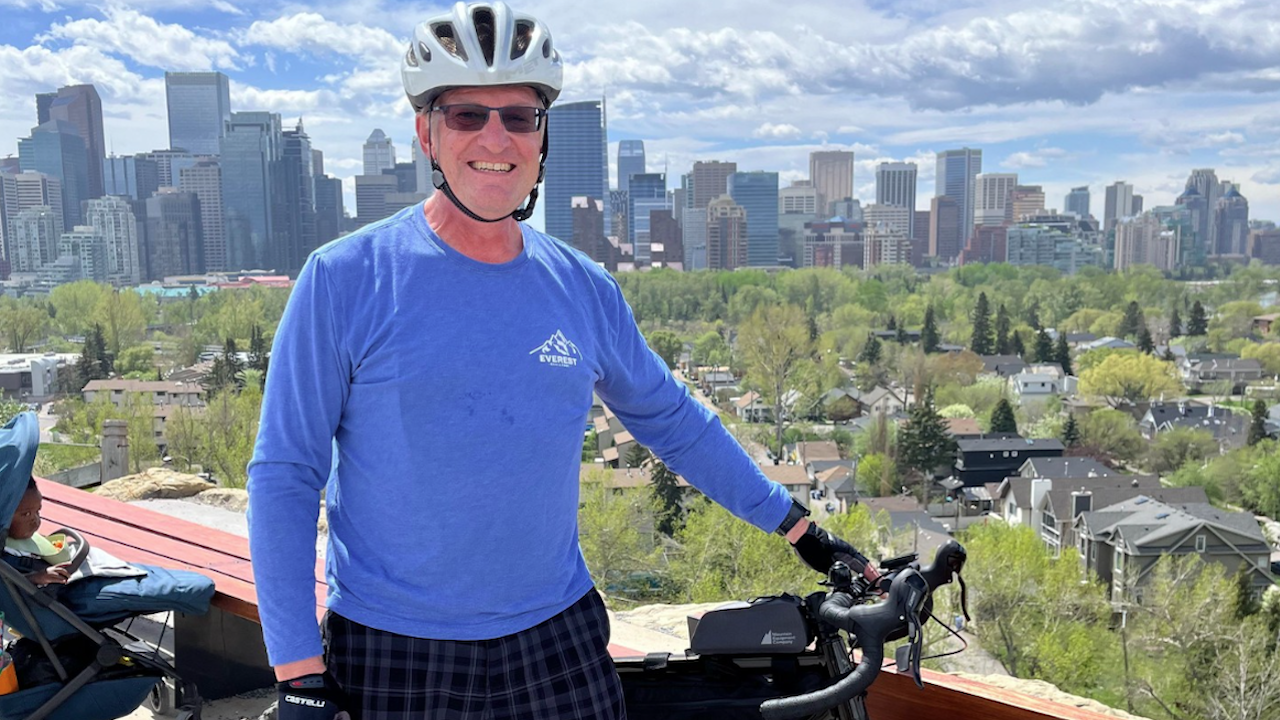
A former Ironman athlete’s blurry vision turned out to be the opening line of a seven-year fight with stage 4 lung cancer, and a string of newer targeted drugs has turned a dire prognosis into long-term management and ongoing advocacy.
In 2019 the warning sign was simple and odd: “In 2019, I noticed that I was having trouble seeing with my left eye,” he recalled, and “I went to the optometrist, and they said it was probably a detached retina.” What followed was a rapid cascade of scans, surgery and tests that revealed fluid buildup, rising pressure and the hard fact that the removed material was cancerous. The eye was lost, and the diagnosis that followed was stage 4 lung cancer.
Doctors were “very shocked” to trace the first signs to the eye, especially because he had never smoked and had been an endurance athlete who raced Ironman events. At the time, specialists gave a blunt prognosis of about 12 to 24 months, advice to “get affairs in order,” and a grim expectation that most people in his position did not outlive that window. That assessment set a stark baseline he was determined to beat.
Treatment began with afatinib, a targeted therapy that worked for several months before the cancer showed up in the brain and required a drug that crosses the blood-brain barrier. He moved onto Tagrisso (osimertinib), which offered more control for a time. When those options no longer held the disease in check, a newly approved treatment became the next step.
He began receiving Rybrevant (amivantamab), administered by IV every three weeks in a medical setting. After a year on Rybrevant his scans were looking “very, very good,” and the shift from full-dose chemotherapy to a chemo-free targeted regimen transformed day-to-day life. He still contends with skin irritation and fingernail infections, but describes the overall tolerability as manageable compared with more aggressive chemo.
Oncologists point out that cancers can seed unusual spots, and the eye is an uncommon destination. “Cancer can find its way to some very odd locations, but the eye is a very, very rare one,” an oncology physician noted when speaking about the case, underscoring how unpredictable metastasis patterns can be. That unpredictability makes vigilance and early investigation important, even when symptoms seem unrelated to the lungs.
The drug’s side effect profile includes common complaints like infusion reactions, muscle and joint pain, mouth sores, swelling, fatigue, nausea and digestive changes, while rarer but serious risks can involve lung inflammation, blood clots and severe skin issues. Pregnant women are advised not to take the medication due to fetal risks, and clinicians say dose reductions are an option if side effects feel too aggressive. “If somebody is having too many side effects, or if it is feeling too aggressive, we can do dose reductions,” a treating physician explained, noting that careful management often keeps patients on therapy without major complications.
The approval of Rybrevant for certain types of non-small cell lung cancer in the U.S. and Canada has opened another avenue for patients whose tumors harbor specific molecular features. He credits high fitness and years of endurance training with helping him tolerate treatments and maintain resilience through ups and downs. Preparing now for a 600-mile biking expedition to raise awareness for lung cancer, he uses his platform to push the message that unexpected symptoms deserve attention.
He accepts that luck and science both played roles in extending his life beyond the initial estimate, saying plainly, “Doctors gave me a year to two years – they told me to get my affairs in order. And it’s been seven years now,” and shrinking the distance between prognosis and lived reality. As an advocate he stresses that a diagnosis does not automatically mean a death sentence, pointing to mounting research and longer-term survivors. “If you have lungs, you can get lung cancer – but at this point, for almost any type of cancer, a diagnosis is not a death sentence,” he said, adding, “They’re doing so much research on it, especially with lung cancer… I’ve known people who have lasted 12 to 18 years, so for me, seven years is great. So I’ll just keep going.”
His message is practical: push for current therapies, ask questions, and work with your care team to manage side effects and switch treatments when needed. The combination of new targeted drugs, attentive management and patient advocacy is changing outcomes for some people facing advanced lung cancer. For him the fight continues, with treatment cycles, training rides and public talks all part of a life that refuses to be capped by an early prognosis.
