
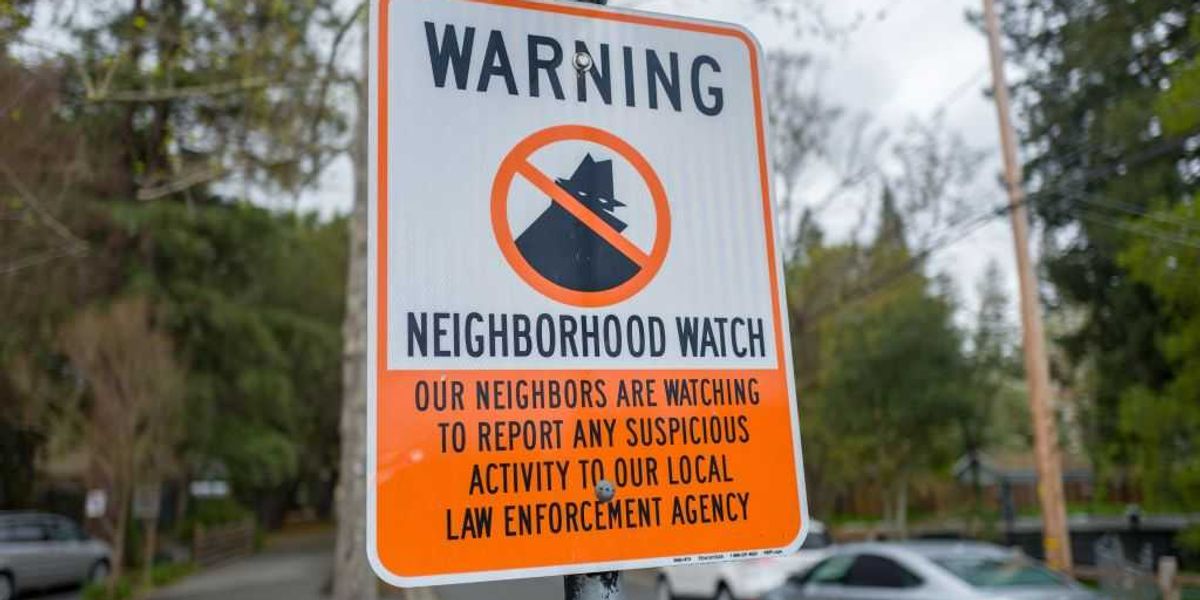
Ann Arbor’s city council tore down decades of neighborhood watch signs and justified the move as correcting past racism, while critics say it was pointless virtue signaling that hurts public safety and wastes taxpayer money. The debate mixes history, public-safety tradeoffs, and political theater, with council members insisting the signs excluded people and opponents warning residents will pay the price in security. This piece lays out what happened, why officials said it was necessary, and why many conservatives see it as a misplaced priority.
The council voted to remove over 600 Neighborhood Crime Watch signs, arguing that the program dated back to a different era. “Neighborhood Watch programs emerged in the 1970s during a period of national anxiety about crime and social change” and were “often rooted in assumptions about who did and did not ‘belong’ in a neighborhood, reinforcing race-based hyper-vigilance and suspicion particularly toward black, brown, and other marginalized residents and visitors.” That formal language was used to justify a city-wide purge of visible reminders of citizen-led crime prevention.
Officials celebrated the symbolic clean-up with a ceremonial tear-down attended by the mayor and several councilmembers. The council estimated it spent at least $18,000 from the general fund to remove the signs, a cost critics call unnecessary and performative. From a Republican perspective, spending taxpayer dollars to erase symbolic fixtures while crime remains a concern looks like misplaced priorities.
City leaders repeatedly described the signs as messages that made some residents feel unwelcome. “Signs don’t just sit there, they speak. For many people, especially black and brown residents and visitors, those signs have never felt neutral. They signal that unfamiliarity itself is suspicious, that their presence must be justified, that belonging is conditional,” said one councilmember in the debate. That quote captured the council’s argument that appearances matter and public signage can reinforce exclusionary attitudes.
Mayor Christopher Taylor echoed the critique in blunt terms, saying “Neighborhood watch signs are expressions of exclusion.” That line became a refrain during the tear-down and in official statements afterward. Critics argue the mayor’s comment reduces a practical neighborhood safety tool to a political symbol while ignoring the safety benefits those signs once represented.
Neighborhood Watch programs grew in response to local crime concerns decades ago, when residents banded together to look for unusual activity and alert police. At the time volunteers in one-block groups shared information, watched property, and reported suspicious vehicles or patterns to law enforcement. The active, community-driven dimension of those programs is exactly what many defenders say is being lost when signs are removed instead of programs being reformed.
Removing signage does not prevent neighbors from looking out for each other, and residents still have tools to communicate and cooperate. Apps and neighborhood platforms let people report suspicious activity and coordinate with police without official signs, though digital tools are no perfect substitute for in-person awareness and trust. Conservatives warning about rising crime say communities need practical support, not symbolic gestures.
Those who backed the removal framed it as part of a broader effort to make public spaces feel inclusive. Councilmembers described a goal of nondiscriminatory enforcement and community trust. Opponents counter that erasing history and homemade security efforts will not change underlying attitudes and may leave people less safe.
Data cited about local crime rates suggest residents still face a tangible risk: property crime and violent crime figures indicate a nontrivial chance of victimization in the city. With those risks on the books, critics argue the sensible approach is to strengthen community policing partnerships, improve outreach, and empower residents rather than spending public money on sign removal. Citizens concerned about safety will have to decide whether to rely on neighborhood networks, technology platforms, or municipal initiatives moving forward.
