
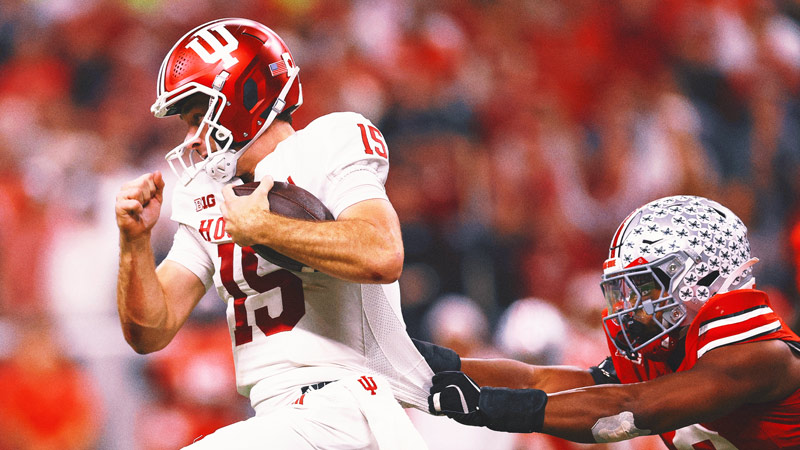
Jay Glazer’s latest take on the 2026 NFL Draft swings the spotlight toward two clear questions: which prospects are already seen as “sure thing” NFL stars, and which positions could see a sudden run of talent that reshapes draft day strategy. This piece breaks down the scouting signals, roster implications, and the draft mechanics that turn prospects into immediate impact players. Think consensus board movers, position depth waves, and how teams might react when value piles up in one place.
When analysts call a player a “sure thing” they mean reliability across film, measurables, and character checks, not perfection. That label often follows prospects who have dominated multiple levels of competition and whose traits translate cleanly to pro schemes. Teams love that kind of predictability because it reduces the gamble at premium picks.
Scouts look for durability, processing speed, and combat-tested production as the backbone of a “sure thing” evaluation. A player who combines those with a high football IQ and consistent technique becomes a favorite to contribute early. Those are the names execs circle on their boards when they prioritize immediate help over upside gambles.
Beyond individual standouts, the draft’s momentum can hinge on position runs—clusters of similar players suddenly valued by many teams. A run can form when the college game produces a deep class at one spot, or when pro schemes evolve and spike demand for a particular skill set. When teams sense a run forming, draft day trades and reach picks escalate quickly.
Edge rushers and offensive tackles are the usual suspects to trigger a run because they play positions that affect the whole roster; one great edge or blindside protector can change a franchise’s trajectory. Wide receivers sometimes swell into a group as college passing games churn out production-heavy prospects with pro-ready routes. Quarterback runs are rarer but the most dramatic, forcing franchises to move mountains for signal-callers they think can be franchise anchors.
Draft boards aren’t static documents; they breathe with each visit, workout, and medical report that lands on an evaluator’s desk. A player once pegged as a mid-round value can rocket into the top 50 if a team sees scheme fit and upside suddenly aligning. Conversely, medical flags or poor interview days can erase a long climb, which is why teams invest so much in pre-draft intel to avoid surprises on draft night.
Cap strategy and roster construction shape how teams respond when a position run brews. Clubs with pressing holes on the offensive line or pass rush are likelier to pounce early, sacrificing future picks to secure talent who can start right away. Teams in win-now mode will trade up aggressively for perceived “sure thing” pieces, while rebuilders might bank picks and let the run come to them, hoping value slides into their laps.
For the prospects themselves, being labeled a near-certain pro accelerates scrutiny and expectations, and that carries both opportunity and pressure. Step up at the Combine or in a pro day and you confirm the hype; trip on a medical or character question and teams start recalibrating. The margin between a top-15 selection and a mid-round pick can be razor-thin, driven by nuance and narrative as much as by tape.
Draft night drama often boils down to timing and conviction—who believes the tape enough to swing for a prospect, and who believes the board will gift similar talent later. When analysts like Jay Glazer flag certain names or a potential positional run, front offices listen, but they still have to bet on the fit in their locker room and scheme. The draft is where projection meets pressure, and where widely agreed “sure things” and surprise position runs rewrite plans in real time.
