
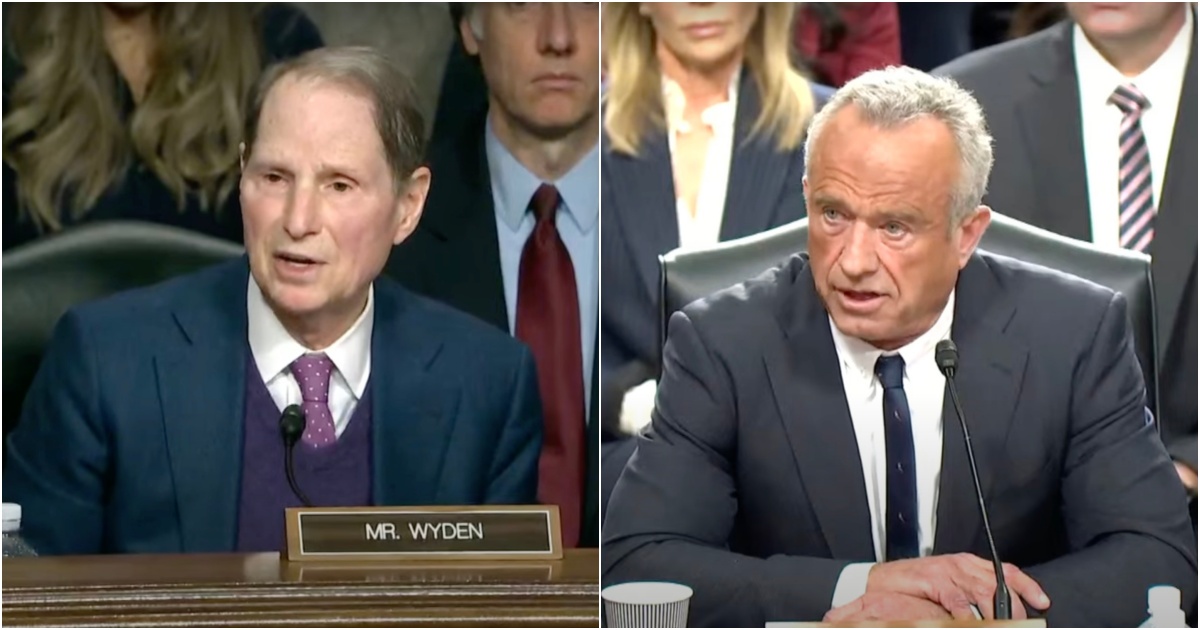
Robert F. Kennedy Jr. and Senator Ron Wyden of Oregon found themselves in a fiery exchange during a Senate Finance Committee confirmation hearing. RFK Jr., who is being considered as President Trump’s choice for Secretary of Health and Human Services, faced intense scrutiny from Senator Wyden. The hearing was part of a series of testimonies that included other notable figures like Kash Patel and Tulsi Gabbard. The atmosphere was charged, with many anticipating contentious discussions, especially regarding RFK Jr.’s nomination.
Senator Ron Wyden wasted no time in launching a barrage of accusations against Kennedy, attempting to undermine his credibility. Wyden claimed that RFK Jr. was promoting unfounded conspiracy theories, particularly concerning vaccines. He accused Kennedy of spreading misinformation that could potentially harm children by discouraging vaccinations. Wyden harshly described Kennedy as someone who pursues influence and money, regardless of the consequences on public health.
Kennedy, however, was prepared for such attacks. He promptly rebutted Wyden’s claims, pointing out the senator’s misrepresentation of his statements. RFK Jr. clarified that his comments on the Lex Fridman Podcast were taken out of context. He explained that he had acknowledged the efficacy of certain live virus vaccines while also highlighting that no vaccine is universally safe for every individual. He emphasized that all medicines, including vaccines, can have varying effects on different people.
The confrontation continued as Kennedy accused Wyden of being dishonest, noting that he had already addressed these issues multiple times on national television. He expressed frustration over the senator’s persistence in bringing up misleading information. The tension in the room was palpable, with Kennedy firmly standing his ground against Wyden’s accusations.
Wyden, undeterred, attempted another line of attack by referencing a letter Kennedy allegedly wrote to the FDA. The senator claimed the letter aimed to prevent Americans from accessing COVID vaccines. Kennedy, however, swiftly countered this claim with facts. He clarified that his actions were motivated by concerns over the CDC’s recommendations for vaccinating young children against COVID, which he argued lacked a scientific basis.
Kennedy explained that his lawsuit was driven by the belief that COVID vaccines were inappropriate for children who faced minimal risk from the virus. He used this rationale to dismantle Wyden’s narrative, showcasing the depth of his understanding and commitment to public health.
During the proceedings, a protester momentarily interrupted, but Kennedy remained composed and continued to challenge Wyden’s assertions. The senator then accused Kennedy of contributing to measles deaths in Samoa, alleging that his visit to the region was aimed at spreading misinformation about the measles vaccine.
Kennedy responded by setting the record straight. He explained that his visit to Samoa was to introduce a medical informatics system to improve healthcare efficiency. He clarified that he had no involvement with the measles outbreak there and pointed out that tissue samples sent to New Zealand revealed that most individuals did not have measles.
The hearing showcased Kennedy’s ability to debunk the senator’s claims with poise and precision. Despite the intense questioning, RFK Jr. maintained a steady composure, addressing each accusation with clarity and evidence. His responses highlighted a commitment to transparency and a deep understanding of the issues at hand.
Kennedy’s confrontation with Wyden was a testament to his resilience in the face of adversity. His ability to counter misinformation with facts and articulate his positions clearly was evident throughout the hearing. The exchange underscored the importance of having informed and courageous voices in public service.
The hearing was a significant moment in RFK Jr.’s journey as a nominee for Secretary of Health and Human Services. It demonstrated his capability to handle pressure and defend his views against fierce opposition. The event also highlighted the ongoing debate surrounding vaccine safety and public health policies.
As the proceedings unfolded, it became clear that Kennedy’s nomination would not be without challenges. The intense scrutiny he faced was indicative of the broader political landscape and the contentious issues surrounding public health and safety. Despite this, Kennedy’s performance left a lasting impression on those present.
The exchange between Kennedy and Wyden was more than just a political showdown; it was a reflection of the broader ideological divide in the country. Kennedy’s defense of his positions resonated with those who value informed discourse and evidence-based decision-making in public health.
RFK Jr.’s handling of the hearing exemplified a commitment to addressing complex issues with integrity and transparency. His responses not only countered Wyden’s accusations but also provided a platform for discussing critical topics affecting the nation.
The hearing was a pivotal moment in the ongoing narrative of Kennedy’s career. It underscored the significance of having leaders who are unafraid to challenge misinformation and advocate for policies that prioritize public health and safety.
**End of Gateway Pundit News Article **
Watch RFK Jr. Challenge Senator Ron Wyden’s Record and Expose Lies in a Heated Exchange | The Gateway Pundit: – https://www.thegatewaypundit.com/2025/01/watch-rfk-jr-obliterate-unhinged-democrat-senator-ron/
