
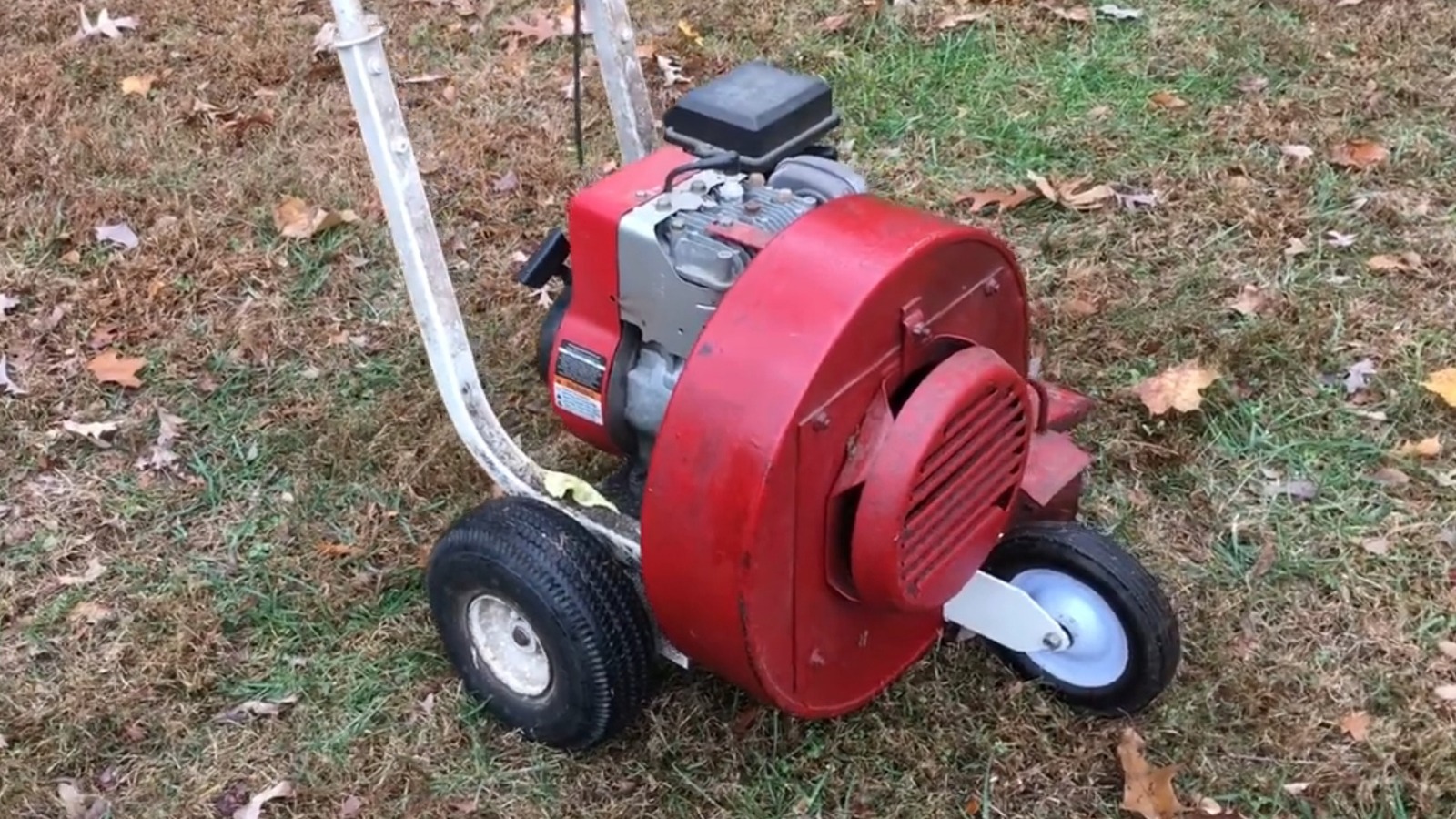
Leaf blowers did not start out as the sleek, grab-and-go tools most people know today. In the 1970s, some of them looked more like odd little machines from a garage experiment than the compact blowers stacked on store shelves now. The path from those early designs to modern handheld and backpack models is a surprisingly short but busy stretch of power-tool history.
The earliest versions were built low to the ground and rolled on wheels, closer in spirit to a lawn mower or snow blower than a modern blower. A drum sat at the front to house the fan, while a long handle at the rear gave the user something to push as air blasted out through a side chute. That setup gave yards a serious cleanup boost, even if the shape made the tool look a little clunky by today’s standards.
Before leaf blowers became a category of their own, the idea grew out of other equipment. Some of the first blowers were adapted from agricultural sprayers, with the pesticide tanks removed so they could be used just for air movement. That workaround showed how often new tools are born from people finding a smarter use for existing machines.
Echo, known at the time as Kyoritsu Noki Company, helped turn that improvised idea into something recognizable. In the 1970s, the company released what is widely considered the first backpack blower, followed not long after by the first handheld model. Those releases marked a big shift, because they made leaf cleanup less about pushing a bulky machine and more about carrying power in a more flexible way.
Once those designs hit the market, other manufacturers took the hint. The backpack style gave users more mobility, while handheld units made quick work of smaller yards and tighter spaces. Over time, both forms became the standard, leaving the wheeled versions to fade into the background of tool history.
That older walk-behind style did not vanish overnight, though. Some accounts trace its development back to H.L. Diehl, who worked in aviation engineering before selling leaf blowers through the H.L. Diehl Company in the late 1950s. His version may have lost the popularity contest, but it helped shape the broader story of what a leaf blower could be.
Today, walk-behind models still exist, with brands like SuperHandy and Billy Goat carrying the style forward. They are no longer the norm, but they still have a place for users who want serious power without wearing the machine on their back or holding it in their hands all day.
The bigger takeaway is how fast the leaf blower changed from a niche, awkward contraption into a common yard tool. What began as a push-along machine with a fan and a chute eventually evolved into the familiar gas, electric, corded, and cordless blowers used across neighborhoods every fall. Even now, the older designs feel like a small reminder that some everyday tools started out looking downright strange.
