
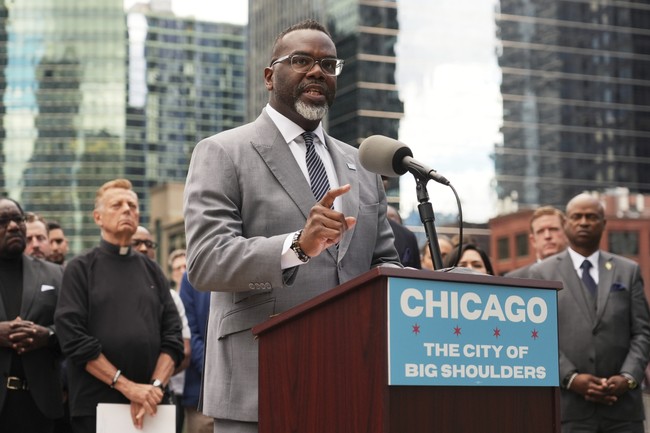
Over the Labor Day weekend, Chicago witnessed a tragic surge in violence, with over six individuals losing their lives and more than 50 others injured. Former President Donald Trump expressed his frustration with Democratic leaders who continue to decline his offer to restore law and order in the beleaguered city. Trump took to Truth Social, emphasizing his concern by stating, “CRIME IS TOTALLY OUT OF CONTROL IN CHICAGO. 6 DEAD, 24 BADLY WOUNDED, LAST WEEK ALONE!!!”
The alarming statistics reported by ABC7 indicated seven fatalities and 52 injuries as of Labor Day morning. Among the tragic events was the shooting of a 25-year-old woman, who succumbed to her injuries after being shot multiple times. Similarly, a 29-year-old man also lost his life after being shot repeatedly, highlighting the dire situation in the city.
A 43-year-old woman was another victim in the wave of violence, shot by five suspects, resulting in her death. The weekend’s chaos also saw a single incident where seven individuals were wounded on Saturday. Sunday added to the tally with four more people injured in separate shootings.
In contrast to Chicago’s troubling crime rates, Washington, D.C., has seen improvements after Trump federalized the police force, deploying the National Guard against the opposition of Mayor Muriel Bowser. Initially resistant, Bowser later appeared to align with Trump’s measures as crime rates decreased significantly. Trump highlighted the effectiveness of his approach, pointing out Bowser’s newfound popularity due to reduced crime in the nation’s capital.
Trump has consistently urged Democratic mayors nationwide to accept federal help, emphasizing the potential positive outcomes. He noted, “Mayor Muriel Bowser of D.C. has become very popular because she worked with me and my great people in bringing CRIME down to virtually NOTHING in D.C.” He criticized other Democratic leaders for their reluctance to cooperate, stating they spend more time justifying crime rather than working to eliminate it.
Citing the success in Washington, D.C., Trump questioned why cities like Chicago, Los Angeles, New York, and Baltimore wouldn’t take similar actions. He pointed out the tangible benefits, saying that Mayor Bowser’s approval ratings increased by 25% due to the crime reduction efforts. Despite her initial opposition, the changes in D.C. have led to increased public safety.
Trump also recounted efforts in Los Angeles during the riots, where federal intervention was key to maintaining order. He mentioned how local law enforcement acknowledged the crucial support, stating, “The top Law Enforcement Officer in L.A. said they couldn’t have done it without us.” The federal presence helped prevent further chaos and safeguarded the city’s ability to host major events like the Olympics.
The former president expressed satisfaction with the improvements in D.C., urging other cities to follow suit. “D.C. is a GIANT VICTORY that never has to end!!!” he declared, contrasting it with the persistent crime issues in other Democrat-run cities. Trump’s message is clear: cooperation can lead to safer streets and improved lives.
In the meantime, cities across America continue to wrestle with violent crime without similar federal intervention. The challenges faced by these urban centers underscore the need for decisive action and collaboration between local and federal authorities. As crime rates remain high in some areas, the call for effective strategies becomes more urgent.
Trump’s insistence on federal assistance highlights the divide between political ideologies and the practical need for safety. His approach, though controversial to some, reflects a commitment to reducing crime and protecting citizens. Whether other cities will heed this call and seek similar solutions remains to be seen.
Chicago’s struggle with crime is a stark reminder of the complexities involved in urban governance. As residents endure the consequences of inaction, the debate over the best path forward continues. With lives at stake, the urgency for resolution grows, and the search for effective leadership becomes paramount.
The nation’s capital serves as a case study in the potential benefits of federal involvement, showcasing a pathway to reduced crime. As debates rage on, the evidence from D.C. offers a beacon of hope for other cities. The question remains: will local leaders embrace the opportunity to make meaningful changes?
With Trump advocating for a stronger federal role, the political landscape may shift as cities weigh their options. The decision to accept or refuse assistance could significantly impact the safety and well-being of millions. As the conversation unfolds, the focus remains on creating safer communities for all.
Ultimately, the situation reflects broader themes of governance, responsibility, and the role of leadership in addressing public safety. The choices made by city leaders today will shape the future for residents and set precedents for handling urban crime. The stakes are high, and the path forward requires careful consideration and bold action.

1 Comment
Truly amazing. Dems claim they don’t have enough crime!