
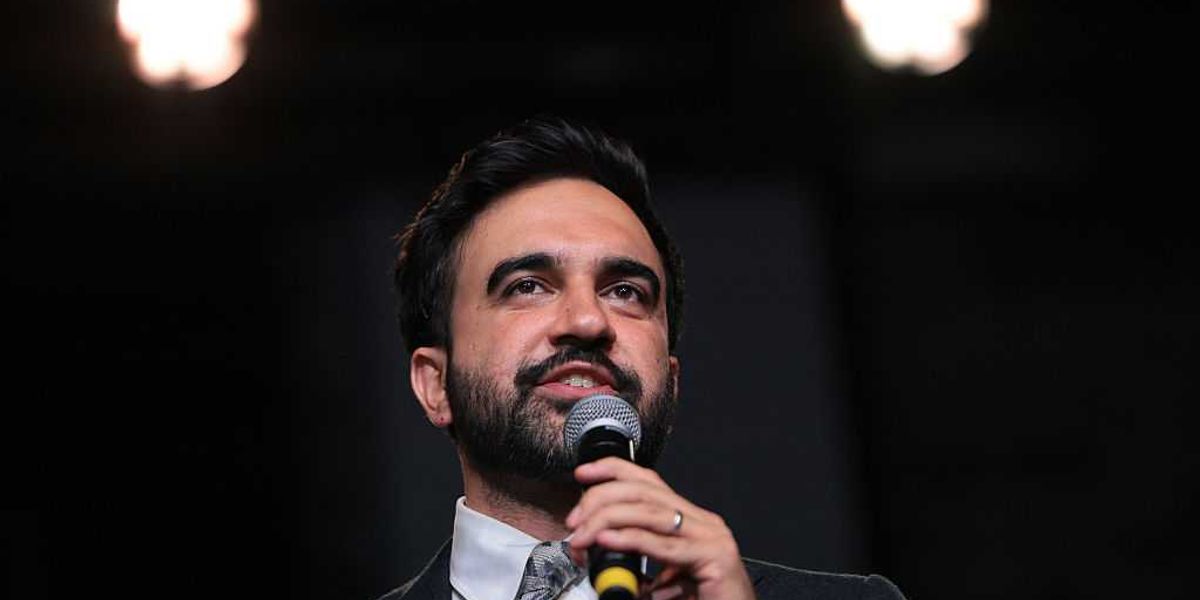
Zohran Mamdani is stirring up another big fight over race, history, and politics in New York City, and this one is already landing with a thud. Asked about reparations for slavery in a future city administration, he did not slam the door on the idea, which was enough to set off a fresh round of criticism and debate.
That kind of answer matters because reparations is not some tiny side issue. It goes straight to questions of fairness, responsibility, and who gets stuck paying for mistakes made generations ago. In a city like New York, where taxes are already a hot-button issue, even floating the concept can light a fire fast.
Mamdani’s comments tap into a familiar progressive instinct, one that treats almost every social problem as proof that government should reach deeper into people’s pockets. Supporters frame reparations as a moral correction, a way to acknowledge the lasting damage of slavery and discrimination. Critics see something much simpler and much more troubling: a political class trying to assign guilt, money, and blame across people who had no part in the original crime.
The practical problem is hard to ignore. Reparations sounds clean in campaign talk, but once anyone starts asking who qualifies, how much they get, and who pays, the whole thing gets messy in a hurry. That is especially true in a place like New York City, where millions of residents already feel squeezed by rent, taxes, and the cost of daily life.
There is also the basic issue of public trust. Voters do not like the feeling that elected officials are more focused on symbolic gestures than on real-world problems like crime, housing, schools, and the price of everything from groceries to gas. When a candidate refuses to rule out a massive and divisive policy idea, people naturally wonder whether that is a serious governing plan or just another way to score points with the activist crowd.
For Republicans and plenty of independents, this is exactly the kind of debate that reminds them why they distrust left-wing politics in the first place. The logic often goes like this: if the government can keep expanding the list of grievances that need to be “fixed,” then there is no limit to how far it can intrude into private life. Today it is reparations, tomorrow it is another tax, another program, another demand for more control.
There is a deeper cultural tension underneath it all too. Americans have always argued about history, but most people still want leaders who build a future instead of dragging everyone into endless blame games. A city as large and diverse as New York does not need more division from politicians eager to turn old wounds into new policy battles.
That is why Mamdani’s stance is being watched so closely. He is not just answering a narrow policy question, he is signaling the direction of his politics and the kind of coalition he wants to build. If reparations remains on the table, then so does a bigger argument over whether New York should keep moving toward activist-driven government or get back to basics.
And in a state where residents are already fed up with high costs and a sense that common sense keeps getting pushed aside, that argument is not going away anytime soon.
