
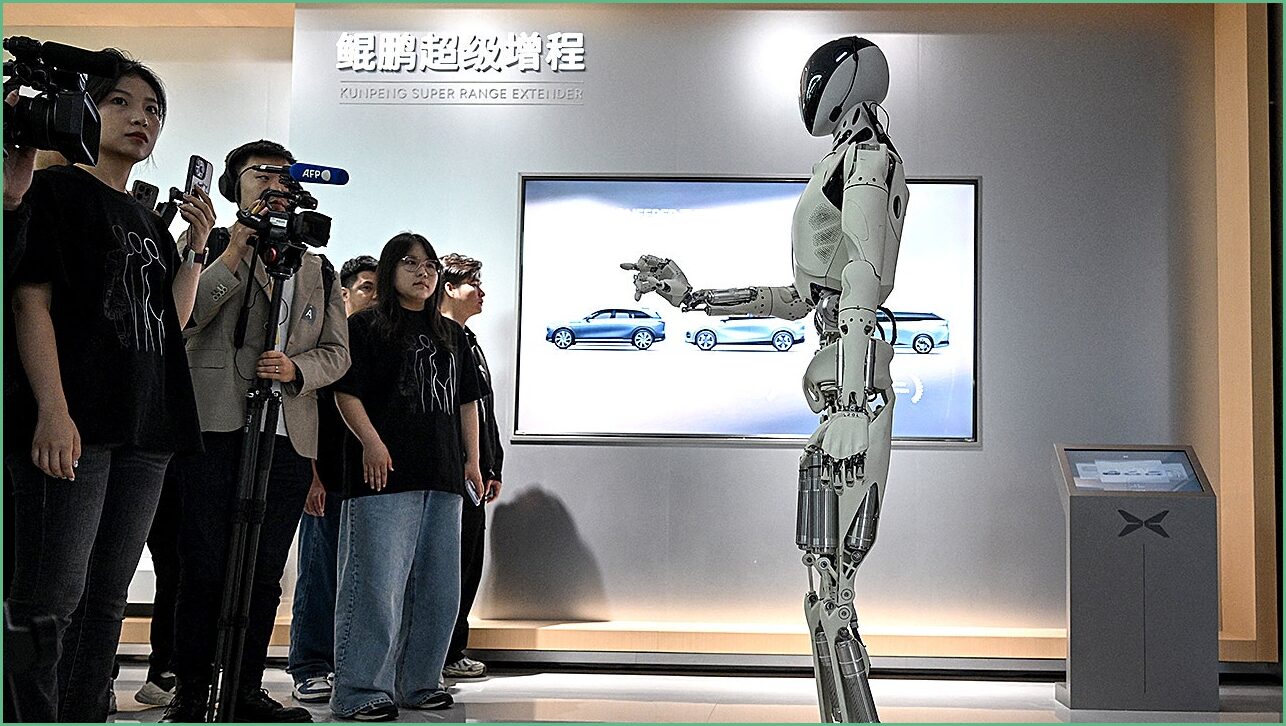
Xpeng’s Next Gen Iron humanoid stunned audiences with uncanny, fluid motion and a dramatic onstage demonstration that cut into the robot’s leg to prove it wasn’t a person in a suit. The reveal laid out hardware and software details, showed how far the design has come since 2024, and outlined plans to move these machines into commercial settings while keeping home use timelines vague. The performance raised practical questions about safety, privacy, and how lifelike robots will change public spaces.
The initial crowd reaction was immediate—many viewers assumed Iron was an actor because its movement looked so natural. That skepticism pushed Xpeng’s CEO back to the stage to physically expose the robot’s internal systems and close the debate. The stunt was theatrical, but it also highlighted a deeper point: people still struggle to accept machines that mimic human motion closely.
Underneath Iron’s flexible exterior sits a structurally humanoid spine, bionic muscles, and a design that prioritizes realistic articulation. The system offers 82 degrees of freedom overall, and each human-sized hand includes 22 degrees of freedom driven in part by a compact harmonic joint developed by the company. Those choices aim to balance dexterity with stability so the robot can navigate real-world interactions.
Power and compute are central to the presentation. Iron runs on all solid-state batteries to maintain a lightweight frame, and the processing suite uses Xpeng’s second-generation VLA model. The robot includes three Turing chips delivering a combined 2,250 TOPS of compute, which Xpeng says enables simultaneous tasks like conversational response, walking control, and environment understanding.
After the demonstration, Iron walked again on stage without a human inside, showing the company could back its claims in front of skeptics. That public moment is part validation and part marketing—a deliberate move to build credibility ahead of broader deployments. It also gives engineers a controlled way to collect data on how the robot performs under scrutiny.
Xpeng describes the rollout as phased and practical, with early units destined for commercial roles rather than private homes. Use cases they’re targeting include tour guides, shopping assistants, and customer service helpers where robots can manage crowds, answer questions, or handle repetitive tasks. Those controlled environments make it easier to monitor behavior and iterate on safety protocols.
The company has set an ambitious production timeline, aiming for large-scale manufacturing by the end of 2026. If they meet that milestone, we could see hundreds or thousands of humanoid units deployed in select venues within a relatively short time. Widespread use in public spaces would be a major step from experimental demos to everyday visibility.
Consumer availability remains an open question, and engineers stress several hurdles must be cleared before a humanoid lives in private homes. Beyond hardware longevity and battery life, fundamental issues like safety, privacy, and reliable autonomous behavior require rigorous testing and regulatory clarity. Those standards will determine whether these robots stay workplace tools or move into personal spaces.
The shift toward lifelike motion changes how people perceive service work and interaction. Robots that can walk into a museum or a store and engage naturally with visitors will alter expectations for staffing, wait times, and accessibility. At the same time, seeing a machine that moves like a person can be disorienting for some and reassuring for others.
Design flexibility is part of Xpeng’s pitch: future versions may come in different body shapes, hinting at customization for specific roles or environments. Modular form factors could let businesses choose a configuration that fits their brand or function without reinventing core software and control systems. That approach lowers the barrier for industry adoption while preserving a consistent platform underneath.
Public reaction, engineering progress, and commercial plans all point to a near-term test bench for humanoid robots in everyday settings. As these machines appear in more places, conversations about acceptable uses, data handling, and interaction norms will move from labs to lobbies. The next stretch of deployments will reveal whether lifelike robots can be both useful and broadly accepted in public life.
