
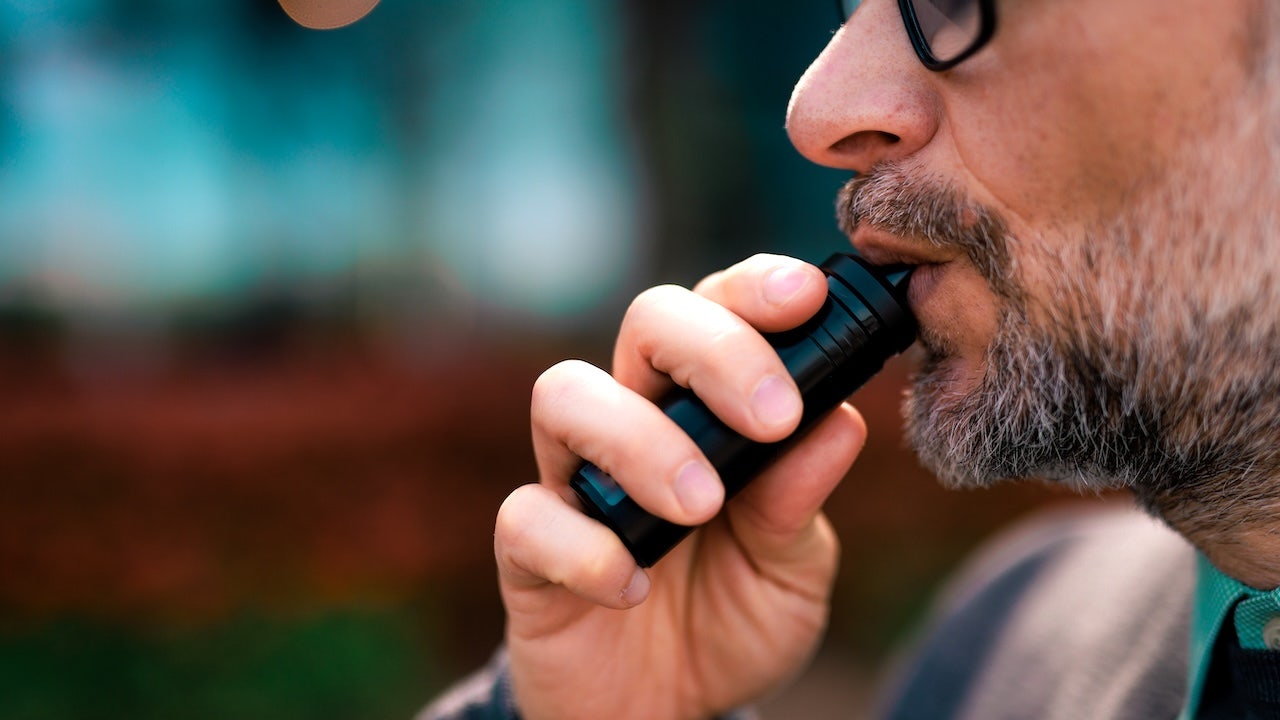
People who try to quit vaping sometimes end up reaching for cigarettes again, and that twist is raising eyebrows among addiction specialists. The problem is not just the nicotine itself, but the way modern vaping can keep users hooked all day long while making withdrawal hit hard when they try to stop.
Public health data has pointed to a troubling pattern: some adults who walk away from vapes do not stay nicotine-free. Instead, they slide back to combustible tobacco, a move that may feel like relief in the moment but brings its own set of risks and keeps the dependence alive.
Trent Carter, a board-certified nurse practitioner and CEO of Renew Health in New Mexico, said the switch back to cigarettes can make sense from a behavioral angle even if it looks backward on paper. “Vaping can become constant throughout the day, whereas a cigarette is more of a defined episode,” Carter said.
That difference matters more than it sounds. Cigarettes usually force a break, a trip outside, and a clear start and stop, while vaping can blur into the background and become almost automatic. Over time, that nonstop access can crank up nicotine intake and strengthen the hand-to-mouth habit that keeps people coming back.
High-potency nicotine is a big part of the trap. Many e-cigarettes use concentrated nicotine salts that deliver a strong dose with each puff, which can be harder to unwind than the lower, more controlled intake some people expect. “If you’re consuming a large amount with every single puff … it’s going to be harder to stop when compared to a lower dose,” Carter said.
Nicotine works on the brain fast, nudging dopamine and other chemicals tied to pleasure, mood and reward. When that supply gets cut off suddenly, the body can push back with cravings, irritability, brain fog, and ugly sleep problems that make quitting feel like a full-time job.
That is why some standard quit aids do not always feel like enough. A patch or gum can help with cravings, but if the habit side of vaping is ignored, the deeper problem stays put and the urge to relapse can stay loud.
“While a patch or gum could definitely help with the nicotine cravings, if you’re not addressing the behavioral aspect of it, then you’re really falling short,” Carter said. “You’re leaving a huge component of why they may be smoking — whether it’s because of anxiety or even insomnia during the day.”
Early marketing around e-cigarettes also left a mark. Plenty of people were led to believe vaping was a cleaner, safer, almost doctor-friendly alternative, and that message made it easy to underestimate how hard the habit could be to break later.
“If you’re being told something is safe or doctor-approved, we tend to feel we’re making the right choice,” Carter said. “While traditional cigarettes have toxins that e-cigarettes do not, if your daily consumption of nicotine becomes much higher, we find ourselves in a nasty cycle. You got rid of the toxins, but now you’re consuming much more nicotine.”
That cycle can hit both body and mind. Heavy, nonstop nicotine use can push up heart rate, raise blood pressure, wreck sleep and aggravate anxiety, which only makes the next craving feel sharper. What starts as a shortcut away from smoking can morph into a tougher dependence with fewer guardrails.
Switching back to cigarettes is not a real solution, either. It brings tar, carbon monoxide and other toxins right back into the picture, which means the person trying to quit vaping may trade one serious problem for another without ever getting free of nicotine addiction.
Experts say the smarter route is treating the dependence itself, not just the device. That usually means supervised tapering, behavioral therapy, and a close look at the stress, anxiety, boredom or sleep issues that feed the habit in the first place.
“The goal shouldn’t be to find another way to consume nicotine,” Carter said. “The goal should be to treat the dependence itself.” He added, “It’s not trading one for the other, but finding the underlying cause and addressing that head-on — that’s how someone truly takes steps in the right direction.”
For people trying to get out of the loop, self-awareness matters, but so does backup. Reaching out to a licensed addiction or mental health professional can help build a plan that fits the person instead of just swapping one nicotine source for another.
