
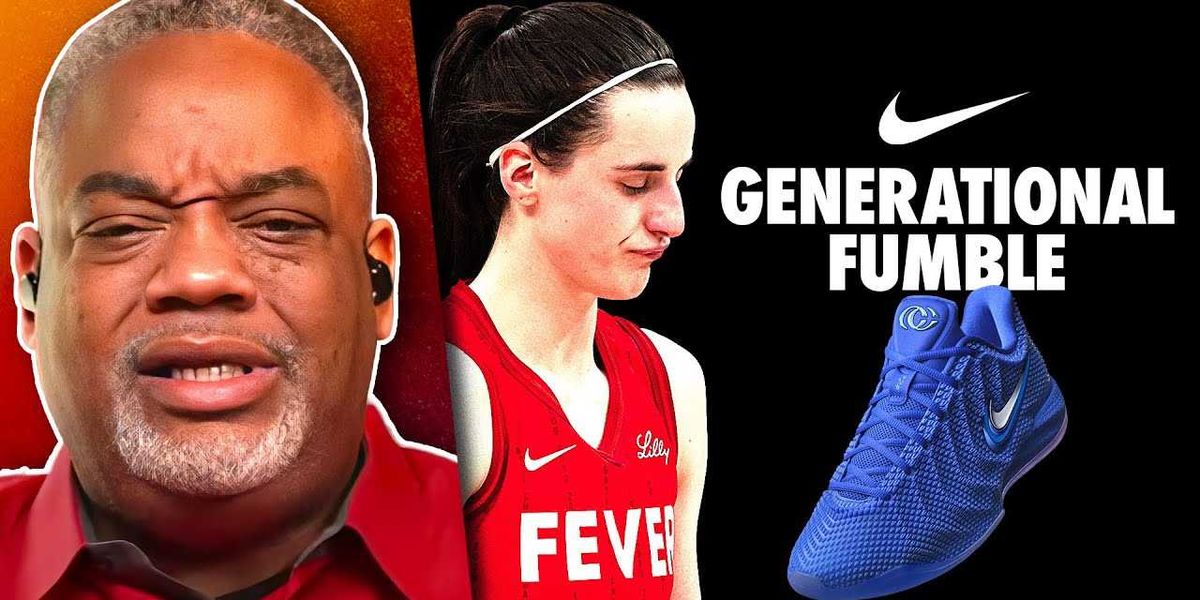
When Caitlin Clark burst onto the national stage she changed the conversation around women’s basketball, and now that spotlight has become the battleground for a larger debate about marketing, culture, and corporate decision making. This piece follows the argument made by commentator Jason Whitlock that a missed timing by a major brand cost both the company and the player a peak opportunity. It also examines how cultural priorities can shape, and sometimes distort, business moves in sports today.
Caitlin Clark’s rise was public and fast, turning college and professional courtrooms into headline events and drawing viewers who hadn’t cared before. Plenty argued that a signature shoe would be an easy commercial slam dunk, so when the sports giant didn’t act, critics noticed. Some saw an obvious business misstep; others smelled something more complex at work.
Whitlock didn’t hold back about the timing. “Looks like a sharp shoe. But the timing of when they’re releasing, now, when Caitlin Clark’s popularity is at the lowest it’s been since 2022. Caitlin Clark starting her junior year of college started to become a force of nature,” he said, arguing that the brand missed the athlete’s peak cultural moment. He doubled down, noting how Clark’s senior run pushed college women’s basketball ratings to unprecedented levels. “And by the time she got to her senior year in college, by the time she got to the national championship game her senior year, the ratings for women’s college basketball went through the roof. They set records, unprecedented records,” he continues, adding, “Caitlin Clark had arrived.”
With that arrival came commercial expectation. Instead of immediate endorsement and product rollout, the shoe release timeline stretched out into seasons and hype cycles, and that delay opened the door to second-guessing. In Whitlock’s telling, the failure wasn’t just a missed marketing calendar but a strategic error that left money on the table and momentum unclaimed.
He put the situation bluntly. “No Nike shoe her senior year in college. No Nike shoe when she’s a rookie in the WNBA. No Nike shoe when she’s coming into her second season in the WNBA after setting the league on fire. No shoe then,” he emphasizes, laying out a sequence where the brand repeatedly let an opening pass. That list-style critique is the core of his argument about timing and tactical patience gone wrong.
That failure to act, Whitlock says, isn’t merely corporate caution. He fingers cultural politics as a motive and an obstacle, suggesting that identity considerations shifted priorities inside boardrooms. In his view the decision process became entangled with forces outside of pure commerce, driving choices that looked ideological rather than profit-driven.
He named those forces plainly. “It’s the alphabet mafia. It’s the LGBTQIA+, BLM,” he said, putting cultural movements at the center of his critique of corporate America. Whitlock argues that when brands let cultural alignment lead over fan demand and clear market signals, they risk alienating customers and missing straightforward opportunities.
Whitlock also suggested that Clark herself navigated those pressures in ways that mattered to sponsors. “Caitlin Clark being a white, heterosexual woman, a tiny bit reluctant to bend the knee to the alphabet mafia, but she did bend the knee,” he said, framing the athlete’s choices as part of the business calculus companies use when deciding who to back. His claim is that identity signaling, and the perception of it, influences whether a commercial relationship gets sealed or stalled.
He went further into the supposed mismatch between athlete and brand. “But she didn’t have the complexion or the right sexual desires for Nike and for the alphabet crew. She didn’t have the right sexual arousal. She didn’t have the right skin color,” he said, alleging that those factors played a role in the delayed endorsement. Those are sharp accusations intended to provoke a debate about how values and marketing priorities interact.
Whether you accept his frame or not, the debate raises clear business questions: when should brands move quickly to capitalize on cultural moments, and when do they let other considerations dictate timing? The Clark situation shows how high-profile athletes can become lightning rods for broader tensions between commerce and cultural signaling.
For conservative viewers and commentators, the episode is a twofer: a cautionary tale about corporates prioritizing politics over profits and a reminder that cultural alignment with certain movements can cost companies real opportunities. It’s a conversation likely to continue as athletes, fans, and brands navigate a marketplace that now mixes performance, identity, and public perception in complicated ways.
Whatever the truth of Whitlock’s accusations, the takeaway is clear: timing matters and cultural calculations can change outcomes. Fans and industry watchers will keep an eye on how brands respond when the next breakout star steps into the spotlight, and whether commerce or cultural posture wins the day.
