
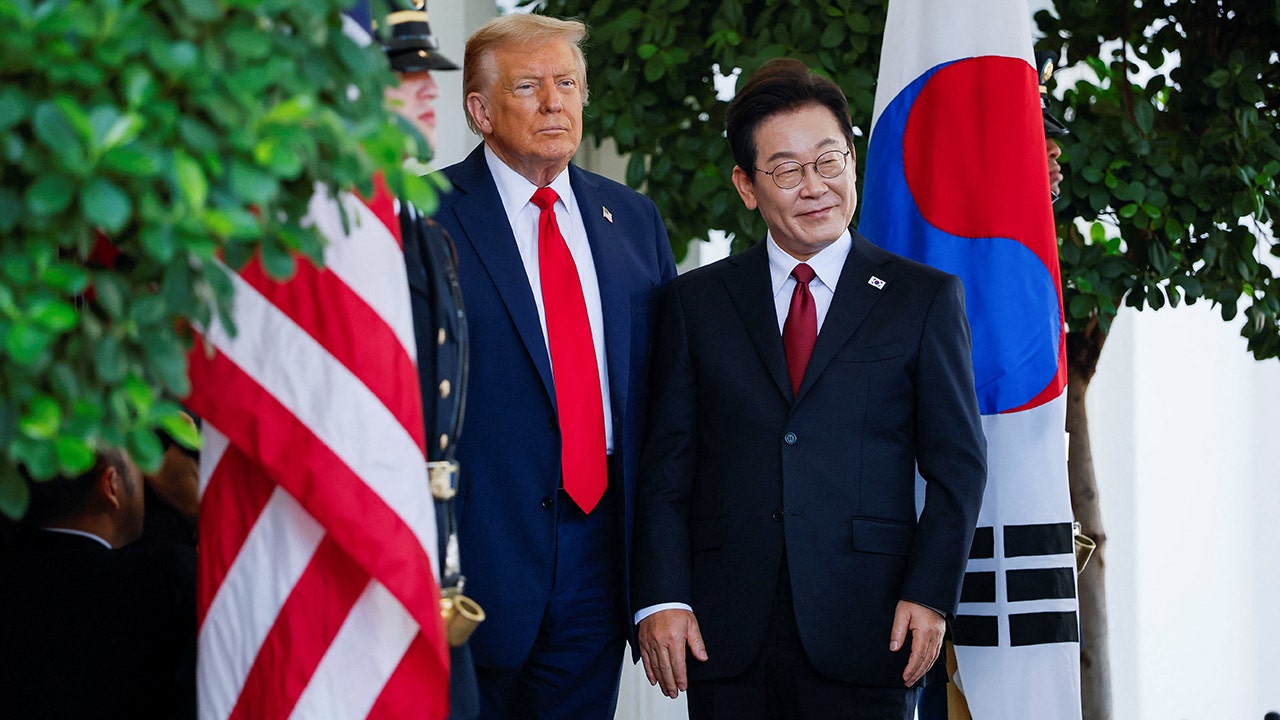
The White House is pressing South Korea over what it sees as a broken promise on fair treatment for American tech firms, with Coupang now caught in the middle of a fast-moving dispute. Seoul says its regulators acted within the law, but Washington and several House Republicans are saying the pattern looks a lot more like pressure on U.S. business than neutral enforcement.
- White House criticism of South Korea
- Large fines against Coupang
- Claims of discriminatory treatment of U.S. companies
- South Korea’s defense of its regulators
- House Republican concerns over the alliance
South Korean regulators have slapped Coupang with about $688 million in penalties, including a provisional $224 million fine tied to its food delivery business. A White House official said the administration opposes what it sees as discrimination by President Lee Jae Myung’s government and expects Seoul to honor its commitment to treat U.S. technology companies fairly.
South Korea pushed back quickly. An embassy official said the country stands by the agreement with the Trump administration and maintains a business climate that is supposed to be fair and nondiscriminatory for everyone, not just in theory but in practice.
“All investigations and decisions undertaken by the Korean government, including the recent fine imposed on food delivery service providers for anticompetitive conduct by the Korean Fair Trade Commission have been conducted lawfully and in accordance with applicable laws and regulations,” a spokesperson for the Embassy of the Republic of Korea told Fox News Digital. “Furthermore, the right to seek legal remedies under the Korean law is fully guaranteed.”
The embassy also stressed that the U.S. relationship remains South Korea’s most important strategic partnership. That message leaned on familiar language about democracy, rule of law and open markets, while pointing to continued efforts to smooth things over with American policymakers and keep the economic relationship on solid ground.
Coupang is no small player in this fight. Often called the “Amazon of South Korea,” the company runs the country’s biggest e-commerce operation and is famous for its fast “Rocket Delivery” service, which gets many orders to customers the same day or by the next morning.
Despite its deep roots in South Korea’s market, Coupang is an American company on paper and on the books. It is incorporated in Delaware, based in Seattle and traded on the New York Stock Exchange, with founder Bom Kim at the center of its rise since 2010.
The State Department is also sounding the alarm. One official said the Korea Fair Trade Commission’s ongoing campaign against American companies is putting the broader U.S.-South Korea alliance under strain, and the department is now weighing policy options in response to what it views as discriminatory treatment.
Rep. Darrell Issa, who has been one of the loudest critics of South Korea’s approach, argued that the issue goes far beyond one company. He said the relationship between the two countries has been built over decades through sacrifice, trade and shared values, but warned that the Lee government could either fix the damage or make it worse.
“For eight decades, America and Korea have benefited from an alliance purchased by sacrifice on the battlefield, joined by economic opportunity, and bolstered by mutual values,” Issa told Fox News Digital. “The Lee government has the opportunity to repair or damage our relationship, and I hope he chooses the path of friendship, rather than continued confrontation.”
“But that is being put at risk by the anticompetitive policies of KFTC Chairman Ju that have unfairly targeted America’s tech industry and even individual American citizens,” he added.
House Republicans have been digging into the issue for months, with a July Judiciary Committee timeline describing a string of actions aimed at Coupang, including a secret laptop recovery mission in China and a push for perjury charges against the company’s interim CEO in South Korea. Seoul police later cleared the executive, and the case did not move forward.
As the dispute keeps unfolding, both sides are sticking to their lines. The White House says South Korea promised fairness and is now falling short, while Seoul says its regulators are following the law and its alliance with Washington remains a top priority.
For U.S. lawmakers, the concern is not just about fines or paperwork. It is about whether American companies can operate overseas without getting singled out, and whether a key ally is drifting toward rules that reward the wrong players and punish the wrong firms.
