
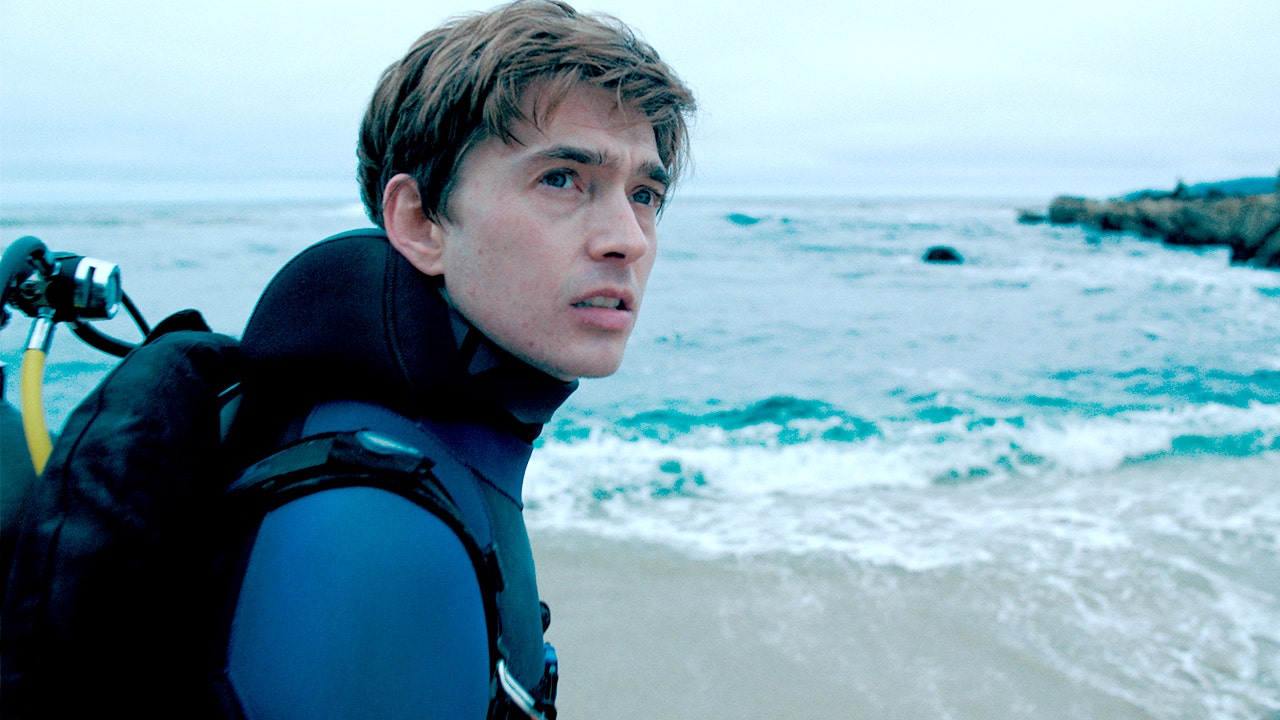
Jay Gardiner’s underwater nightmare lands with a sharp mix of dread, grief, and survival suspense, turning a wildly high-concept setup into something strangely intimate. Anchored by Austin Abrams and driven by Brian Duffield’s tense direction, the film keeps pressure on every frame while pushing a father-son wound to the surface.
Talk about a bad day at sea. “Whalefall” takes the already uneasy idea of ocean survival and sends it straight into full-on panic mode, where one wrong breath can end everything. The result is a movie that leans hard into claustrophobia, but never loses sight of the emotional damage sitting underneath all that saltwater.
Adapted from Daniel Kraus’s 2023 novel, the story follows Jay Gardiner, a college student still carrying the mess left behind by his estranged father, Mitt. Played by Josh Brolin, Mitt is remembered as a once-vibrant scuba diver whose final choice leaves Jay with a pile of guilt he cannot shake. That grief sends Jay into the water looking for answers, even before the film throws its most outrageous twist at him.
The twist is exactly what it sounds like. Jay gets swallowed by a giant sperm whale, and from there the movie becomes a nerve-fraying struggle to stay alive with limited oxygen and no real plan beyond instinct and hope. The whole setup could have played like a stunt, but the film treats it like a genuine survival ordeal, and that seriousness gives the absurd premise real bite.
A lot of the tension comes from how enclosed everything feels once Jay is inside the whale. He is boxed in by darkness, pressure, and time, while the film keeps hinting at even stranger dangers waiting in the same impossible space. There is a giant squid in the mix too, because apparently being trapped inside a whale was not cruel enough on its own.
What keeps the movie from sinking is Abrams. He has an easy, plainspoken likability that makes Jay feel like a real kid in over his head, not just a genre placeholder waiting to be shoved around by the plot. That matters, because the movie only works if the audience buys into his fear, stubbornness, and flashes of heartbreak.
Brian Duffield, who previously showed a strong handle on solo-character suspense in “No One Will Save You,” brings that same control here. The technical side is impressive enough to make the whale feel physical, not like a cartoon or a clean digital trick, and the line between effects, sets, and practical work is often hard to spot. That uncertainty helps sell the illusion in a big way.
The film also keeps cutting back to Jay’s relationship with Mitt, which gives the survival material some bruised emotional weight. Those scenes do important work, but they also make it clear that the movie is operating on two tracks at once, one about getting out alive and one about what it means to be haunted by a parent who was never easy to love. It is that push and pull that keeps the story from becoming just another gimmick.
Not every part lands cleanly. The final stretch drifts a bit, and the movie could have used a firmer hand in trimming some of its middle passages. Elisabeth Shue also deserves more to do as Jay’s mother, since the role has real dramatic potential that the script barely taps.
Still, the overall experience is hard to shake. “Whalefall” is the kind of survival drama that gets under the skin because it is not only about escaping a whale, but about facing old pain in the middle of a near-impossible crisis. It is tense, immersive, and just strange enough to stick with you long after the screen goes dark.
The cast surrounding Abrams includes Brolin, Elisabeth Shue, John Ortiz, Jane Levy, and Emily Rudd, and the movie uses that talent to give the story a grounded edge. In the end, this is a big-screen ride built for people who like their suspense raw, their emotions bruised, and their disaster stories with a pulse that refuses to quit.
