
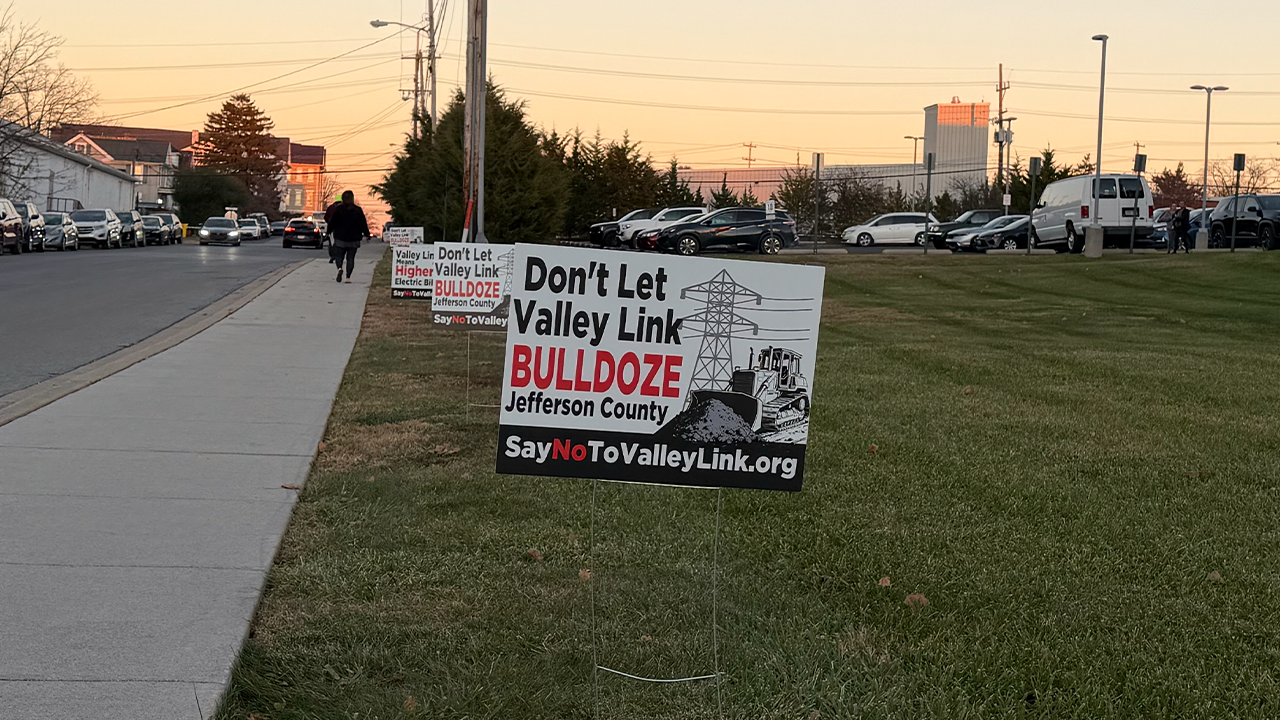
In Jefferson County, West Virginia, a fight over a proposed power line has turned into something bigger than a local zoning squabble. Residents are worried about land, property rights, and whether rural communities are being asked to carry the burden for the data center boom. The dispute has also become a test of how far companies can go when new technology demands more and more power.
At an open house in Ranson, opponents of the Valley Link Transmission Project showed up in force. The line is meant to carry electricity across the state and into Northern Virginia, where sprawling data centers continue to multiply. For the people gathered there, the issue was not just about infrastructure, but about what happens when private land gets pulled into a larger plan without enough local buy-in.
One landowner described receiving a flyer in the mail that, in his view, felt less like notice and more like a warning. He said it offered little detail and left him with the sense that a line had already been drawn across his property on a map. That kind of message tends to light a fuse fast, especially in places where family land and generational roots still matter a lot.
Melissa Hope, a sixth-generation farm owner, said she had spent months trying to spread the word to neighbors. She lives near the route but not directly in its path, which only sharpened her concern about what this kind of project can do to a county’s character. Her bigger worry is that Jefferson County would shoulder the damage while someone else gets the power.
The visual impact of the project added fuel to the backlash. A crane outside the civic center was used to show the height the transmission lines could reach, and the scale was hard to ignore. For people already watching new housing and faster growth reshape the area, the idea of 180-foot structures cutting through the landscape landed like a gut punch.
Valley Link says it has been listening. A company spokesperson said thousands of people had already weighed in and that the open house was meant to give residents another chance to examine possible routes before a final plan is set. That may calm some nerves, but it has not erased the basic fear that the route will still land too close to homes, farms, and the places people rely on every day.
Even among the critics, there is no simple split between pro-growth and anti-growth camps. Some residents accept that data centers need electricity and that the digital economy is not going away. The sharper objection is to forcing one county to absorb the costs, the visual scars, and the legal fight over land while the benefits flow somewhere else.
That tension is what makes the whole debate so sticky. From a distance, the answer looks easy: more data centers need more power, and more power means new lines, substations, and grid upgrades. Up close, though, the people living beside the route see fences, farms, and family histories, not just a clean line on an engineering map.
There is also a deeper question hanging over the entire project about timing. Critics argue that building a long transmission line now could lock communities into a costly solution just as new technologies and new power strategies are emerging. That concern makes the debate feel less like a simple yes-or-no decision and more like a race between local sacrifice and a tech world moving at full speed.
For now, the open house at least forced the conversation into the open. Residents got to press their objections, the company got to explain its position, and everyone in the room was reminded that modern life runs on power, but not every community is eager to be the one that pays the price for it.
