
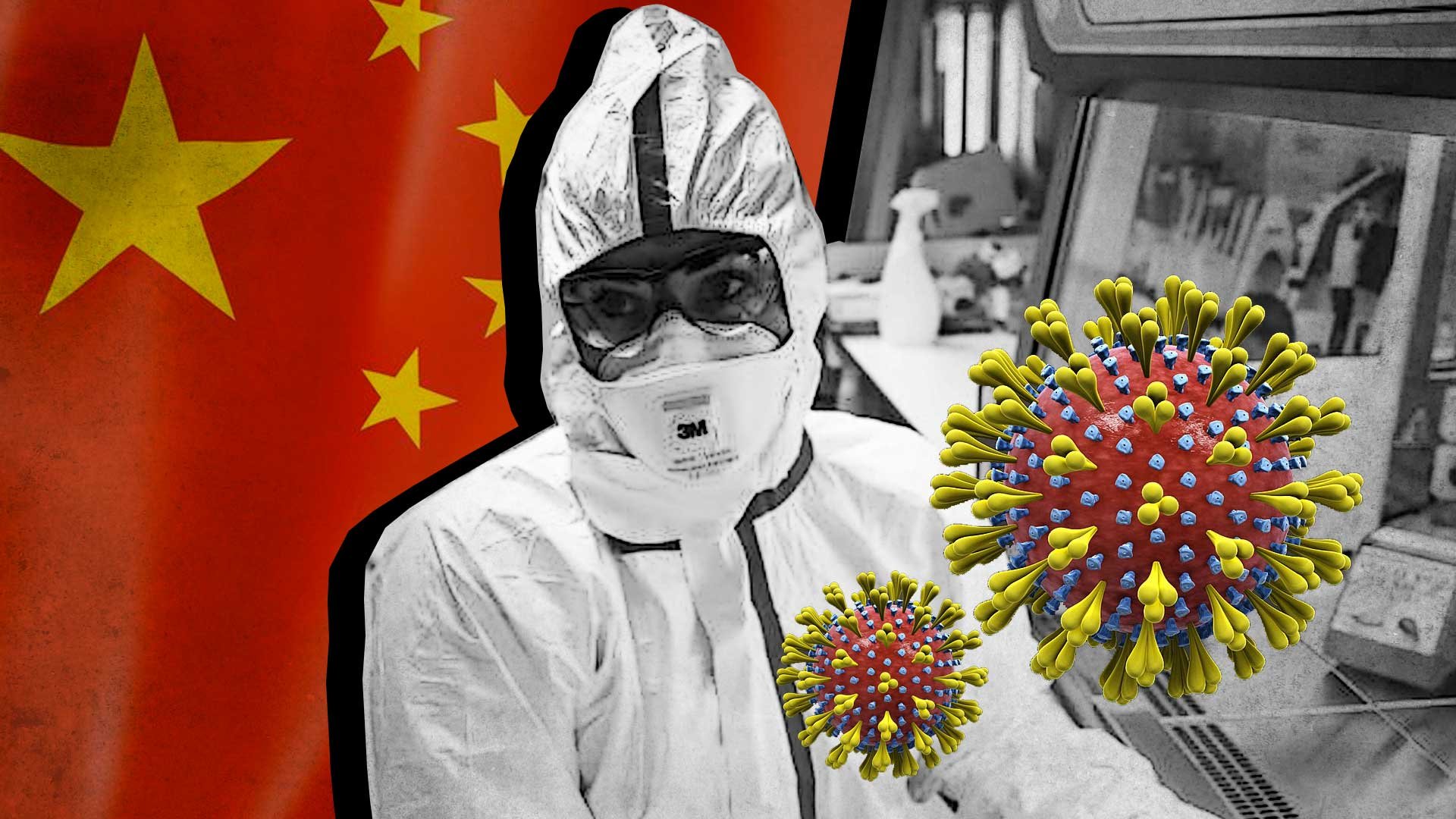
Glenn Kessler, former fact-checker for The Washington Post, admitted he was “completely wrong” in labeling the COVID lab leak theory as “doubtful” back in 2020. His confession came during an interview with The Editors, where he discussed his controversial 2020 article titled, “Was the new coronavirus accidentally released from a Wuhan lab? It’s doubtful.” Kessler expressed “infinite regret” over the mistake, acknowledging that “everyone makes mistakes” and “no one is perfect.”
During the height of the pandemic, as President Donald Trump was pointing fingers at China for the virus’s origins, Kessler and others in the media dismissed the president’s claims. This dismissal not only sowed doubt but also shifted the blame onto natural transmission from bats to humans. As a result, the nation lost precious time debating the virus’s origins, which hampered Trump’s efforts to address the crisis effectively.
This misstep allowed China to evade responsibility and delayed appropriate action against them, diverting attention from Dr. Anthony Fauci’s involvement. Such an error was significant and cannot be dismissed with a mere apology. Some might even argue that this was a deliberate attempt to undermine Trump and protect Chinese interests.
Despite his admission of error, Kessler tried to downplay the situation. “When you’ve got a title like ‘the fact checker,’ when you make a mistake, people notice,” he remarked. He insisted that his overall body of work overshadowed this particular blunder, even as he faced accusations of running a “propaganda mill” by the New York Post editorial board.
Kessler defended his career, noting, “I wrote or edited 3,000 fact-checks. Yes, there might be a dozen bad apples there.” He further claimed, “It’s easy and kind of facile to pick at a particular piece and say that defines a person.” However, this was not a simple mistake that could be rectified with an editor’s note or a minor correction.
The misleading headline propagated a narrative with real-world consequences, contributing to widespread censorship of dissenting opinions. The media’s portrayal of the pandemic heavily influenced America’s approach to tackling the virus, especially in its early stages. This misstep demonstrates the significant impact of media narratives on public perception and policy-making.
Kessler revealed that a colleague had warned him about the definitive framing of the article. “One of the reporters on the piece came up to me the next day and said, ‘I think you made a real mistake by putting ‘it’s doubtful,’” he admitted. The colleague had expressed uncertainty over the virus’s origins, urging caution in the article’s presentation.
Reflecting on his error, Kessler acknowledged, “That’s on me. I screwed up.” He credited Sarah Cahlan, who co-authored the piece, for her foresight and admitted his mistake during her farewell from The Washington Post. Despite this acknowledgment, the article’s headline remains unchanged to this day.
A year after the article’s publication, a note was appended, but it still failed to confirm the lab leak theory as the virus’s source. The note stated, “A year later, the source of the coronavirus is still unknown. But in recent months, new evidence has tipped the lab leak theory onto firmer ground.”
The lack of accountability for such a significant oversight raises questions. Why was Kessler neither suspended nor punished for this glaring error? Instead, he stayed with the publication until he opted for a buyout, leaving after nearly three decades, as reported by the New York Post.
This incident highlights the double standards prevalent in media circles, where liberal narratives often escape scrutiny. The treatment Kessler received underscores a bias that shields media figures who oppose Trump, allowing them to avoid consequences. This bias reflects a broader trend where truth often takes a backseat to political agendas.
The situation serves as a reminder of the importance of media accountability. It echoes the old adage, “Never let the truth get in the way of a good story,” illustrating how narratives can be shaped to fit particular viewpoints. As the media continues to wield significant influence, the need for balanced and accurate reporting becomes ever more critical.
