
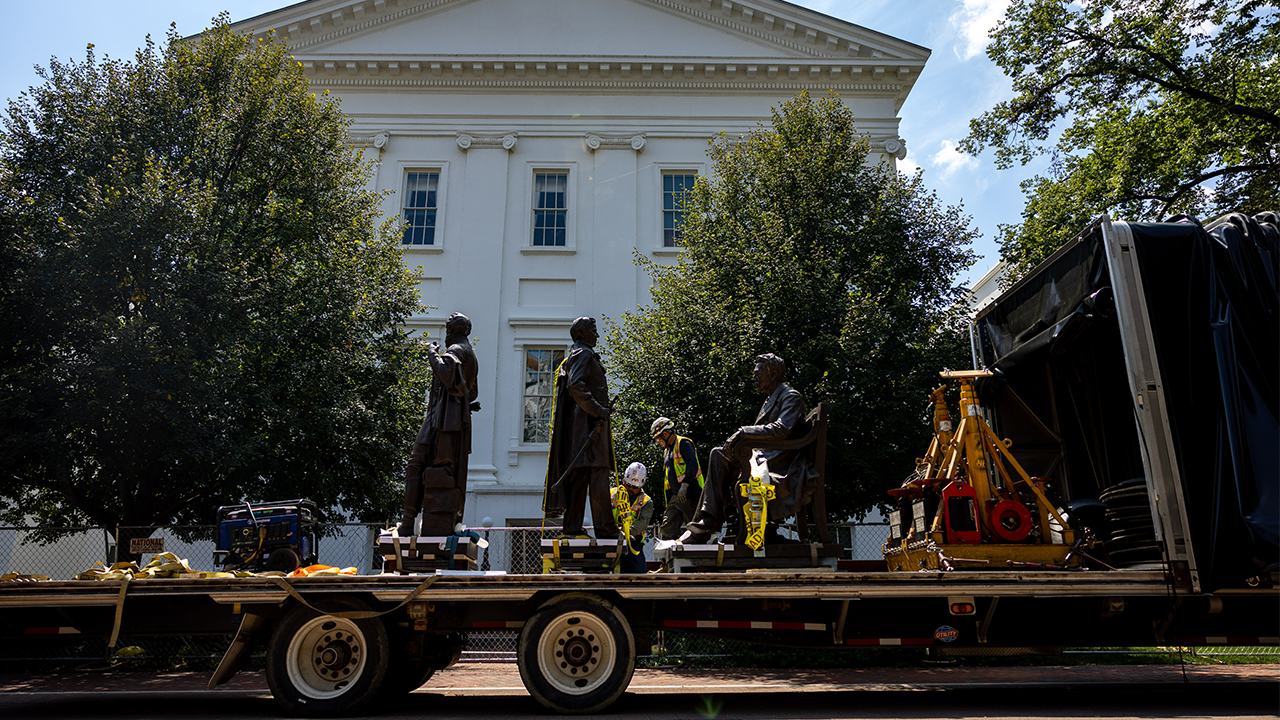
• Virginia’s latest monument removals and the fight over how history is remembered
• Dr. Hunter Holmes McGuire and the Winchester Accord’s lasting humanitarian impact
• The role of Confederate statues and the debate over public honor
• Reactions to the removals from politicians and preservation groups
• The larger clash over “woke” history and how institutions frame the past
Virginia’s monument fight flared again when statues in Richmond came down, and this time the target included Dr. Hunter Holmes McGuire. The move lit up an old argument with fresh force: whether public spaces should keep honoring figures tied to the Confederacy, or whether those monuments are being scrubbed away by people who care more about politics than history.
McGuire was not just another name on a pedestal. He served as a Confederate surgeon through much of the Civil War and became known for helping shape a wartime rule that would protect captured doctors as non-combatants, a concept that later echoed through international law. That history gives the removal a sharper edge, because the statue was not only about the Confederacy, but also about a medical figure whose influence reached far beyond the battlefield.
The story centers on the Winchester Accord, which grew out of the First Battle of Winchester in 1862. After six Union army doctors were captured, McGuire pushed for their release, and an understanding emerged that medical personnel should be treated differently from combat troops. That principle eventually found its way into the Geneva Convention, becoming part of the basic framework for humanitarian treatment in war.
That is why the statue’s fall landed so hard for critics of the decision. To them, tearing down McGuire’s monument felt like a sign that no nuance survives once a figure is branded with the wrong era or the wrong uniform. If a person lived in the Confederacy, they argue, the rest of the record gets flattened and the larger contribution is shoved aside.
Supporters of removal see it differently. They look at the broader message sent by Confederate monuments in public places and say those statues still project a version of history many communities no longer want to celebrate. For them, the point is not just about one doctor’s biography, but about whether government property should keep giving prime space to symbols rooted in a divided past.
That tension has only grown stronger in Virginia, where the politics of memory keep colliding with the politics of race. State Senator Mike Jones pointed to painful reminders of segregation and argued that the monuments remained offensive because they evoked a time when Black citizens lived under open humiliation and exclusion. His view reflects a common belief among removal advocates that the statues keep old wounds visible for all the wrong reasons.
Still, the backlash is hard to miss. Many conservatives see the removals as part of a broader campaign to rewrite the country’s past by stripping away monuments instead of teaching the full story. They say the same institutions that preach about justice often show little patience for historical context when it involves figures they dislike.
There is also a practical wrinkle in all this. The statues are reportedly headed to battlefield sites through the Shenandoah Valley Battlefields Foundation, which softens the blow a little by placing them somewhere tied to the actual history. That shift may satisfy preservationists, but it also underscores the central dispute over where remembrance belongs and who gets to decide it.
What makes McGuire stand out is that his legacy reaches into the very laws that govern warfare today. The irony is obvious enough to sting: a man connected to the origin of medical protections in war now being treated as if his only meaning were tied to the cause he served. That is the kind of historical shortcut that keeps these fights alive, because once context is lost, public memory turns brittle fast.
So the real battle is not just over bronze and stone. It is over whether American history can hold contradictions without collapsing into slogans, and whether a country can remember flawed people honestly without pretending they never mattered. In Richmond, those questions are still hanging in the air, heavy enough to outlast the crane and the truck and the empty plinth left behind.
