
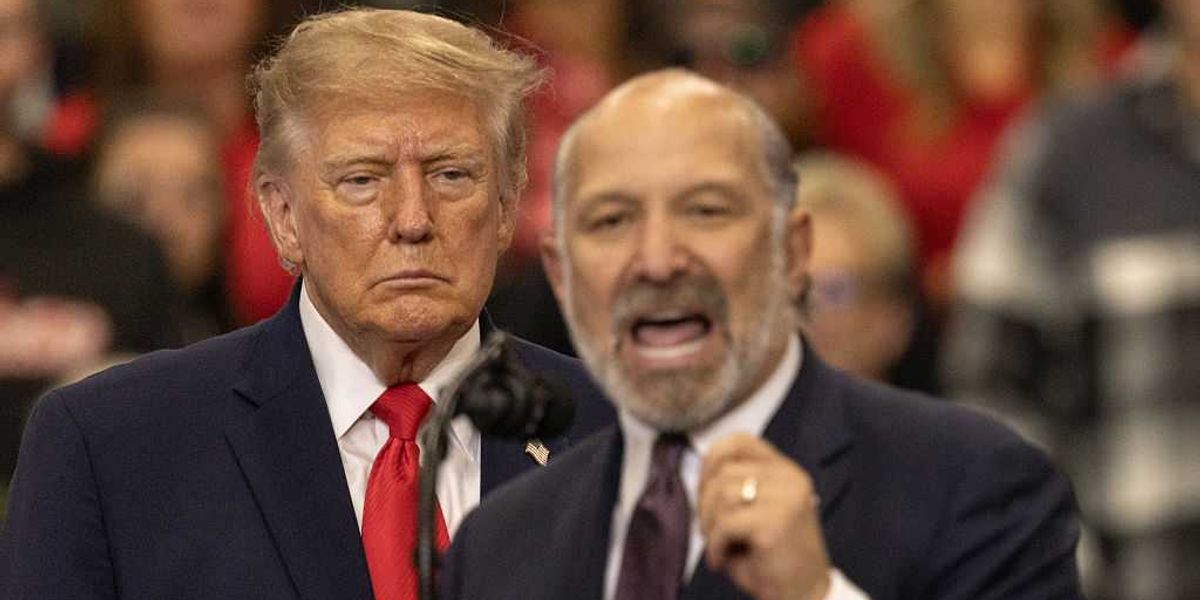
Commerce Secretary Howard Lutnick is heading into Capitol Hill scrutiny after a report claimed he slowed down President Trump’s push to tighten chip restrictions on China. The issue sits right at the crossroads of national security, trade leverage, and America’s fight to stay ahead in artificial intelligence, where advanced semiconductors are the prize everyone wants.
The timing makes the story even hotter, since China has spent years trying to narrow the gap on cutting-edge technology while U.S. officials debate how hard to press. At the center of the fight is a simple but powerful question: should Washington move fast to choke off Beijing’s access to the most advanced chips, or keep some room open for dealmaking and strategic flexibility?
Lutnick is expected to explain why the restrictions did not move as quickly as some lawmakers wanted. That delay has already triggered criticism from those who see any hesitation as a gift to China, especially when chips and the equipment used to make them are now viewed as critical national assets.
For supporters of a tougher line, this is not a niche policy fight. They argue that if America wants to keep its edge in AI, defense, and advanced manufacturing, it cannot afford to let China stock up on the hardware that powers next-generation systems. Every month of delay, in that view, gives Beijing more breathing room.
The controversy also lands in the middle of Trump’s broader economic and security agenda, which has leaned hard on strength, leverage, and fewer excuses. That makes the accusation especially sensitive, because any impression of wobble on China can quickly turn into a bigger debate about whether the administration is acting fast enough to protect U.S. interests.
China’s appetite for advanced chips has only made the issue more urgent. Nvidia and other major players sit at the center of a global tech race, and Washington knows that whoever controls the best semiconductors controls a huge slice of the future, from military systems to artificial intelligence models that demand massive computing power.
That is why congressional oversight on this fight is likely to be sharp. Lawmakers who have spent years warning about Chinese ambitions are unlikely to be satisfied with vague reassurances, and Lutnick will face pressure to show that the administration’s approach was deliberate rather than cautious to a fault.
There is also a political layer to all of this. In Washington, chip policy has become a proxy battle over whether America is serious about confronting China or still willing to let economic interests blur the mission. The stakes are high enough that even a short pause can look like weakness to critics looking for it.
Scott Bessent and Pete Hegseth are among the other names tied to the broader national security and economic posture around China, which shows how wide this fight has spread inside the administration’s orbit. When tech, trade, and defense all collide at once, the pressure does not stay contained for long.
What makes the story so combustible is that chips are not just another export item. They are the backbone of modern power, and every decision about them sends a signal about where the White House draws the line with Beijing.
That is why Lutnick’s testimony is likely to draw intense attention. The hearing will not just be about one alleged delay, but about whether the administration is moving with the kind of urgency that today’s tech rivalry demands, or whether it is leaving too much room for China to keep climbing.

1 Comment
Needed