
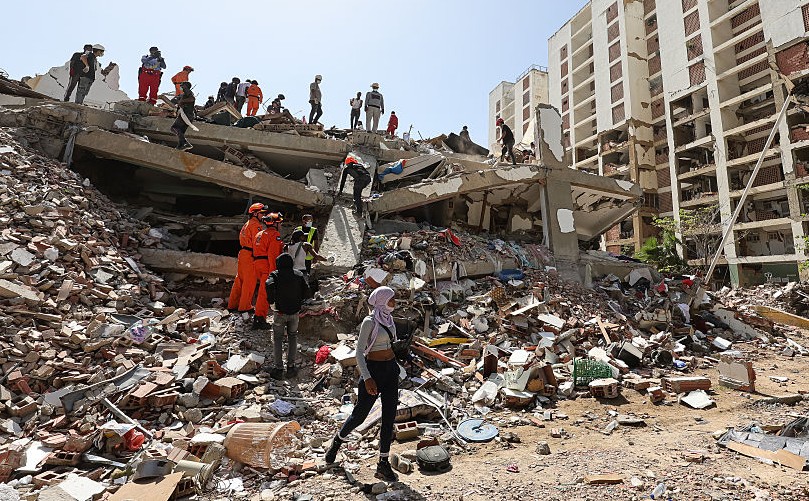
In the wake of deadly earthquakes in Venezuela, Bishop Carlos Márquez has pushed back hard against the idea that the disaster should be read as God’s direct punishment. At the same time, he still insisted that suffering has a place in the Christian life and that faith does not promise a painless path. The result is a sharp mix of natural explanation, religious reflection, and a debate that cuts right into how believers understand tragedy.
Speaking about the recent tremors that devastated parts of northern Venezuela, Márquez said people should not confuse natural forces with a heavenly verdict. He argued that what earlier generations might have called a curse is now understood as part of the way the world works. In his words, “We can’t escape biological law; we can’t escape the laws of nature. What we once thought was a curse or divine punishment, we now know to be natural processes, processes that are even necessary,”
That comment landed in the middle of a moment of real grief. The earthquakes, which struck within seconds of each other, left thousands dead, flattened buildings, and added another layer of pain to a country already under strain. When a disaster that large hits, people naturally search for meaning, and religious leaders often find themselves answering questions that have no easy ending.
Márquez tried to steer that search away from blame and toward endurance. He urged the faithful to remember that God permits suffering, even if the reason for it is hidden from human sight. That is a familiar Christian idea, but he also went a step further by insisting the earthquakes themselves belong to the order of nature rather than a special act of punishment aimed at the victims.
That is where the tension shows up. The Catholic tradition has long taught that the fall brought disorder into creation, and that the world we live in is not what it was meant to be. Earthquakes, floods, and other disasters sit in that uneasy space, where nature remains real and active, but creation is also wounded and unstable.
Scripture adds another layer to the discussion. The Bible does not always treat catastrophe as random chaos, and it certainly does not shrink from the idea that God can judge human evil. The story of the Flood in Genesis is one of the clearest examples, showing a world corrected through overwhelming judgment while still leaving room for mercy and survival through Noah and his family.
At the same time, Márquez did not leave the faithful with a cold, mechanical view of suffering. He returned to Christ’s promise that pain is not the final word and that believers are not abandoned in hardship. That message is central to Christian hope, especially in places where tragedy is not abstract but painfully visible in broken homes, grieving families, and damaged cities.
“Therefore, on our journey toward the fullness of living happily forever with Christ in heaven, we will encounter pain and suffering,” the bishop said. “Christ’s promise was not that we would not suffer, nor that there would be no earthquakes, floods, or natural tragedies,” he added. “Amid the pain, he promised not to abandon us. We are not alone (Our Lord says): ‘I will be with you until the end of the world,’ (and) He promises us his companionship in the midst of pain.”
That line about companionship matters because it keeps the focus on presence instead of theory. For people standing in the rubble, arguments about cause can feel distant fast, but the promise that God walks with the suffering hits closer to home. Márquez said the Lord “walks with us in the midst of our pain” and works through the Church, especially among those who are hurting most.
He also pointed to the sacraments and the Word of God as the tools that comfort, heal, and steady hearts when life falls apart. In his view, those gifts do more than offer religious language. They help people keep moving, keep believing, and keep standing when the ground itself has already given way beneath them.

1 Comment
????? God judging for the cartels & drugs nation produced over the years