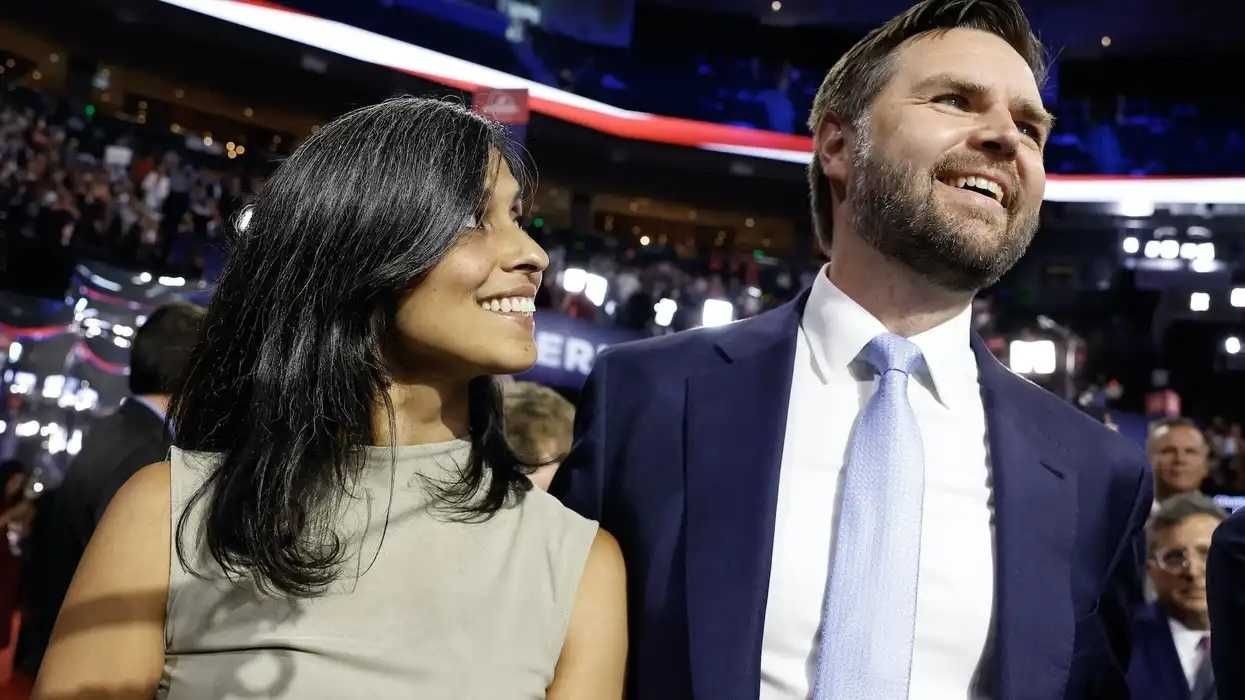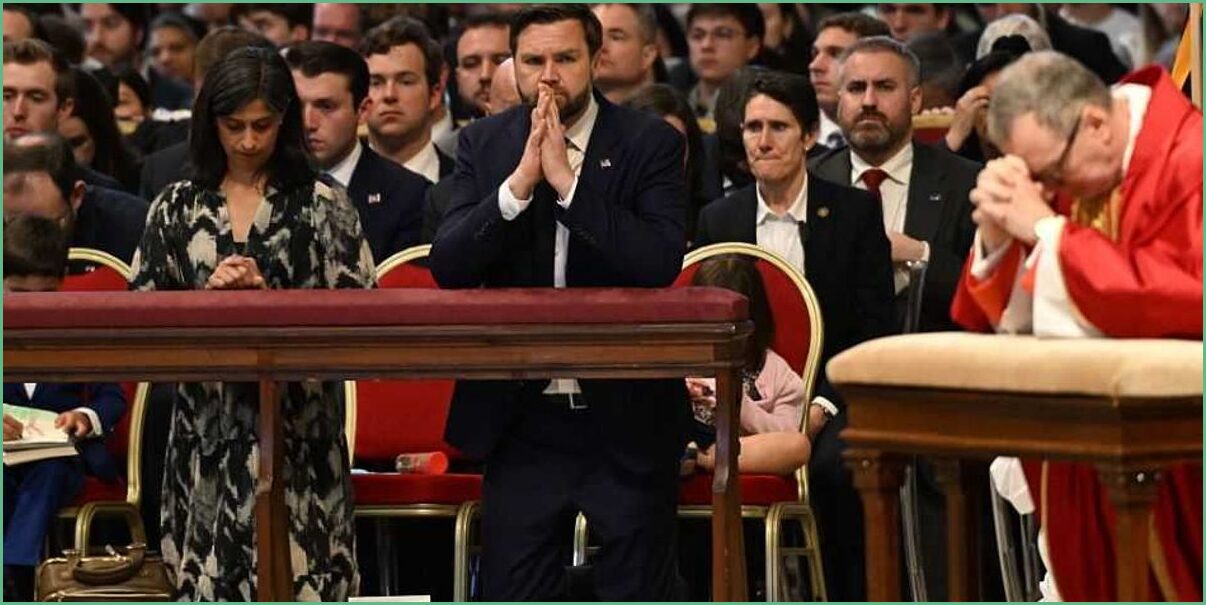
JD Vance’s comment that he hopes his wife might one day share his Christian faith reopened a debate about belief, identity, and status in modern America. The reaction exposed sharp cultural divides: meritocracy and credentials on one side, claims of spiritual truth and conversion on the other. This piece examines how sincere religious commitment rubs against elite sensibilities, how cultural Hinduism differs from committed Christianity, and why that contrast still matters in public life. It argues that Vance’s hope is less about coercion and more about a confident claim that faith changes a person’s whole horizon.
In elite circles today, religion often looks like an accessory you can pick up between networking events and graduate seminars. Shared ambition, school pedigree, and lifestyle choices tend to define modern partnerships more than creeds. So when a politician says he hopes his spouse comes to believe what he believes, it can feel oddly old-fashioned to those who think faith should be private and optional.
Vance is not an evangelist with fireworks on stage; his language was plain and personal. He said:
Do I hope, eventually, that she is somehow moved by the same thing I was moved in, by church? Yeah, honestly, I do wish that, because I believe in the Christian gospel. … But if she doesn’t, then God says everybody has free will and so that doesn’t cause a problem for me.
That earlier remark sparked complaints that ranged from misunderstanding to outright mischaracterization. Critics framed his hope as an insult to his wife’s identity or as part of larger political narratives about culture and belonging. But much of the heat missed a simpler point: he was describing a conviction about truth, not a plot to erase another person’s history.
Usha Vance grew up in Southern California in a Telugu Brahmin household that prized scholarship and respect for tradition. She has said plainly, “My parents are Hindu … and that’s one of the things that made them such good parents.” That sentence captures how cultural ties can coexist with different degrees of religious practice.
She attends Mass with her family and agreed with her husband on raising their children Catholic, yet she still identifies with Hindu heritage in ways that matter to her. That arrangement is increasingly common among couples who blend culture and religion without insisting on perfect symmetry. What alarms some observers is not the arrangement itself but the implication that one faith claims final truth.
Many Americans confuse cultural Hinduism with a purely spiritual, non-hierarchical faith. In practice, however, the social logic tied to caste and status has shaped behaviors and institutions for centuries. For a society that boasts meritocratic ideals, the parallel between caste gradation and elite credentialing in the West is uncomfortable but worth naming.
Christianity makes a radical claim at odds with gradation: worth is not a function of pedigree or resume. The doctrine that a person can be “born again” reverses status as destiny and insists on inherent dignity. That theological point is what attracted men like Vance to the Church beyond its rituals and aesthetics.
Where Hinduism says you are born to your station, Christianity says you are born again. Where one sanctifies hierarchy, the other sanctifies humility.
That difference is not merely academic. If a faith makes status primary, it can justify neglect and shrug off injustice as karmic consequence. If a faith places mercy first, it reframes suffering and compels compassion even when social systems would excuse indifference. Those are competing moral languages, and they produce different public outcomes.
In America’s meritocracy, religious conviction often threatens the myth that success equals moral status. When privilege masks itself as virtue, a faith that demands humility and recognizes universal brokenness becomes an irritant. That tension explains much of the anger aimed at Vance and others who turn from a status-focused worldview toward a grace-centered one.
Silicon Valley’s flirtation with Eastern practices illustrates the point. Tech leaders borrow meditation and mystic imagery while preserving hierarchical structures that reward status and power. Spiritual tourism does not necessarily dismantle the social order that benefits the elite, and sometimes it masks the very inequalities it claims to transcend.
The practical realities of caste in global Indian communities are not erased by Western admiration for temples or yoga. Reports of discrimination and the legal debates they prompted show that social hierarchy can persist even in meritocratic workplaces. Ignoring that complexity is easy if one only ever samples the aesthetics.
When Vance hoped his wife might come to share his faith, he stepped into that complexity with openness rather than coercion. Catholic teaching insists that faith is a gift that cannot be inherited or forced; it requires a personal response. That insistence on voluntary belief both protects conscience and explains why hope, rather than demand, is the right posture.
Personal faith can unsettle comfortable assumptions about worth without trampling a spouse’s identity. Families that blend cultures and convictions navigate real tensions and real love. When someone says they hope another comes to believe, they are more often describing desire for shared meaning than declaring cultural conquest.