
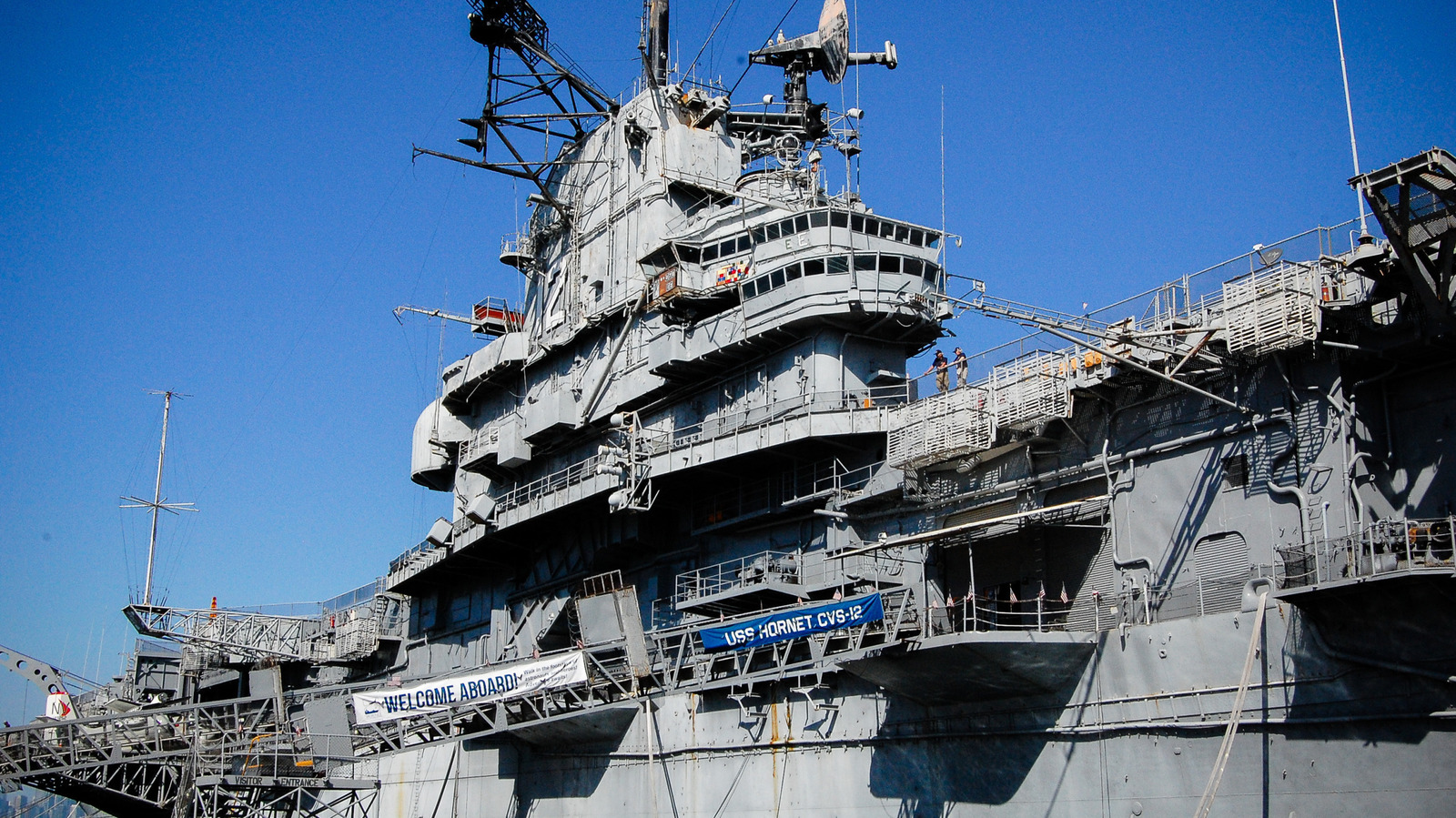
The USS Hornet has been anchored at Alameda for nearly 30 years as a floating museum and piece of World War II history, and now mounting costs, changing waterfront plans, and safety concerns are pushing the issue of whether it can stay or must move.
The Hornet arrived in Alameda decades ago and became a public museum that drew veterans, school groups, and visitors curious about carrier life. Over time the ship has aged, and so have the systems that keep it afloat and open to the public. The museum has worked to preserve the ship, but the bill for basic upkeep keeps climbing.
Maintenance is a relentless problem for vessels built for war, not long-term exhibition. Corrosion, hull leaks, and mechanical systems demand constant attention and expensive repairs, and many of the more complex fixes require drydocking or specialized contractors. Without steady funding, small problems multiply into major safety hazards that can force closures or restrictions on public access.
Another reality is the cost of mooring space along a busy bay. Waterfront property values and redevelopment plans change municipal priorities, and a historic ship that once fit into a mixed-use plan can suddenly conflict with new commercial or residential visions. Local authorities must balance nostalgia against fiscal responsibilities, public safety, and the goal of maximizing shoreline utility.
Funding is never simple for a nonprofit museum operating a massive steel carrier. Revenues from ticket sales, private donations, and grants ebb and flow, and capital campaigns often come up short when unexpected structural issues emerge. When a museum faces chronic shortfalls, trustees, municipal partners, and the public face a stark choice: find new funding, change the mission, or relocate the artifact to a place better suited to long-term preservation.
Environmental and regulatory pressures also play a role. Older ships can carry hazardous materials like lead paint, asbestos, and oils that require careful remediation to meet modern safety standards. Agencies overseeing waterways and public health may demand cleanup or upgrades that are costly and time consuming. Those requirements can tip the balance toward moving the ship to a facility equipped to handle such work or to a drydock that can safely isolate contaminants.
There are practical relocation challenges as well. Towing a carrier is a complicated maneuver that needs clearances, tug power, and weather windows, not to mention the destination’s ability to accept and care for the vessel. Potential new homes must offer long-term financial stability, skilled preservation staff, and a plan that respects the carrier’s historical significance. Finding that fit is rare, which is why decisions around the Hornet carry weight and controversy.
Community sentiment runs strong when it comes to veterans and artifacts from World War II, and opinions about the Hornet’s fate reflect that emotional attachment. Some argue that the ship must remain where it has been part of the local fabric for decades, while others prioritize practical stewardship that ensures the carrier survives another century, even if that means leaving Alameda. Whatever the outcome, the debate highlights a bigger question: how do we honor history in a way that is sustainable and safe for future generations?
