
- Expanded Navy contract for AI-powered inspection robots
- Push to improve fleet readiness and maintenance speed
- Gecko Robotics’ new deck-scanning system for hidden damage
- How robotic inspections cut repair scope and costs
- China’s shipbuilding advantage and U.S. naval pressure
- Predictive maintenance and the future of warship upkeep
The Navy is leaning harder into AI and robotics as it tries to keep warships moving and cut the long delays that can leave ships stuck in port. A deal with Gecko Robotics has now jumped to $300 million, a sharp increase that shows how seriously the service is taking faster inspections, smarter maintenance and better fleet readiness.
At the center of the push is a simple idea: find the damage sooner and fix less of the ship than crews might otherwise tear apart. Gecko’s systems use wall-climbing robots and AI software to scan hard-to-reach areas, spot corrosion and structural wear, and give maintainers a clearer picture before a repair job turns into a bigger headache.
Gecko Robotics CEO Jake Loosararian said the broader message is about getting smarter with the tools already available. “While the U.S. may not be able to out-manufacture faster than China, we can outsmart the ways that we maintain, operate and are ready with our vessels,” he said.
The company says its technology can save millions on a single ship and move far faster than traditional inspection methods. In some cases, it can identify structural issues up to 50 times faster, which matters when a delayed repair can ripple through deployment schedules and maintenance planning.
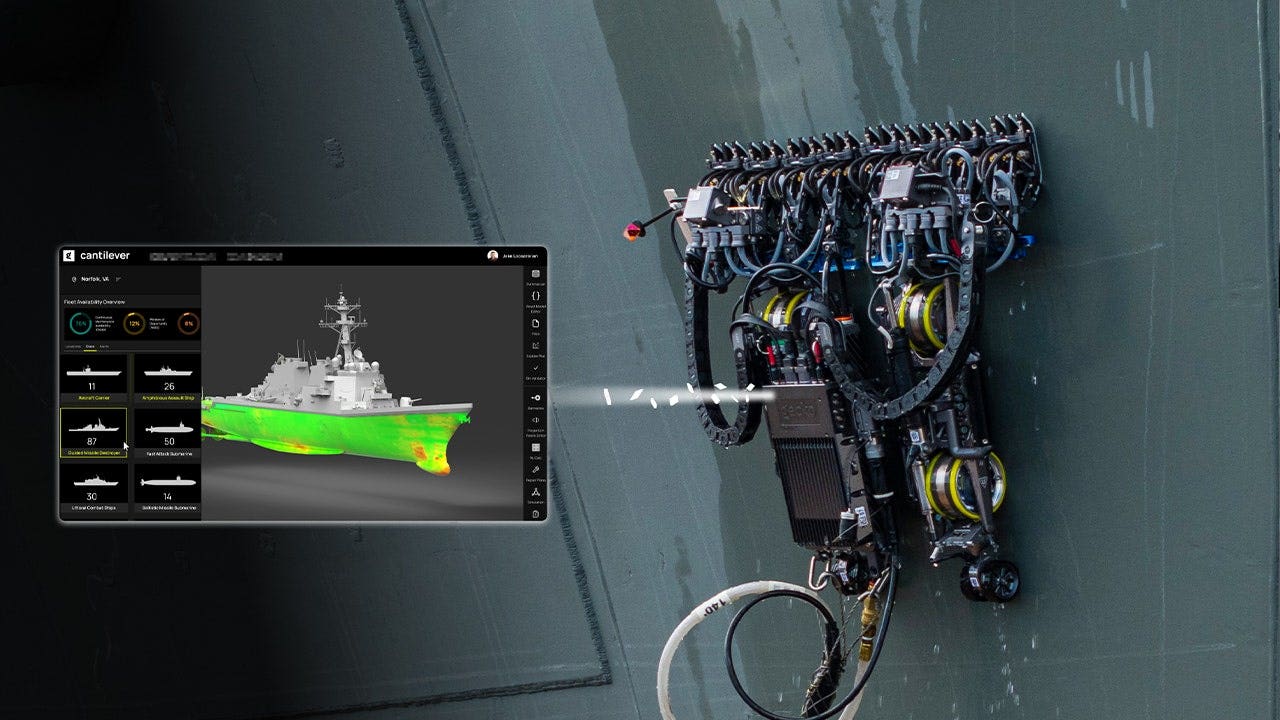
One of the biggest new pieces is Komodo, a robot built for the Navy that inspects steel beneath thick deck coatings without stripping the surface first. That makes a huge difference on warships, where crews often need to remove material before they even know how bad the problem is.
Komodo maps corrosion and material thickness so maintenance teams can see what is happening under the surface before digging into the work. Loosararian described it as “essentially a CAT scan,” and that comparison fits the mission pretty well. Instead of guessing, crews get a more exact read on what needs attention.
The payoff is not just speed. It is also precision, and that can shrink the size of a repair job fast. One example cited by Loosararian showed an assessment that originally called for roughly 1,200 square feet of repairs being narrowed to about 300 square feet after robotic inspection.
That kind of reduction matters in a Navy that is trying to stretch every maintenance dollar. When the scope shrinks, the time in the shipyard can shrink too, which helps avoid the slow grind of surprise repairs that keep vessels from returning to sea on schedule.
The expanded contract comes only months after the Navy first awarded Gecko a five-year agreement worth $71 million to widen the use of its inspection tech across the fleet. The initial rollout targeted 18 ships in the Pacific Fleet, including destroyers, amphibious warships and littoral combat ships.
Those are exactly the kinds of ships that need to stay ready in a tense Indo-Pacific environment. China already has a larger battle force than the U.S. Navy, and it can turn out ships at a pace American yards struggle to match, so keeping existing vessels healthy has become a major priority.
The Navy’s broader goal is to push fleet readiness toward 80%, even as maintenance delays keep sidelining ships that should be available for deployment. That makes inspection technology more than a tech upgrade. It becomes part of the fight to keep the fleet available, active and harder to bottleneck.
Gecko’s robots crawl over hulls, flight decks, ballast tanks and other difficult areas, gathering data on corrosion, metal loss and hidden damage. That information goes into the company’s Cantilever platform, where AI helps planners decide where repairs should happen first and where crews can hold the line a little longer.
For the Navy, the real value may be in what happens before a ship ever reaches major maintenance. If years of inspection data can predict failures early, crews can line up parts, labor and plans ahead of time instead of scrambling after the fact. That means fewer surprises, less wasted effort and a better shot at keeping warships ready when the clock starts ticking.
