
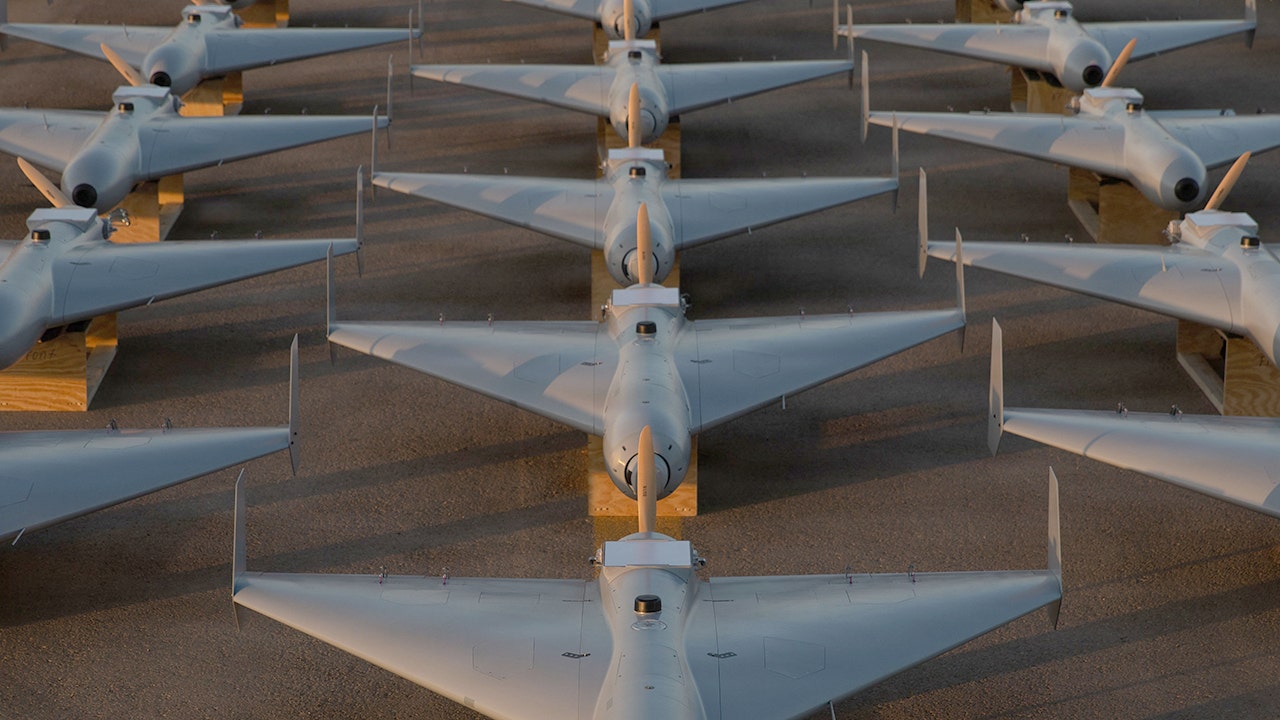
The U.S. and Israel are facing a very different kind of fight against Iran — not big ships trading blows but cheap kamikaze drones and massed waves meant to overwhelm defenses. This piece outlines how Iran uses saturation tactics, how the U.S. has adapted with systems like LUCAS and AI-driven targeting, why cost and logistics now shape outcomes, and what lessons from Ukraine and American industry mean for future defense. The focus is on rapid adaptation, smarter networks, and building affordable defenses that work at scale.
The air campaign we’re seeing exposes a fundamental shift: wars can be won or lost on volume and networks, not just on platforms. Iran has perfected a simple, brutal idea — overwhelm an opponent with enough expendable drones that defenses collapse under the pressure. These Shahed-style drones are low-tech but effective in mass, and they are being used against soft targets where they cause chaos and fear.
That reality forces a change in American thinking. This is less about proving superior gadgetry and more about matching the enemy’s economics and tempo. High-end interceptors are brilliant tools, but they’re also expensive and finite; when an adversary pours out cheap, one-way drones, the defender runs out of missiles and decisions fast. The right response starts with recognizing that logistics and cost curves are the battlefield now.
Washington has responded with a mix of pragmatism and innovation. The LUCAS system, built from captured Iranian designs and fused with U.S. navigation and ISR, shows we can turn enemy ideas against them. Sending back an affordable, networked drone to go after manufacturing and logistics nodes is a blunt, effective way to degrade the threat without escalating to all-out exchanges between big platforms.
KEANE WARNS IRAN STRIKE BECOMING ‘REGIONAL WAR,’ SAYS THREE GULF STATES PREPARING FOR COMBAT
Another crucial shift has been the introduction of AI throughout the targeting and command cycle. From sifting intelligence to real-time battle management, machine models help prioritize targets and reduce civilian risk in ways manual systems struggle to match. That difference matters politically and morally: a disciplined, intelligence-driven campaign separates a responsible defense posture from indiscriminate barrages that hit civilians.
The economics problem is still the hard part. Producing enough low-cost interceptors or layered defenses to match mass-produced drones is a new industrial challenge. We need intercept platforms and sensors designed specifically to deal with one-way, massed threats — faster, cheaper, and easier to maintain and deploy. It’s not just about buying more missiles; it’s about rethinking how we engineer a battlefield advantage under different cost constraints.
CARGO SHIP HIT BY PROJECTILE IN STRAIT OF HORMUZ WHILE IRAN LAUNCHES FRESH ATTACKS ON MIDDLE EAST
Ukraine’s defense experience has been a front-row classroom for these lessons, proving that small, cheap counters and smart tactics can blunt asymmetric drone campaigns. American industry has the capacity to scale what works, but political and bureaucratic clarity are needed to move at pace. The choice is simple: accept the new reality and mobilize the industrial base, or face repeated waves that gradually erode deterrence.
The ultimate advantage will come from systems thinking: integrating affordable interceptors, distributed sensors, resilient communications, and AI-driven targeting into a cohesive combat cloud. Drones aren’t just weapons; they’re sensors and nodes, and the counter is networks that can outscore and outpace them. That approach preserves options and keeps escalation controlled while delivering real effects on enemy infrastructure.
This conflict underlines a core Republican point: strength is not just in grand statements but in rapid, practical adaptation that protects civilians and pounds adversaries’ capacity to strike. If America moves decisively — leveraging lessons learned, adjusting procurement, and supporting allies — we can turn the economics of drone warfare into an American advantage. The clock now runs on choosing bold, realistic fixes that match the enemy’s speed and scale.
