
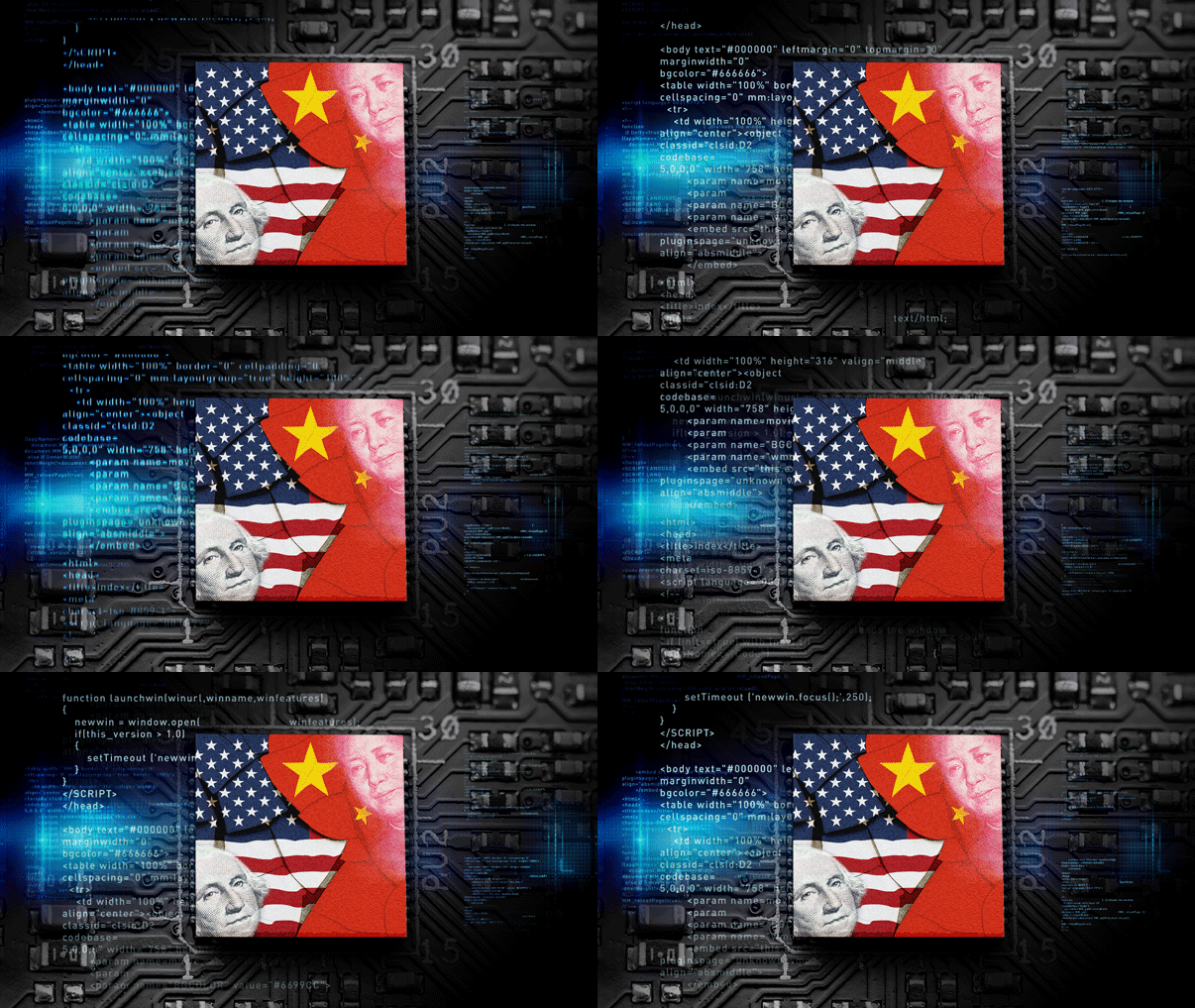
The theft of American technology by China is no theoretical worry; it is a real, organized campaign that costs U.S. firms and workers dearly, and it demands decisive, conservative action. This piece lays out the problem, the human and economic toll, and the policy fixes Republicans should push to defend our companies and national security.
China has turned industrial theft into a national strategy, picking off entire sectors rather than just single targets. Fueled by a state-directed economy and massive investment in chosen industries, Beijing treats intellectual property from free market competitors as a resource to be mined for national advantage. That means our nimble private companies end up competing against a Communist system willing to steal, subsidize, and undercut.
The scale is staggering and undercounted because most theft goes undetected or unreported. Companies fear reputational damage and shareholder fallout, so many incidents never see daylight. When firms do try to sue, litigation costs can climb into the millions, and enforcing judgments against Chinese entities is often impossible.
AMERICA HAS TO RESPOND WITH A UNITED FRONT TO CHINA’S MASSIVE ECONOMIC WARFARE
Washington must stop treating this as only a commercial problem and recognize it as an economic national security crisis. The Department of Justice can and should step up by sharing the financial burden of pursuing cases and letting victims recover from fines and forfeitures. Republicans should demand tougher penalties so stealing intellectual property becomes a losing proposition compared with honest innovation.
Every American company, from startups to industry giants, needs better protection and clearer guidance from government intel agencies. Threat briefings are not enough when the adversary is the Ministry of State Security using deep-cover recruitment and cyber tools to harvest secrets. Action means proactive intelligence sharing, preemptive disruption, and targeted sanctions that hit the people and entities doing the stealing.
GOOGLE ENGINEER STOLE AI SECRETS FOR CHINA, SENATE HEARS IN EXPLOSIVE TESTIMONY
The Linwei Ding case shows how personal access can translate into trillion-dollar risk when proprietary designs get exported. He used inside knowledge of AI chip architecture as a commercial hook for a China-based venture, and while prosecution matters, the damage was already done. Once the design is out, copycat products can be produced at scale and sold at margins that U.S. firms cannot match without state backing.
We also need to get serious about people-based threats. China’s talent recruitment programs and covert compensation for scientists and engineers must be exposed and blocked. Designating foreign entities that act as extensions of Chinese intelligence as State Sponsored Economic Espionage Organizations would create a legal framework to prosecute anyone who knowingly accepts material benefit from those programs.
CHINA ‘RIPPING OFF’ AMERICAN BUSINESSES – BUT THE DOJ CAN FIGHT THEM, GOP LAWMAKER SAYS
Reforming incentives matters as much as reforming penalties. The White House and Congress should craft laws that let private victims share in criminal penalties and that reduce the financial drag of litigation. At the same time, intelligence agencies should provide tailored, actionable warnings, especially to small businesses and startups that are most vulnerable and least equipped to defend themselves.
Over the past two decades, state-directed theft helped hollow out critical American industries, from steel to semiconductors. A Republican response must be muscular: tougher criminal penalties, targeted economic tools, and robust intelligence support for the private sector. If we want to keep the edge of American innovation, we have to stop treating theft as an inevitable cost of doing business and start treating it like the threat it is.
