
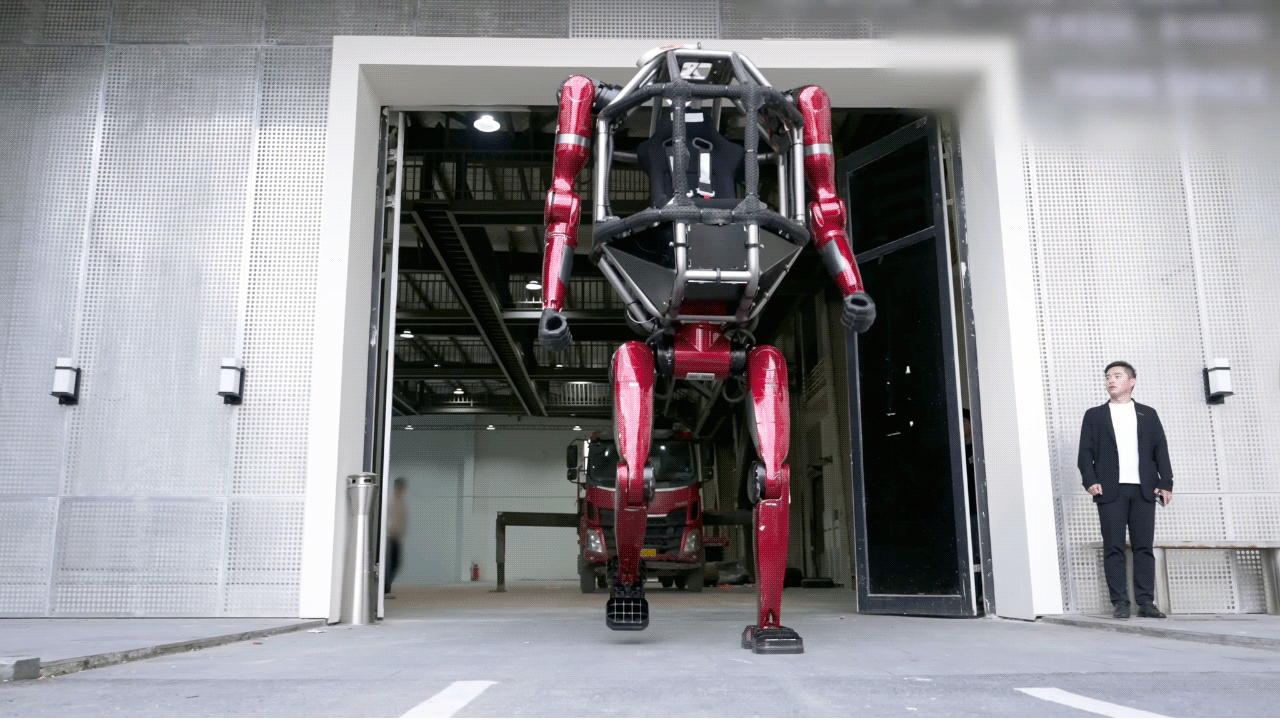
Unitree’s new rideable machine is a spectacle more than a product right now, a hulking hybrid that invites questions about where robotics is headed and who gets to decide what counts as useful tech. This piece walks through what the GD01 does, what we know and what we don’t, and why it matters beyond the viral demo video.
A towering rideable robot that walks with a person inside and smashes through bricks is exactly the sort of thing that makes you stop and ask, “Wait, are they really selling that?” Unitree’s GD01 looks like part robot, part vehicle and part expensive showpiece, built to carry a passenger and to shift between a two-legged stance and a four-legged form.
The company says the GD01 starts at roughly $574,000 and that with a rider aboard the machine tips the scales at about 1,100 pounds. That price puts it in exotic-car territory, which means the people most likely to buy one are collectors, entertainment venues or organizations with a very specific need for a walking, rideable platform.
The ability to transform is the headline feature. Two-legged mode suggests tighter maneuvering, while a four-legged stance promises better stability for pushing through obstacles or standing still under load. In the short demo Unitree released, the founder sits inside as the machine walks, leans back and shifts configuration before shoving through a pile of bricks.
Plenty of key details are missing. We still don’t know the GD01’s range, battery life, top speed or the safety systems that would be required for real-world use. Those missing specs matter a lot when you are talking about a walking, 1,100-pound vehicle moving around people and property.
The GD01 arrives as part of a broader push by Unitree to expand its footprint in robotics. The company has rolled out an app-style store for robot motion skills, early kits that emphasize dance and spectacle, and more affordable humanoid platforms aimed at research and hobbyists. Those moves suggest Unitree wants an ecosystem where hardware and downloadable behaviors feed each other, not just one headline-grabbing robot.
Even if the GD01 is described as mass-produced, that label doesn’t make it mainstream. A machine like this is more likely to appear at tech expos, theme parks or industry demonstrations than on neighborhood streets. Practical uses today seem limited to show business, demos, industrial testing or research where a rideable, transforming chassis is genuinely useful.
What the GD01 really highlights is how capability is progressing. The control systems, actuators and sensors that let a human ride, balance and change posture could eventually be applied to rescue bots, warehouse lifters, mobility aids or specialized manufacturing platforms. The first versions may simply turn heads, but the underlying tech could seed more practical designs later on.
Regulation and safety are equally important. A robot that weighs as much as a small car and can change how it walks introduces a different regulatory challenge than small delivery bots on sidewalks. Local laws, standards and testing regimes will need to catch up if machines like this move out of controlled demo spaces and into shared environments.
Unitree has demonstrated the GD01 can move and transform, but its core question remains the same: “OK, but who is this really for?” The machine is impressive to watch, and its existence forces a short-term conversation about spectacle versus utility and a longer-term conversation about where embodied robotics will matter next.
