
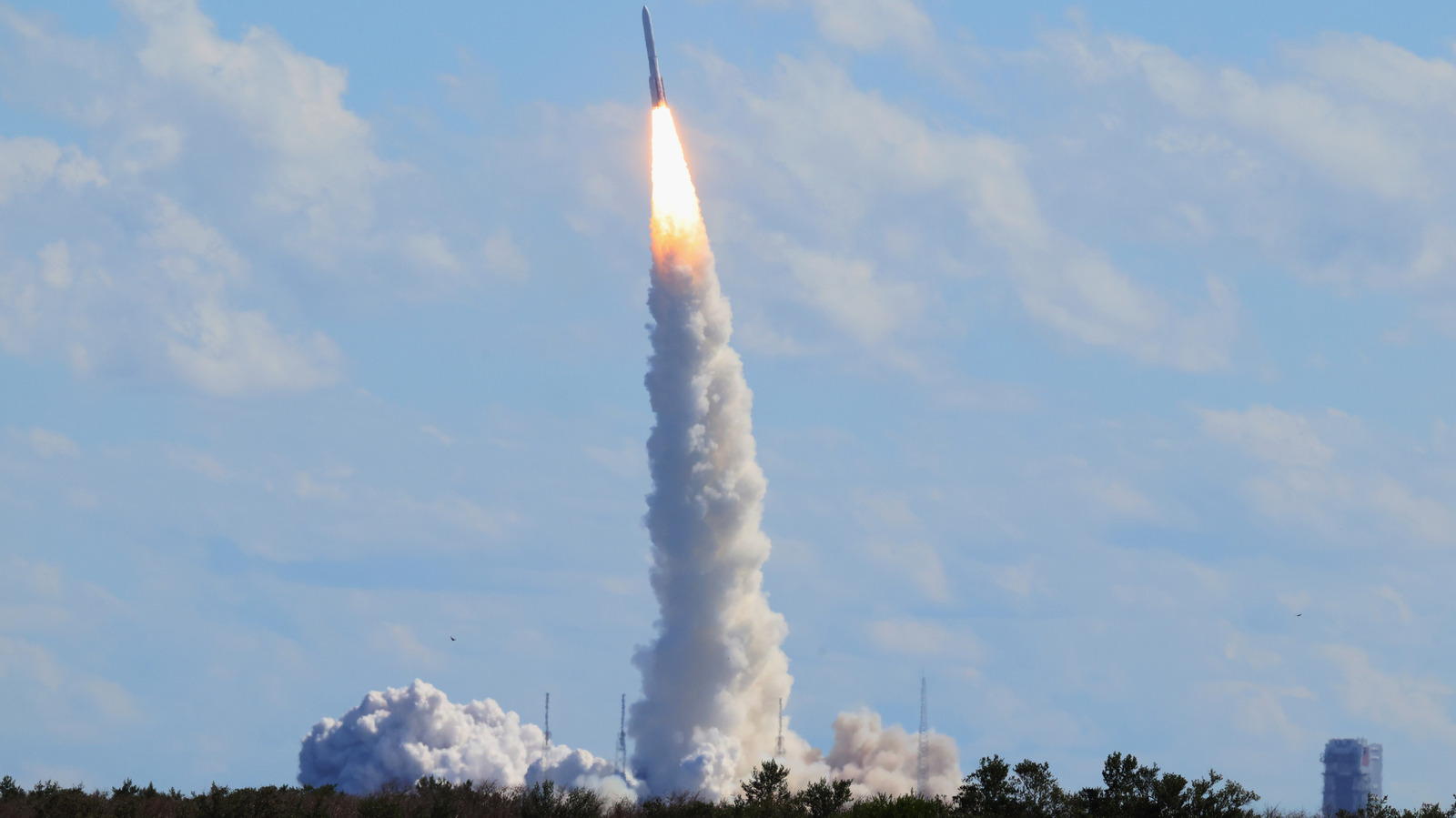
Amazon’s satellite ambitions took a hard hit when ULA’s Vulcan rocket failed soon after liftoff and wiped out 40 payloads bound for the company’s Leo network. Early signs point to a booster trouble spot rather than a bad engine, and that detail matters because the ripple effects could stretch far beyond one botched launch.
The flight went wrong early, but the full picture only became clearer later in the mission. Telemetry dropped roughly 10 minutes after launch, and ULA’s preliminary read says the first-stage booster did not generate the thrust it needed because it was not getting enough fuel.
That is a sharp distinction. ULA says the engines themselves were operating normally, which shifts attention away from the BE-4 powerplants and toward the booster system feeding them. In rocket work, that kind of clue can change the entire direction of the investigation.
The Vulcan Centaur is a two-stage rocket, and the second stage did what it was supposed to do, at least within the limits of a compromised flight. The problem was that stage separation happened too low and too slow for the mission to recover, leaving the upper stage unable to rescue the launch.
This is the first major failure for ULA in two decades, which is why the moment landed so loudly across the space industry. ULA has had launch headaches before, including a previous mission where a solid rocket booster nozzle came loose after liftoff, but those flights still managed to complete their jobs.
That is not what happened here. The new failure ends with the payload lost, and with it, a stack of satellites that Amazon needs to build out its orbital internet plan.
The financial damage is real, too. Estimates put each satellite at around $1.5 million to $2 million, which means the lost hardware alone could reach as high as $80 million.
But the bigger issue is what this could mean for future missions. The same BE-4 engine family used on Vulcan also powers Blue Origin’s New Glenn first stage, and NASA has shown interest in a modified Centaur V upper stage for Artemis-related work.
That makes this failure more than a ULA headache. If the root cause turns out to be something inside the booster or fuel delivery system, it could force a wider rethink across multiple launch programs that depend on related hardware.
Both Vulcan and New Glenn are grounded for now, and that silence on the pad says plenty. ULA’s emphasis that the engines were not at fault appears aimed at separating this event from earlier BE-4 testing problems, including an explosive failure that once damaged nearby infrastructure.
Amazon had already spread its launch bets around. ULA was one of several providers chosen to carry what was then called Project Kuiper, alongside Blue Origin and Arianespace, as the company built out what it now calls Amazon Leo.
That spread of options may soften the blow, but it does not erase it. ULA says its announcement on the Vulcan Leo 1 mission will be updated as more findings come in, and the next round of details will matter a lot for anyone watching the commercial launch race.
