
This piece examines a string of policing, immigration, and institutional failures in Britain, centered on the tragic death of Henry Nowak and the policies and cultural shifts that critics say allowed it to happen. It argues that legal and training changes, a fear of being labeled racist, and lenient immigration practices combined to produce deadly consequences and growing public distrust. Voices from Washington and American conservatives are woven into the account to underline how the episode speaks to broader Western trends.
When 18-year-old student Henry Nowak was fatally stabbed by Vickrum Digwa, the scene that followed looked less like emergency care and more like a political ritual. Responding officers handcuffed the mortally wounded teenager even as he repeatedly said he could not breathe and that he had been stabbed. Treating a dying victim like a suspect has outraged ordinary people across Britain and beyond.
Bodycam footage of Nowak’s final minutes has become a flashpoint, prompting foreign reaction and fierce domestic debate. The State Department that “ideological conditioning and two-tiered policing are glaring symptoms of civilizational decline that must be rejected across the West.” That language captures the worry that fear of labels and rigid ideology now shape how officers respond.
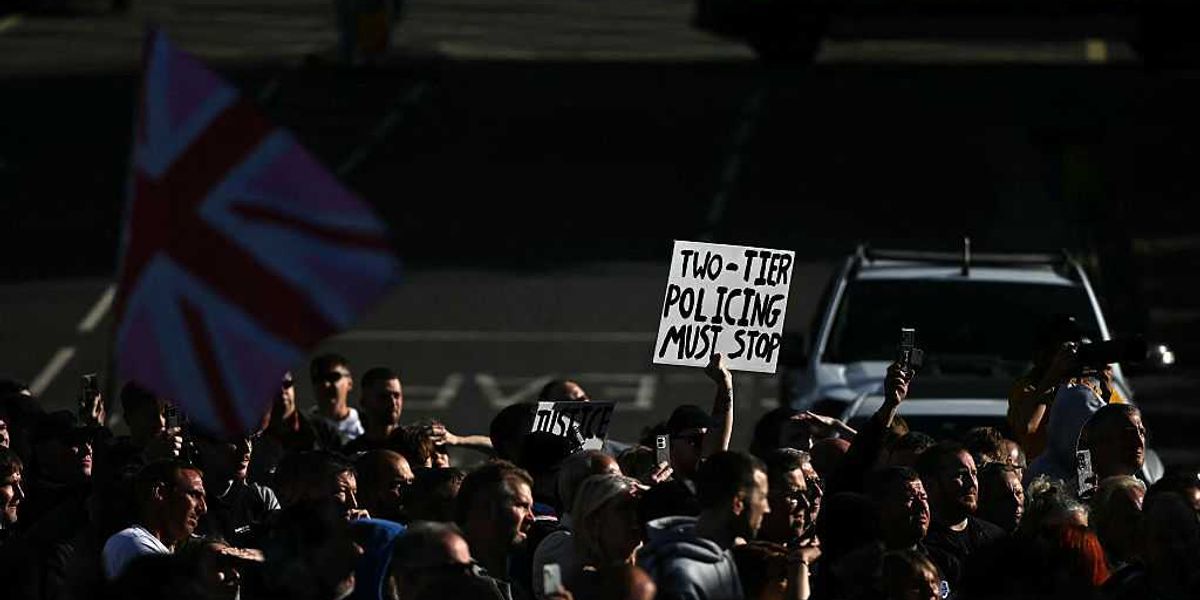
Two-tier policing is the public shorthand for a system where enforcement looks inconsistent, where victims and suspects are judged through the lens of identity before evidence. The problem did not appear out of nowhere; it traces back to institutional choices by the bodies that set police training and national practice. Rules and guidance meant to fight prejudice have, critics argue, remade priorities in ways that leave ordinary safety behind.
National bodies introduced measures such as logging perceived hostility even when no crime occurred, and they pushed anti-racism plans into everyday policing and judicial practice. The 2022 Race Action Plan and its later updates explicitly told officials to focus on racial equity rather than treating everyone the same. That shift from blind equality under the law to engineered outcomes has predictable consequences when officers hesitate to act for fear of being accused of bias.
https://x.com/StateDept/status/2062616906406760627
These changes are not abstract. Polls show large numbers of people believe policing now treats groups differently, and high-profile mishandlings reinforce that sense of betrayal. When a victim dies while being handcuffed and treated as the problem, trust erodes quickly. Politicians who insist everything is fine find themselves out of step with public anger.
The consequences extend beyond single avoidable deaths. In Nottingham, Valdo Calocane killed three people after medical professionals repeatedly declined to detain him amid concerns about disproportionate detention of young black men. Authorities, the critics say, prioritized avoiding accusations of bias over protecting the public, with deadly results. That calculus is part of a broader pattern critics insist must be reversed.
Fear of being labeled racist has even been cited after major terror attacks. At the Manchester Arena bombing, witnesses and some security staff reportedly hesitated to intervene despite suspicious behavior, because confronting a potential attacker raised the fear of racial accusations. When hesitation becomes policy, lives are at risk and security becomes performative rather than effective.
Political leaders have predictably fought about responsibility. Downing Street rejected foreign criticism of British policing, and senior ministers pushed back hard against characterizations of a two-tier system. Yet the same politicians who denounced overseas commentary previously made loud statements about systemic racism in other countries, fueling accusations of double standards and hollow outrage.
Conservative voices have been blunt. Vice President JD Vance warned that the Nowak case looked like civilizational failure and linked it to elites who, he said, surrendered national priorities. His words struck a chord with voters who view recent policy choices on crime and immigration as part of the same story: a pivot away from citizen safety and toward ideological signaling.
Henry Nowak died the same way a civilization dies: abandoned, handcuffed by authorities who neither trusted nor cared for him, and accused of hate crimes he did not commit. … He would still be alive today, and he would be if the last few generations of European elites had stood their ground against the politics of self-hatred and the mass invasion of migrants, many of whom despise the West and the people who love it.
Immigration feeds into this debate. Over recent years, hundreds of thousands crossed into Britain without proper controls, and some of those individuals later committed shocking crimes. Critics argue successive governments embraced open borders in the name of multiculturalism while leaving communities struggling with rapid demographic change and safety concerns.
Expanding hate speech rules and adding new non-criminal incident logs has silenced debate and deterred officers and citizens from speaking up. The result is a country where fear of accusation can outweigh commonsense action, and where policy priorities leave voters wondering which lives and neighborhoods politicians feel are worth defending. That unease now fuels protests, electoral anger, and a demand for a return to simple, impartial law enforcement.
