
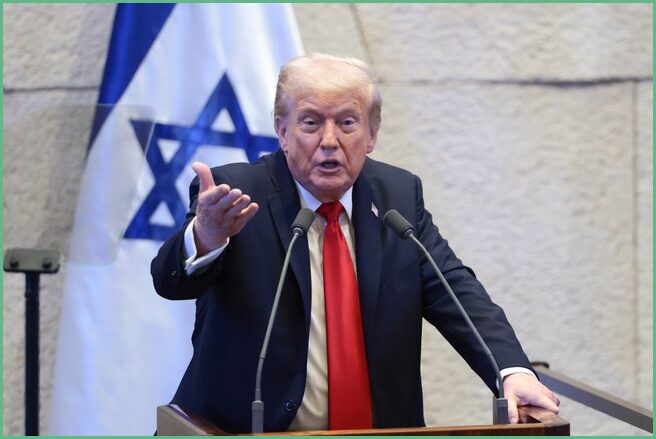
Trump Suggests Pardon in Knesset, Crowd Erupts
President Donald Trump stunned the Knesset when he stepped away from his prepared remarks and proposed something few expected: a pardon for Benjamin Netanyahu. The room’s response was immediate and intense, turning the formal address into a viral moment. This was not a staged line; it landed in real time and changed the tone of the visit.
He began by celebrating the agreement that led to the return of the last hostages and the fragile calm over the region, then pivoted toward an off-script proposal that had everyone talking. It was framed as a friendly nudge to Israel’s leadership, delivered with the brashness his supporters expect. That mix of diplomacy and showmanship has defined his approach on the trip.
“Hey, I have an idea,” Trump said. “Mr. President [Isaac Herzog], why don’t you give him [Netanyahu, who Trump pointed to in the front row] a pardon?” And the hoots and hollers began.
The chamber exploded into applause and cheering that rose to a standing ovation, a moment that lasted for several minutes. Lawmakers and guests in the room seemed genuinely surprised, then delighted, by the unscripted ask. It was pure theater and powerful signaling all at once.
A camera caught Netanyahu’s reaction, and the smile on his face made it clear he appreciated the moment. That visible approval only intensified the crowd’s response. The energy in the hall felt like a political endorsement wrapped in genuine emotion.
At one point a chant seemed to break out, and while it’s hard to pin down every shout, it had the feel of “Bibi” echoing through the chamber. The crowd’s noise felt celebratory rather than chaotic. For supporters of both men, it was an electric moment of shared triumph.
Trump kept his focus on President Herzog, who stood and smiled without committing to the idea. “By the way, that was not in the speech, as you probably know,” Trump remarked as the chants in the room died down. “But I happen to like this gentleman right over here [pointing to the President]. It just seems to make so much sense.”
“Ya know, whether we like it or not, this has been one of the greatest wartime [leaders],” he added, pointing to Netanyahu, while referencing Bibi’s indictment for allegedly accepting lavish gifts of cigars and champagne in exchange for favors.
“Cigars and champagne, who the hell cares about it. All right, enough controversy for the day……You are a very popular man.
You know why? Because you know how to win.”
The remarks drew renewed applause and more of those “Bibi” chants as the chamber soaked in the moment. It was partisan theater tuned to a sympathetic audience, and it landed with the force of a campaign rally inside a foreign legislature. For those who view Trump as bold and direct, this was exactly the kind of leadership they wanted to see on the world stage.
Trump made sure to acknowledge the team that helped bring the peace deal about, mentioning Special Envoy Steve Witkoff, Jared Kushner, and then Secretary of State Marco Rubio among others. That nod kept the speech tied to policy achievements as well as applause lines.
POTUS addresses Israel’s Knesset: “After two harrowing years in darkness and captivity, 20 courageous hostages are returning to the glorious embrace of their families… And after so many years of unceasing war and endless danger, today, the skies are calm, the guns are silent, the sirens are still, and the sun rises on a Holy Land that is FINALLY AT PEACE—a land and a region that will live, God willing, in peace for all eternity.”
Trump has done what no other president has been able to do: bring peace to the Middle East. Not a temporary stall or a two-state solution, but Israel triumphant and their enemies silenced. Trump signaled that this would be spoken about for generations, and that the Golden Age of the USA would also include the Golden Age for Israel and for the Middle East.
This trip showcased Trump’s approach: concrete deals paired with bold, headline-making moments.
